
The autonomous community of Andalucía is located in the very south of Spain. It is made up of the eight provinces of eight provinces of Huelva, Seville, Cádiz, Córdoba, Málaga, Jaén, Granada and Almería. The region’s landscapes range from the sun-soaked beaches of the Costa del Sol to the snow-capped peaks of the Sierra Nevada. This geographical diversity is matched by the region’s complex history which has seen the Phoenicians, Carthaginians and Romans all leave their mark long before the arrival of the Moors from North Africa. In this article we will recommend some of the best places to visit in Andalucía.
The Islamic period, which lasted from 711 to 1492 AD, had a particularly profound impact on the region. This era bequeathed Andalucía with some of its most iconic monuments, including the Alhambra in Granada, the Mezquita in Córdoba and the Giralda in Seville. These architectural marvels stand as testament to the sophisticated Moorish culture which once flourished in Al-Andalus.

The year 1492 marked a turning point in Andalucian history. Not only did it see the fall of Granada to Christian forces, ending centuries of Islamic rule, but it also witnessed Christopher Columbus setting sail from Huelva on his momentous voyage to the New World. The subsequent influx of wealth from the Americas led to Seville’s rise as a dominant city, its navigable river Guadalquivir serving as a conduit for riches from the New World.
However, as Spain’s colonial power waned, so did Andalucía’s fortunes. The region faced numerous challenges, including economic downturns and social unrest. The Spanish Civil War was particularly bitter here, exacerbating existing class divisions. It wasn’t until the tourism boom of the 1960s that Andalucía’s economic recovery began in earnest.
Today, Andalucía is one of Spain’s most visited regions thanks to its vibrant culture, epitomised by flamenco music and dance, bullfighting and the convivial atmosphere of its tapas bars. From its beaches to its mountain peaks, from its Moorish palaces to its whitewashed villages, Andalucía offers a journey through time and across cultures, promising unforgettable experiences for those who venture to explore its many treasures.
Best Places to Visit in Andalucía
Seville: The Capital of Andalucía
As the capital of Andalucía, Seville epitomises the region’s rich historical and cultural heritage. Founded as the Roman Hispalis and later thriving as the Moorish Ishbiliya, the city presents a captivating blend of architectural styles and historical epochs.
The city’s centrepiece, the Cathedral of Saint Mary of the See, stands as the world’s largest Gothic cathedral and houses Christopher Columbus’s tomb. Its bell tower, La Giralda, originally a minaret, exemplifies Seville’s architectural syncretism. The adjacent Royal Alcázar showcases exquisite Mudéjar architecture, reflecting the interplay between Islamic and Christian artistic traditions.

The Plaza de España, built for the 1929 Ibero-American Exposition, demonstrates the grandeur of Spanish Revival style with its expansive semicircular design and ornate tilework. For a taste of local culture, the Triana neighbourhood offers authentic flamenco experiences and a vibrant market.
The Metropol Parasol, a modern wooden structure colloquially known as Las Setas, houses an archaeological museum and provides panoramic city views. The Parque de María Luisa offers an escape from the summer heat whilst the nearby Los Remedios neighbourhood hosts the Feria de Abril, one of the most important annual festivals in Andalucía.
Córdoba: A Harmonious Blend of Civilisations
Córdoba is located 145km north-east of Seville and once served as the capital of Islamic Spain. The city’s zenith came during the 10th century when it was the heart of the Caliphate of Córdoba, rivalling Constantinople and Baghdad as a centre of learning and culture.
The Mezquita-Catedral stands as Córdoba’s most iconic monument, embodying the city’s complex religious history. Originally constructed as a mosque in the 8th century, it was later converted into a cathedral following the Christian reconquest. The structure’s forest of ornate arches and columns, topped by a Renaissance nave, creates a unique architectural fusion that encapsulates Córdoba’s multifaceted heritage.

The Alcázar de los Reyes Cristianos, a fortress-palace with Mudéjar elements, offers visitors insight into the city’s royal past. Its terraced gardens and ingenious water features reflect the sophisticated hydraulic engineering of medieval Córdoba. Nearby, the Roman Bridge spanning the Guadalquivir River has stood for two millennia, testament to the city’s strategic importance since antiquity.
The Judería, Córdoba’s old Jewish quarter, is a labyrinth of narrow streets and whitewashed houses. Here, the 14th-century Synagogue stands as one of only three original medieval synagogues remaining in Spain. The neighbourhood also houses the Casa Andalusí, a museum showcasing the city’s Islamic heritage.
Another interesting attraction located just outside of Córdoba is the Medina Azahara archaeological site which offers a glimpse into the opulent palace-city built by Caliph Abd-ar-Rahman III. This UNESCO World Heritage site provides crucial insights into the sophistication of Umayyad architecture and urban planning in Al-Andalus.
Granada: The Jewel of the Alhambra
Granada lies at the foot of the Sierra Nevada mountains, some 175km south-east of Córdoba. The city represents the last bastion of Islamic rule in Spain, falling to the Catholic Monarchs in 1492. This historical backdrop has imbued the city with a unique character, blending Moorish, Jewish and Christian influences.
The Alhambra, a sprawling hilltop fortress-palace complex, stands as Granada’s crowning glory and one of Spain’s most visited monuments. This UNESCO World Heritage site showcases the pinnacle of Nasrid architecture, with its intricate stuccowork, tranquil courtyards and ingenious water features. The adjacent Generalife gardens offer a verdant counterpoint, demonstrating the Islamic concept of paradise on earth.

Below the Alhambra lies the Albaicín, Granada’s old Moorish quarter. This hillside neighbourhood, with its narrow winding streets and carmenes (traditional houses with walled gardens), provides panoramic views of the Alhambra and exemplifies medieval Islamic urban planning. The district is punctuated by the Church of San Nicolas, a popular viewpoint and the remains of hammams (Arab baths).
The city centre is dominated by the Cathedral of Granada, a masterpiece of Spanish Renaissance architecture. Adjoining it is the Royal Chapel, the final resting place of the Catholic Monarchs, Ferdinand and Isabella. These structures symbolise the Christian reconquest and the subsequent cultural shifts in the city.
Granada’s Sacromonte district, traditionally home to the city’s Roma community, is renowned for its cave dwellings and flamenco traditions. The area offers visitors an authentic glimpse into Granada’s folk culture and stunning views of the Alhambra and Albaicín.
The city’s intellectual heritage is preserved in institutions like the University of Granada, founded in 1531 and the Madraza, the former Nasrid university. These sites, along with numerous museums and cultural centres, continue Granada’s legacy as a centre of learning and artistic expression.
Málaga: Birthplace of Pablo Picasso
Founded by the Phoenicians in the 8th century BC, Málaga is the birthplace of Pablo Picasso and serves as the gateway to the Costa del Sol. The city boasts a rich archaeological heritage alongside modern cultural attractions making it a popular short break destination and an important port of call for Mediterranean cruises.
The city’s historical core is dominated by the Alcazaba, an 11th-century Moorish fortress that exemplifies military architecture of the period. Adjacent stands the partially restored Castillo de Gibralfaro, offering panoramic views of the city and Mediterranean. At the foot of the Alcazaba, the Roman Theatre serves as a testament to the city’s classical past.
Málaga Cathedral, known locally as ‘La Manquita’ (The One-Armed Lady) due to its unfinished south tower, presents an intriguing mix of Gothic, Renaissance and Baroque styles. Its museum houses an impressive collection of religious art.

The city’s modern cultural offerings are equally noteworthy. The Museo Picasso Málaga, housed in the 16th-century Buenavista Palace, showcases works spanning the artist’s career. The Centre Pompidou Málaga, with its distinctive multicoloured cube structure, brings a selection of 20th and 21st-century art to the rejuvenated port area.
Málaga’s gastronomic scene thrives in the Mercado Central de Atarazanas, a 19th-century iron-framed market and along Calle Larios, the city’s main shopping thoroughfare. The nearby beaches of La Malagueta and La Caleta offer urban seaside relaxation.
The city’s commitment to urban renewal is evident in projects like the Muelle Uno harbour development and the Soho art district, cementing Málaga’s position as a dynamic cultural hub in Andalucía.
Cádiz: Europe’s Oldest City
Founded by the Phoenicians around 1100 BCE, Cádiz is reputedly Western Europe’s oldest continuously inhabited city. It lies just 120km south of Seville and has been a strategic port for successive civilisations, leaving an indelible mark on its urban fabric and culture.
The city’s compact old town, perched on a peninsula, is encircled by defensive walls that bear witness to its historical importance. The 18th-century Cádiz Cathedral, with its golden-tiled dome, dominates the skyline. Its tower offers panoramic views of the city and the Atlantic Ocean.
Cádiz’s maritime heritage is evident in structures like the Torre Tavira, an 18th-century watchtower equipped with a camera obscura and the bustling fish market. The city’s numerous plazas, including the expansive Plaza de San Juan de Dios and the intimate Plaza de las Flores, serve as vibrant social hubs.
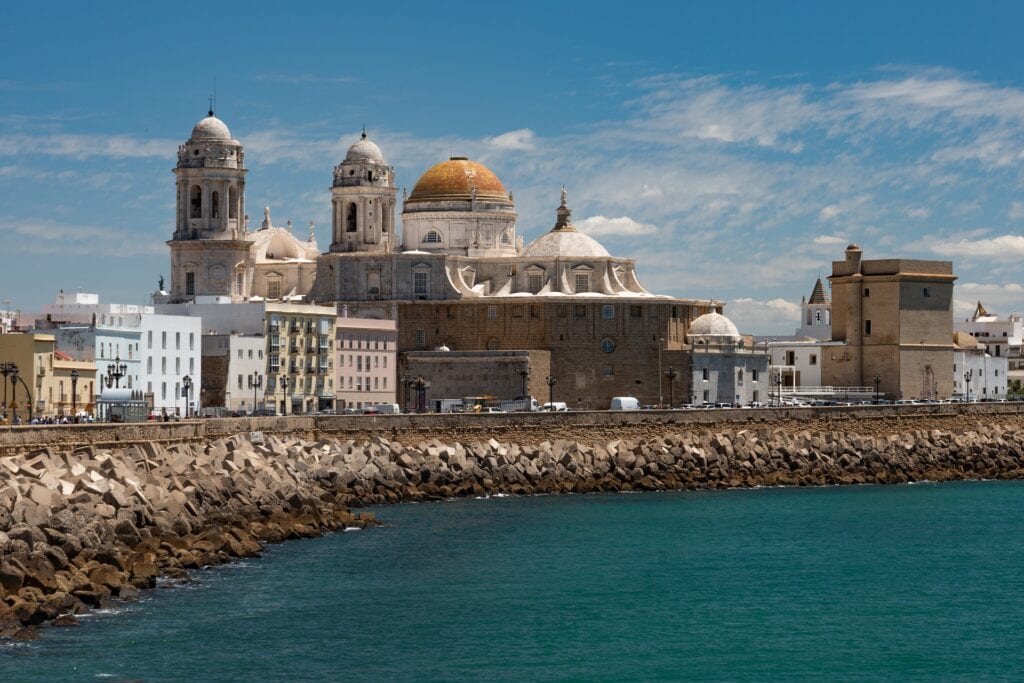
The Museum of Cádiz houses significant archaeological finds, including two Phoenician sarcophagi, alongside an impressive fine arts collection. The city’s Roman past is visible in the partially excavated theatre, one of the largest in the Iberian Peninsula.
Cádiz’s beaches, particularly La Caleta, flanked by the castles of Santa Catalina and San Sebastián, offer a unique urban beach experience. This beach has served as a cinematic stand-in for Havana, underlining the city’s photogenic qualities.
The city is renowned for its carnival, considered one of Spain’s liveliest, where satire and music take centre stage. This event, along with the city’s year-round cultural offerings and culinary scene, particularly its seafood, makes Cádiz a compelling destination for those seeking to experience Andalucía’s coastal charm and historical depth.
Ronda: Standing High Above the Tajo Gorge
Ronda is dramatically located atop a deep gorge in the Serranía de Ronda mountains, some 100km west of Málaga. Its natural beauty and architectural grandeur make it a popular day trip destination from holiday resorts along the Costa del Sol.
The Puente Nuevo, an 18th-century bridge spanning the gorge, is Ronda’s most iconic structure. This architectural marvel not only connects the old and new towns but also houses a museum detailing its construction and the city’s history. The views from the bridge and the surrounding Cuenca Gardens provide spectacular vistas of the Guadalevín River and the surrounding countryside.
Ronda’s old town retains its medieval layout with narrow streets and charming plazas. The Mondragón Palace, now housing the Municipal Museum, showcases the city’s diverse cultural influences through its Mudéjar ceilings and Renaissance courtyard. Nearby, the Palacio del Rey Moro features water mines leading to the river, testament to the city’s strategic importance.

Another must-visit site is the Arab Baths, located near the old city walls. These remarkably preserved 13th-century baths offer a fascinating glimpse into the Moorish period, with their distinct vaulted chambers and innovative water systems.
The city is also significant in the history of bullfighting. The Plaza de Toros, one of Spain’s oldest and most architecturally distinctive bullrings, now serves as a museum dedicated to the controversial tradition. The adjacent Real Maestranza de Caballería de Ronda provides insight into the city’s equestrian heritage.
Ronda’s natural surroundings offer ample opportunities for outdoor enthusiasts. The nearby Sierra de las Nieves Natural Park and the Grazalema Natural Park provide excellent hiking trails and diverse ecosystems.
Jerez de la Frontera: Sherry and Dancing Horses
Jerez de la Frontera, located 92km south of Seville, is a popular day trip destination known for its rich sherry production, equestrian traditions and flamenco heritage. As the heart of sherry wine production, the city is home to some of Spain’s most famous bodegas, including Tío Pepe and Sandeman. Visitors can tour these historic wineries to learn about the intricate aging process of sherry, from Fino to Amontillado and Oloroso.
The Consejo Regulador de las Denominaciones de Origen ensures the authenticity of these wines, safeguarding their unique characteristics that come from the local Palomino grapes and the region’s distinctive solera system.

Jerez’s equestrian culture is equally renowned. The Royal Andalusian School of Equestrian Art offers performances showcasing the “dancing” horses in dressage routines that highlight the deep connection between horse and rider. Each May, the Feria del Caballo celebrates this tradition with vibrant parades and competitions, drawing enthusiasts from around the world.
Flamenco, another cornerstone of Jerez’s cultural identity, thrives in the city’s numerous peñas (flamenco clubs) and at the Centro Andaluz de Flamenco, housed in the 18th-century Palacio de Pemartin. This center serves as both a museum and a repository of flamenco history, capturing the intensity of this passionate art form.
Jerez also offers a captivating architectural landscape. The 11th-century Alcázar, with its Moorish baths and towers, reflects the city’s Islamic past, while the Cathedral of San Salvador blends Gothic, Baroque and Neoclassical styles, dominating the skyline with its grandeur.
Pueblos Blancos: White Villages of Andalucía
The Pueblos Blancos, or White Villages, of Andalucía form a striking collection of hillside settlements scattered throughout the provinces of Cádiz and Málaga. These villages, characterised by their whitewashed walls and red or brown tiled roofs, offer visitors a glimpse into traditional Andalucían life set against dramatic mountainous backdrops.
Among the most notable of these villages is Zahara de la Sierra, perched atop a mountain, overlooking a turquoise reservoir. Its Moorish castle ruins and narrow streets exemplify the defensive nature of many Pueblos Blancos. Nearby, Grazalema, nestled in the Sierra del Pinar, is known for its handwoven blankets and as a base for hikers exploring the Sierra de Grazalema Natural Park.
Arcos de la Frontera, often considered the gateway to the Pueblos Blancos route, dramatically straddles a limestone ridge. Its old town, a maze of narrow streets, leads to the Plaza del Cabildo, offering panoramic views of the surrounding countryside.
Setenil de las Bodegas presents a unique spectacle with its houses built under overhanging cliffs, integrating natural rock formations into the town’s architecture. This unusual setting has made Setenil one of the most photographed of the White Villages.
Vejer de la Frontera, overlooking the Strait of Gibraltar, boasts well-preserved medieval walls and a distinctive Moorish character. Its winding streets, hidden plazas and numerous miradores (viewpoints) make it a favourite among visitors.
The Pueblos Blancos also play a significant role in Andalucían gastronomy. Many villages are known for specific products: Ubrique for its leather goods, Olvera for its olive oil and Villaluenga del Rosario for its payoyo cheese.
These villages, while united by their whitewashed aesthetic, each possess unique characteristics shaped by their specific geography and history. Collectively, they offer an authentic experience of rural Andalucía, its traditions and its stunning natural landscapes.
La Alpujarra: Mountain Villages of Granada
The Alpujarra is a corner of Andalucia which it often seems time forgot! It skirts the southern slopes of the Sierra Nevada Mountains, the highest in mainland Spain, boasts stunning scenery, hot sunny weather and is a wonderful area for walking. During the spring and autumn months the surroundings are particularly beautiful; in spring the land is carpeted with a vast array of wild flowers and blossom adorns the fruit trees which are dotted around the slopes.
The area is characterised by steep valleys scoured by rivers and streams hurtling down the mountainside from the snow covered slopes above, many of which rise to over 3000 metres. Traditional farming has left a legacy of terraced valley sides dotted with small buildings or cortijos which were the summer residence of village farmers.
The Alpujarra was one of the last outposts of the Moors when they ruled Spain many years ago. They left a legacy of attractive villages, built in a style unique to this part of Spain, together with many miles of acequias, a complicated system of irrigation which remains to this day.
National Parks of Andalucía
Andalusia’s diverse natural parks cover more than 30% of its surface, offering a wide range of landscapes from desert to mountain ecosystems. Here are ten of the best parks to explore.
Cabo de Gata – Níjar (Almería): Cabo de Gata is a unique desert-like landscape with volcanic mountains, salt marshes and virgin beaches. It protects a maritime-terrestrial ecosystem and is known for its diverse wildlife, including migratory birds like flamingos.
Sierra de Aracena (Huelva): This park is known for its lush Mediterranean forests, a stark contrast to drier parts of Andalusia. Located in northern Huelva, it features rich plant life, offering visitors a peaceful, green retreat.
Doñana (Huelva): One of Spain’s most famous natural parks, Doñana is a vast wetland rich in biodiversity. Once a private hunting estate, it now serves as a sanctuary for migratory birds and endangered species.
Los Alcornocales (Cádiz): A vast expanse of cork oak forests, Los Alcornocales stretches from near Tarifa to Ubrique. It is one of the largest remaining Spanish Mediterranean forests, boasting diverse wildlife and greenery.
Grazalema (Cádiz): Grazalema is distinguished by its rare Spanish fir trees and its rich Mediterranean forest. It’s a biodiversity hotspot, making it a favorite for nature enthusiasts.
Cazorla, Segura and Las Villas (Jaén): Spain’s largest protected area, this park features forests, wildlife and traditional villages. It’s home to species like deer and wild boar and is surrounded by olive groves.
Sierra de Castril (Granada): Known for its rugged terrain, Sierra de Castril features deep gorges, caves and canyons. It’s a natural extension of the Cazorla mountain range.
Sierra Nevada (Granada and Almería): This national park encompasses Spain’s highest peaks, including Mulhacén and Veleta. Its alpine environment supports unique flora and fauna, making it an ecological treasure.
Sierra Norte (Seville): Covering 25% of Seville province, this park is part of a larger complex within Sierra Morena. It features oak and chestnut forests, with historic white villages like Constantina and Cazalla.
Sierra de las Nieves (Málaga): Located in the Ronda mountain range, this park is known for its limestone peaks and dramatic drops. The area is shaped by erosion and karstification, offering striking landscapes.