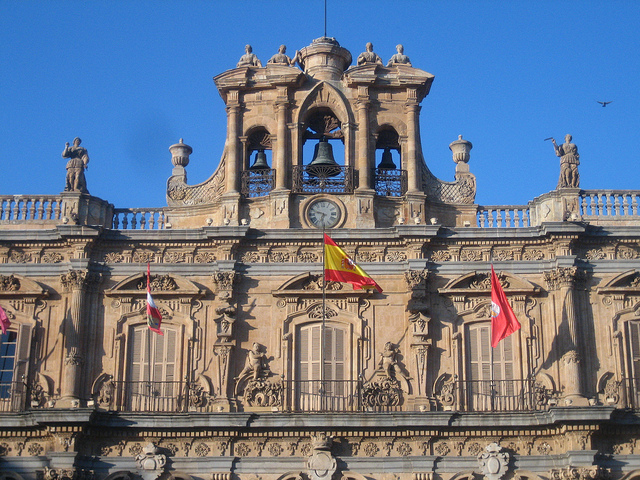
Salamanca catches people off guard. Most visitors know it has one of Spain’s oldest universities and some impressive architecture, but few expect how the city glows golden at sunset or how the student population shapes its atmosphere. The nickname “La Ciudad Dorada” (Golden City) isn’t marketing hyperbole – the Villamayor sandstone genuinely transforms under evening light, turning plazas and monuments into a warm, honeyed spectacle. Combined with what’s arguably Spain’s most beautiful main square and living university traditions, Salamanca feels both grand and intimate at once.
What strikes me about Salamanca, having visited many times over the years, is how it’s avoided becoming museum-like despite the UNESCO designations and tourist attention. Yes, there are coachloads doing the highlights, but walk five minutes from Plaza Mayor and you’re in neighbourhoods where locals vastly outnumber visitors. The university remains an actual functioning institution with 30,000 students creating proper chaos during term time, not some preserved historical site you shuffle through reverently.


The city’s manageable – you can walk everywhere that matters in twenty minutes, the monuments cluster together logically, and the scale never becomes overwhelming. When it comes to things to do in Salamanca, you’re looking at a city where Renaissance architecture meets genuine student energy, where eight centuries of scholarship created traditions that persist in ways that feel alive rather than performed. Here’s are the main attractions and activities which deserve your attention.
Best Things to Do in Salamanca
The list looks comprehensive, but Salamanca rewards thorough exploration rather than just hitting the famous bits. Some attractions are globally significant, others reveal character you won’t find in guidebook highlights. Mix them according to time available and particular interests.
Plaza Mayor
Right, Spain’s full of impressive plazas, but Salamanca’s Plaza Mayor is something else entirely. Built in the 18th century in that baroque style the Spanish do so confidently, it’s this perfectly proportioned enclosed square with arcades running the full perimeter and those medallions depicting everyone from Spanish monarchs to Christopher Columbus carved into the spandrels.
The symmetry is almost absurdly precise – 88 arches, uniform building heights, that clock tower on the town hall providing vertical emphasis without dominating. It’s the sort of urban space that creates instant calm even when it’s mobbed with people, which it usually is. Locals treat it as their living room – morning coffee, evening drinks, Sunday strolls, meeting friends. Tourists photograph it obsessively, and honestly, fair enough.


What I appreciate having seen it at all times and seasons is how the light transforms it. Golden hour makes the sandstone glow in ways photographs never quite capture – warm, honeyed, that quality that justifies the “Golden City” nickname. Night-time when they illuminate it creates completely different drama. Even harsh midday sun when most Spanish architecture looks bleached and exhausted, Plaza Mayor maintains elegance.
The cafés under the arcades are touristy and overpriced – accept this going in. You’re paying for location, and sitting with coffee watching the square’s theatre unfold is entirely worth the inflated price. The constant flow of students, elderly locals, tourist groups, street performers, the occasional political demonstration – Plaza Mayor functions as Salamanca’s stage.
During university term, it fills with students doing what students have done here for centuries – debating, flirting, showing off, passing exams by tradition. The energy shifts dramatically during summer holidays when international visitors dominate and locals mostly avoid the centre.
University of Salamanca
Founded in 1218, making it Spain’s oldest university and one of Europe’s most venerable, this institution shaped intellectual movements from medieval scholasticism through the Renaissance. The historical weight is genuine – scholars came here from across Europe, the theological debates influenced Counter-Reformation thinking, and the university’s prestige rivalled Oxford or Bologna.
The Plateresque façade is what everyone comes to photograph – that intricate stone carving covering the entrance, impossibly detailed, looking almost sculpted rather than cut from stone. Somewhere in that elaborate decoration hides a tiny frog carved on a skull, and tradition insists finding it brings good luck (particularly for students facing exams). Watching crowds crane their necks searching for it has become part of the experience.
Inside, you can visit historic lecture halls where walls are still covered in centuries-old graffiti – students writing their names in bull’s blood after passing finals, a tradition that persisted for generations. The old library, with its ancient manuscripts and globes, creates that atmosphere of accumulated knowledge that modern universities struggle to replicate regardless of their facilities.
What makes it compelling beyond the historical significance is how it remains a functioning university with 30,000 students. You’re not shuffling through preserved rooms – you’re navigating actual academic life. Students crowd the courtyards between lectures, professors rush past clutching papers, exam stress manifests visibly during assessment periods. The continuity between eight centuries of scholarship feels tangible in ways heritage sites rarely achieve.
The university operates proper academic calendars, so term time brings different energy than summer holidays. If you want to see it functioning rather than just admire empty architecture, visit during the academic year when the place is actually alive.
The Old and New Cathedrals
Salamanca’s got this peculiar arrangement where two cathedrals sit literally attached to each other – medieval Romanesque next to Renaissance-baroque, creating architectural conversation across centuries. The older one dates from the 12th century, austere and solid in that way Romanesque does, with frescoes of the Last Judgement that have retained surprising amounts of original pigment.
The New Cathedral, begun in the 16th century but taking two centuries to complete, shows that evolution from late Gothic through Renaissance to baroque as architectural fashions shifted during construction. The dome dominates Salamanca’s skyline – you see it from everywhere, particularly from vantage points across the river where the whole complex rises dramatically above the old town.

Here’s where it gets entertaining – during 1990s restoration work, the stonemasons added an astronaut and a dragon eating ice cream to the carved details on the Puerta de Ramos. It’s become this thing where visitors hunt for these anachronistic additions, which some people find delightful and others reckon is taking liberties with heritage monuments. I’m in the delightful camp – there’s precedent for stonemasons leaving personal marks, and in centuries these will be their own historical curiosities.
You can climb the towers for panoramic views across Salamanca and the surrounding countryside – it’s considerable climbing (narrow spiral stairs that get claustrophobic) but the perspective justifies the effort. Seeing how the golden sandstone buildings spread across the hillside with the Tormes River curving beyond gives context you don’t get at street level.
Both cathedrals charge separate admission from the university, which feels slightly mercenary but reflects how Spanish religious monuments fund their maintenance. Whether you visit both depends on your tolerance for churches after other Spanish cities. If you’re saturated, the exteriors alone are impressive. If you’re interested in architecture and religious art, they’re properly significant examples.
Casa de las Conchas
This late 15th-century mansion is impossible to miss – the façade’s covered with over 300 carved stone shells, symbol of the Order of Santiago and the pilgrimage to Santiago de Compostela. Built by a knight of the order who clearly wanted everyone knowing his affiliations, it’s simultaneously ostentatious and elegant in that way late medieval nobility managed.
The shells create this repetitive pattern that should be monotonous but somehow works – catching light differently throughout the day, creating shadows that emphasise the building’s form, making something fundamentally decorative feel structural. It’s one of Salamanca’s most photographed buildings for good reason.

These days it houses a public library, which means you can wander in to see the interior courtyard – more restrained than the exterior but beautifully proportioned, with Gothic windows and carved details. The library’s actually excellent if you’re interested, with decent collections and study spaces that students pack during exam periods.
What I like about Casa de las Conchas is how it represents that transitional moment between medieval fortified nobility and Renaissance humanism – still showing military-religious affiliations through those Santiago shells, but opening up architecturally with windows and decoration rather than defensive solidity.
La Clerecía and Scala Coeli
La Clerecía’s baroque façade dominates the square opposite Casa de las Conchas – twin towers, intricate stone carving, that sense of vertical emphasis baroque does so confidently. Built in the 17th century as a Jesuit college, it’s now part of the Pontifical University, but the church and towers open to visitors.
The Scala Coeli experience involves climbing those towers for views that rival the cathedral’s – arguably better because you’re looking across at the cathedral rather than from it. The climb’s atmospheric, winding through baroque architecture with occasional stopping points explaining the building’s history.
At the top, Salamanca spreads below – the golden sandstone catching light, Plaza Mayor’s symmetry visible from above, the river curving beyond, surrounding countryside rolling to horizons. It’s less crowded than the cathedral towers, which alone justifies choosing it if you’re only doing one climbing experience.
The church interior is properly impressive baroque – gilded altarpiece, painted ceiling, that combination of theatrical drama and religious intensity Jesuits excelled at. Whether you’re interested depends on your tolerance for baroque excess, though even if ornate Catholicism isn’t your thing, the spatial dynamics and craftsmanship are objectively remarkable.
Convento de San Esteban
This Dominican monastery has one of Salamanca’s finest façades – Plateresque style covering the entrance with biblical scenes carved in extraordinary detail. The martyrdom of Saint Stephen gets depicted with this combination of violence and artistic refinement that characterises the period.
Inside, the church continues the elaborate approach – vaulted ceilings soaring overhead, gilded altarpiece by Churriguera (the family who basically defined Spanish baroque excess), choir stalls carved with intricate detail. The cloister provides necessary calm after that visual intensity – two stories of Gothic arches creating contemplative space.
Christopher Columbus supposedly stayed here whilst seeking support for his voyage, which connects Salamanca to that moment when Europe stumbled into global dominance. Whether he actually stayed in this specific building or the story’s been embellished through repetition isn’t entirely clear, but the connection between scholarship and exploration feels appropriate.
The monastery charges admission, and honestly you could skip it if you’re on limited time or suffering church fatigue. But if you’re interested in religious architecture and baroque art, it’s a properly significant example of Spanish monastic tradition.
Roman Bridge
The Puente Romano crosses the Tormes River at Salamanca’s southern edge – originally 1st century AD, though medieval reconstruction means only a few arches are genuinely Roman. It’s one of those infrastructure projects that demonstrates how Roman engineering shaped Iberian development, creating connections that persisted through subsequent millennia.
Walking across gives you distance from the city centre, letting you see how Salamanca sits on its hillside with the cathedral complex rising dramatically. The bridge itself is solid rather than spectacular – functional Roman design prioritising longevity over aesthetics, though the stone arches create pleasant rhythms across the river.
At the far end, a small Romanesque church and park area provide picnic spots with views back toward the city. Locals use this space for weekend afternoon gatherings – families, couples, students escaping the centre’s intensity. Sunset from here is lovely, watching the golden sandstone glow as light fades.
The bridge appears on Salamanca’s coat of arms, which tells you something about its symbolic importance beyond mere functionality. It’s not a major attraction requiring hours of attention, but crossing it once for the perspective and historical continuity feels worthwhile.
Art Nouveau and Art Deco Museum (Casa Lis)
Casa Lis sits right on the old city walls overlooking the river – modernist building from 1905 that’s become one of Europe’s finest Art Nouveau and Art Deco museums. The building alone justifies visiting – that façade with its coloured glass, the interior staircase where light filters through stained glass creating constantly shifting patterns.
The collection spans decorative arts from the late 19th and early 20th centuries – extraordinary glasswork by Lalique and Gallé, porcelain dolls that manage to be simultaneously beautiful and slightly unsettling, jewellery, furniture, sculptures. It’s the sort of museum that appeals even if you’re not particularly interested in the period, because the craftsmanship and aesthetic vision are genuinely remarkable.
What I appreciate is how it provides complete tonal contrast to Salamanca’s Renaissance grandeur. After hours of sandstone baroque and university solemnity, encountering this celebration of decorative excess and modernist design offers necessary variety. The building’s integration with the city walls creates interesting spatial relationships between medieval infrastructure and modernist architecture.
The museum’s café has that glass façade overlooking the Tormes – brilliant spot for afternoon coffee with views that rival more famous vantage points. It’s less touristy than Plaza Mayor cafés whilst offering arguably better perspectives.
Salamanca’s Food Scene
Salamanca’s cuisine reflects its Castilian location – hearty, meat-focused, shaped by agricultural traditions and that climate where winters get genuinely cold. At the centre sits jamón ibérico de Guijuelo, produced in the nearby Sierra de Béjar mountains where the altitude and climate create ideal curing conditions.
Tasting proper Guijuelo ham in Salamanca – sliced so thin it’s almost transparent, fat melting immediately, that complex flavour developed through months of curing – constitutes an essential experience. The difference between supermarket ham and genuine Guijuelo ibérico is profound, and having it at source in specialist shops or traditional taverns ensures quality.
Hornazo is Salamanca’s distinctive contribution to Spanish pastry – essentially a meat pie filled with chorizo, pork loin and hard-boiled eggs, traditionally eaten during Lunes de Aguas (the Monday after Easter) when locals picnic by the river. It’s substantial, unapologetically meaty, the sort of food that sustained agricultural workers through long days.
Farinato – a sausage made from breadcrumbs, pork fat and spices – sounds unpromising but eaten fresh and properly cooked (often with fried eggs) is genuinely satisfying. It’s poor man’s food elevated through technique and quality ingredients, which describes much of Spanish gastronomy.
The tapas scene isn’t as developed as Granada’s free tapas culture or San Sebastián’s pintxos sophistication, but quality exists if you know where to look. Areas around Plaza Mayor and the university concentrate bars where students dominate – cheap, chaotic, variable quality. Venture into residential neighbourhoods and you’ll find establishments where locals outnumber visitors and the food improves noticeably.
Local cheeses deserve attention – the surrounding countryside produces excellent varieties that shops sell alongside other Castilian specialities. Wines from nearby regions (Toro, Ribera del Duero, Rueda) appear extensively on wine lists, offering alternatives to the Rioja that dominates internationally.
For sweets, chochos (sugared almonds) and bollo maimón (a sponge cake) represent local traditions. They’re not revolutionary, but they’re genuinely traditional rather than invented for tourists, which counts for something.
Huerto de Calixto y Melibea
This garden connects to La Celestina, Fernando de Rojas’ late 15th-century work that’s one of Spanish literature’s foundational texts. According to tradition, the tragic lovers Calixto and Melibea met here, though obviously the historical accuracy of locations associated with fictional characters deserves skepticism.
Regardless of literary authenticity, it’s a lovely spot – situated on the old city walls with views across the river and surrounding countryside, gardens planted with flowers and shaded paths, generally peaceful except when tour groups descend briefly before moving on. It provides necessary respite from the monumental intensity elsewhere in Salamanca.
The literary connection matters because it reflects how Salamanca’s intellectual tradition extends beyond the university into broader cultural production. La Celestina influenced European drama and comedy, and having the city commemorate that heritage through named spaces shows how scholarship and literature remain valued.
It’s not a major attraction requiring hours of attention – fifteen minutes wandering the paths and enjoying the views suffices. But as a brief interlude between architectural monuments, it works brilliantly.
Salamanca’s Night-time Atmosphere
The student population transforms Salamanca’s night-time character entirely. During term, the city stays alive until genuinely late hours – bars packed, streets filled with groups moving between venues, that energy young people create when they’re enjoying themselves without self-consciousness.
The bar scene concentrates around Calle Prior, Gran Vía and the streets off Plaza Mayor – mix of traditional taverns, modern bars, music venues. Quality varies dramatically from establishments taking pride in their offerings to places serving whatever’s cheapest because students will drink it anyway.
What’s distinctive about Salamanca’s nightlife is how it remains genuinely local – you’re not navigating tourist-oriented entertainment districts but joining actual student social life. That means less English spoken, more cultural immersion, occasional confusion about customs and traditions.
The city’s illumination at night creates different drama than daytime visiting – those sandstone buildings glow under lighting, Plaza Mayor becomes almost theatrical, the cathedral complex rises dramatically against dark sky. Even if you’re not interested in bars and clubs, an evening walk through the illuminated centre provides different perspective than midday tourist shuffling.
Summer sees this intensity diminish considerably – students depart, international visitors replace them, bars adjust their offerings accordingly. The city doesn’t die, but it shifts from vibrant university town to more conventional tourist destination. Visit during term if you want to experience Salamanca functioning rather than performing.
Day Trips from Salamanca
Salamanca works brilliantly as a base for exploring western Castilla y León – the surrounding region rewards day trips without requiring overnight stays elsewhere.
Ciudad Rodrigo, about 90 kilometres west near the Portuguese border, is a fortified town that’s retained its medieval character remarkably well. Those defensive walls still encircle the old quarter, the 12th-century cathedral combines Romanesque and Gothic elements, and the whole place feels genuinely historic rather than preserved for tourism. It’s known for carnival celebrations featuring bull runs through narrow streets, which attracts considerable attention but creates chaos that’s entertaining or horrifying depending on perspective.
La Alberca and the Sierra de Francia lie south in mountainous terrain where traditional villages demonstrate rural Castilian life. La Alberca was Spain’s first village declared a National Historic Monument – those half-timbered houses, stone streets, completely intact medieval layout create atmosphere you won’t find in cities. The surrounding mountains offer hiking, the villages maintain traditions around food and festivals, and the whole region feels removed from contemporary Spain in ways that are simultaneously refreshing and slightly eerie.
West toward Portugal, Arribes del Duero Natural Park features dramatic gorges where the Duero River has carved through rock over millennia. Boat trips provide perspectives on those cliffs rising vertically from water, whilst viewpoints offer panoramic vistas across the border region. The area also produces distinctive wines under the Arribes denomination – small production, limited international distribution, worth trying whilst you’re there.
Ribera del Duero wine country lies to the east – approximately 90 minutes driving through agricultural landscapes. The region’s famous for robust red wines made primarily from Tempranillo, and numerous bodegas offer tours and tastings. Combined with medieval towns like Peñafiel (dominated by a striking hilltop castle housing a wine museum), it makes an excellent day trip for anyone interested in Spanish wine beyond the internationally famous Rioja.
Zamora, an hour north, has Europe’s greatest concentration of Romanesque churches – the old town is basically an open-air museum of 12th and 13th-century architecture. The cathedral’s distinctive Byzantine-style dome creates Zamora’s skyline, whilst narrow lanes reveal church after church demonstrating regional variations on Romanesque themes. It’s considerably quieter than Salamanca, which depending on mood constitutes either welcome relief or indication there’s less to hold attention.
Festivals and Celebrations
Semana Santa (Holy Week) brings elaborate processions through Salamanca’s streets – religious brotherhoods carrying pasos (those enormous floats with biblical scenes), hooded penitents walking in formation, solemn crowds watching in that mixture of devotion and theatrical appreciation Spanish Catholics manage. The processions routing through the medieval streets and across Plaza Mayor create genuine drama, particularly at night when candles provide the only illumination.
The Virgen de la Vega celebrations in September honour Salamanca’s patron saint – religious ceremonies combined with concerts, fireworks, bullfights (controversial but traditional), and general festivities. It’s when locals come out collectively, maintaining traditions whilst adapting them to contemporary sensibilities.
University life creates its own festival calendar – the start of academic year brings newcomers being welcomed with concerts and celebrations, whilst exam periods create different intensity as students huddle in libraries and cafés engaging in that productive panic education systems worldwide seem to require.
Lunes de Aguas, the Monday after Easter, maintains this tradition where locals picnic by the river eating hornazo. It’s charmingly low-key – families spreading blankets, students gathering in groups, everyone eating essentially the same meat-filled pastry whilst enjoying spring weather (assuming the weather cooperates, which it doesn’t always).
Frequently Asked Questions about Salamanca
How do I get to Salamanca?
Salamanca sits about 200 kilometres northwest of Madrid – roughly two hours by bus or train. High-speed rail has improved journey times considerably compared to a decade ago, whilst buses remain frequent and competitively priced. Madrid-Barajas Airport serves as the main international gateway – from there, you can take buses or trains directly to Salamanca without needing to navigate Madrid itself, which saves considerable time and stress.
Where should I stay in Salamanca?
The historic centre near Plaza Mayor offers convenience and atmosphere – you’re walking distance from major attractions, surrounded by restaurants and bars, immersed in that golden sandstone ambience. It’s also where prices concentrate highest and where tour groups dominate. Areas slightly further out provide better value whilst remaining perfectly walkable – Salamanca’s compact enough that location matters less than in sprawling cities. Students often choose accommodation nearer the university faculties where prices drop and the atmosphere skews younger and more chaotic.
When is the best time to visit Salamanca?
Spring and autumn offer ideal conditions – comfortable temperatures, good light, the city functioning without summer’s heat or winter’s cold. May and September are particularly lovely. Summer gets genuinely hot – those sandstone plazas amplify heat during July and August – though students departing means fewer crowds and different atmosphere. Winter is properly cold by Spanish standards, but the Christmas period brings festive atmosphere and you’ll see Salamanca functioning for locals rather than tourists. Academic calendar matters considerably – term time brings energy that holidays lack, so if you want vibrant university atmosphere rather than just admiring empty architecture, check when students are actually present.
How many days should I spend in Salamanca?
Two full days covers the major attractions comfortably – Plaza Mayor, university, cathedrals, museums, enough time for proper wandering without rushing. Three days allows for more relaxed exploration, time to experience the food scene properly, perhaps a day trip to surrounding areas. A week makes sense if you’re using Salamanca as a base for exploring western Castilla y León or if you’re genuinely interested in the scholarly atmosphere and want to absorb it properly rather than just collecting sights.
What is Salamanca known for?
Salamanca’s famous primarily for its university – founded 1218, one of Europe’s oldest, attracting scholars for eight centuries and maintaining genuine intellectual prestige. The Plaza Mayor ranks among Spain’s finest baroque squares, whilst the golden sandstone architecture creates this unified aesthetic that’s genuinely distinctive. The city’s a UNESCO World Heritage Site based on that Renaissance urban ensemble. Beyond monuments, Salamanca’s known for maintaining living scholarly traditions, Spanish language schools attracting international students, and that combination of grand architecture with vibrant young population creating energy heritage cities often lack.
Is Salamanca worth visiting?
Absolutely, though it offers different appeal than Spain’s more famous destinations. It’s not trying to compete with Barcelona’s cosmopolitan creativity or Madrid’s cultural overwhelm or Seville’s flamenco intensity. Salamanca’s appeal lies in that combination of architectural beauty, intellectual tradition and genuine functioning university life. The scale’s manageable, the monuments are properly significant without requiring weeks to appreciate, and the student population keeps it feeling alive rather than museumified. Whether you’re here for Renaissance architecture, scholarly atmosphere, or just that extraordinary golden-hour glow across Plaza Mayor, there’s substance beyond the UNESCO designation. It works brilliantly as a standalone destination or combined with other Castilian cities. Just visit during term time if you want energy alongside beauty – summer Salamanca functions fine but lacks that distinctive university intensity.
How far is Salamanca from Madrid?
About 200 kilometres northwest – roughly two hours by either bus or high-speed train, depending on which service you catch. The route crosses Castilian plains that shift from Madrid’s sprawl into increasingly rural landscapes as you approach Salamanca. Many visitors combine the two cities when exploring central Spain, which makes considerable sense given their proximity and complementary characters – Madrid’s metropolitan intensity contrasting with Salamanca’s scholarly elegance.
What local foods should I try?
Don’t miss jamón ibérico from Guijuelo – the nearby mountain town produces some of Spain’s finest cured ham, and tasting it at source ensures quality. Hornazo (that meat-filled pastry traditionally eaten during spring festivals) is distinctively Salamancan. Farinato, whilst sounding unpromising (it’s essentially breadcrumbs and pork fat formed into sausage), is genuinely satisfying when properly cooked. Local cheeses from the surrounding countryside deserve attention, whilst wines from nearby Toro, Ribera del Duero and Rueda appear extensively on local wine lists. For sweets, try chochos (sugared almonds) and bollo maimón (sponge cake) – they’re traditional rather than revolutionary, but genuinely local.
Is Salamanca walkable?
Absolutely – the historic centre is remarkably compact, with most major attractions within twenty minutes’ walk of Plaza Mayor. The layout’s logical enough that getting lost rarely becomes genuinely problematic, though those medieval lanes around the cathedrals do twist unpredictably. Comfortable shoes aren’t optional – those cobblestones look charming but become exhausting after hours of walking, and some streets climb at angles that leave you breathless. The riverside areas and parks extend walking distances, but everything that genuinely matters clusters together accessibly.
Final Thoughts About Salamanca
What I appreciate about Salamanca is how it’s avoided the trap of becoming a heritage theme park. Yes, UNESCO designation brought attention and tourism infrastructure improved considerably. The golden sandstone’s been cleaned, monuments restored, Plaza Mayor polished until it gleams. But underneath that Renaissance elegance, there’s genuine life happening – 30,000 students creating chaos during term, locals conducting daily routines largely ignoring tourists, traditions functioning rather than being performed.
The university remains what it’s always been – an actual functioning institution attracting serious scholars alongside party-focused undergraduates, maintaining intellectual prestige whilst dealing with contemporary education’s challenges. That continuity between eight centuries of scholarship creates atmosphere you won’t find in cities where universities are just one element among many.
The architectural unity matters too – that Villamayor sandstone creating visual coherence across centuries of building, the way evening light transforms everything golden, how Plaza Mayor functions as both monument and living room for the entire city. It’s the sort of urban ensemble that’s genuinely rare, where human-scale proportions and beautiful materials combine to create spaces that work practically whilst being objectively lovely.
When it comes to things to do in Salamanca, you’re looking at a city that rewards spending time beyond the obvious highlights. Yes, Plaza Mayor justifies the journey alone – it genuinely is that beautiful. The university’s historical significance and continuing vitality make it essential rather than optional. But Salamanca reveals itself properly when you’ve wandered those medieval lanes, sat through evening in a student bar listening to debate you don’t entirely follow, understood how the cathedral complex anchors the skyline, experienced that golden-hour transformation across the sandstone monuments.
The city’s manageable without being slight, beautiful without being precious, historically significant without being museumified. The student population keeps it young and slightly chaotic during term, whilst summer brings different atmosphere when tourists dominate and locals reclaim their city after students depart. Both versions have appeal – energetic university town versus elegant Renaissance city – though personally I’d choose term time for that distinctive Salamanca intensity.
Whether you’re here for two days hitting the major sights or a week exploring more thoroughly, bring comfortable shoes for those cobblestones, book accommodation well ahead during peak season, and accept that photographs won’t quite capture how that sandstone glows at sunset. That’s Salamanca – meeting expectations about architectural beauty whilst revealing additional layers about scholarly tradition and living university culture that guidebook descriptions don’t quite convey.
I was there this year and enjoyed it all Visited Ledesma also not far away and a fascinating sleepy village with good eating facilities. Salamanca had much to offer and roman ruins that still are visible. I could readily return Tony Eastaway