
Roman control of the Iberian Peninsula began in 218 BC during the Second Punic War when they captured territories from the Carthaginians. Over the next two centuries, the Romans gradually conquered and Romanized the region through military force and colonization. The Romans divided the peninsula into three provinces – Hispania Baetica, Hispania Lusitania and Hispania Tarraconensis. Important cities like Tarraco (modern Tarragona), Emerita Augusta (Mérida) and Corduba (Córdoba) became prosperous centres which are amongstst the top Roman sites in Spain to this day.
Roman rule over Iberia brought advanced urban planning and infrastructure like roads, aqueducts, amphitheatres and temples. Latin language and culture spread while local Iberian languages and traditions declined. Spain produced many Roman emperors like Trajan and Hadrian. During the 3rd century AD, the peninsula faced invasions, economic turmoil and civil wars as the Roman Empire declined. In the 5th century, Roman authority crumbled as Visigoths and other Germanic tribes conquered areas of Spain.

For over 600 years the Romans left a profound cultural and architectural legacy in Spain despite periods of instability making Hispania one of the most thoroughly Romanized regions of the Empire. Numerous Roman sites in Spain have been remarkably well-preserved and are some of the most popular tourist attractions in different regions of the country.
Most Important Roman Sites in Spain
Mérida (Emerita Augusta)
Located in Extremadura in western Spain, Mérida is a city steeped in Roman history. Originally known as Emerita Augusta, it was founded in 25 BC under the orders of Emperor Augustus to provide a settlement for retired soldiers from the Roman legions. As the capital of the Roman province of Lusitania, Mérida played a vital administrative and cultural role in the empire. The city was connected to Seville by a strategically significant road, further cementing its importance as a hub of communication and trade.
Modern-day Mérida is home to one of the most extensive collections of Roman monuments in Spain which reflect the city’s historical significance. This archaeological wealth has resulted in the Archaeological Ensemble of Mérida being designated as a UNESCO World Heritage site. Amongst its most remarkable sites is the Roman Theatre, an exceptionally preserved structure which could accommodate over 6,000 spectators. This theatre, alongside the adjacent Roman Amphitheatre, highlights Mérida’s prominence as a centre of entertainment. The amphitheatre once held around 15,000 spectators who gathered to witness gladiatorial contests and other spectacles.
Another important site (which is currently in ruins) is the Roman Circus which served as a racetrack for chariot races accommodating 30,000 spectators. The city’s Puente Romano crosses the Guadiana River near the city centre, serving as an iconic symbol of Mérida’s enduring Roman heritage. Many artefacts from this Roman era are on display at the magnificent National Museum of Roman Art in Mérida which is highly recommended for visitors to the city.

Mérida is also home to the Temple of Diana which is one of the city’s most impressive Roman structures. The nearby remnants of the forum and its porticos reveal the city’s civic heart where temples and administrative buildings once stood. The Termas de Los Milagros, an ancient public bath complex and the striking Los Milagros Aqueduct, part of a sophisticated water supply system, further demonstrate the Romans’ architectural ingenuity.
Beyond its urban core, Mérida features remarkable examples of Roman infrastructure, such as the reservoirs of Embalse de Proserpina and Cornalvo. These reservoirs were vital in supplying water to the city, showcasing the advanced engineering techniques employed to sustain a thriving population. Additionally, several Roman necropolises located on the outskirts of the city offer a glimpse into the funerary practices and beliefs of its inhabitants.
Tarragona (Tarraco)
Located some 100km to the south-west of Barcelona in northern Spain, Tarragona is a city of profound historical significance dating back to its Roman origins. Known as Tarraco during the Roman period, the city was established as a military and political stronghold in the 3rd century BC and later became the capital of the Roman province of Hispania Tarraconensis. Its strategic location on the Mediterranean coast and its temperate climate made it not only an administrative centre but also one of the earliest resort destinations for the Roman elite in Spain. Tarraco’s abundance of well-preserved Roman ruins has earned it recognition as a UNESCO World Heritage site.

Amongst Tarragona’s most remarkable Roman monuments is the Roman Amphitheatre which was capable of seating up to 14,000 spectators. It served as a venue for gladiatorial contests, executions and other public spectacles. Adjacent to the amphitheatre are the remains of the Roman Circus which hosted chariot races and similar events. Its elongated track, partially integrated into the city’s modern layout, provides a vivid reminder of ancient entertainment culture.
Tarragona also features the Provincial Forum, a grand complex which served as the administrative heart of Tarraco and the province of Hispania Tarraconensis. This site includes the remains of temples, porticos and civic buildings, reflecting the city’s role as a centre of governance. The city’s Roman Walls, dating back to the 2nd century BC, are another striking feature. These fortifications, amongst the earliest Roman structures in the Iberian Peninsula, were designed to defend the city and its inhabitants from external threats.
The Praetorium, a monumental structure believed to have been the residence and administrative headquarters of the Roman governor, adds to Tarragona’s architectural wealth. Its connection to the circus through underground passageways demonstrates the practical and interconnected nature of Roman urban planning.
Essential to Tarraco’s sustainability and growth was the Roman Aqueduct, known locally as the Pont del Diable (Devil’s Bridge). This aqueduct spans the Francolí River and stands as a testament to Roman engineering ingenuity, supplying the city with fresh water from distant sources. Another vital aspect of Tarragona’s infrastructure was the Roman Quarry, El Médeol, which provided the stone for many of the city’s grand constructions.
Outside the city’s core lies the Roman Necropolis, an extensive burial ground where tombs, mausoleums and intricately decorated sarcophagi offer insights into Roman funerary practices. The necropolis reflects the social and religious dimensions of life in Tarraco, as well as the enduring influence of Roman culture on its inhabitants.
Empúries (Emporiae)
Further along the Catalonian coast, some 140km north-east of Barcelona, lies Empúries which is one of the most fascinating archaeological sites in Spain. Empúries holds a unique position in Iberian history, as it represents a meeting point between Greek and Roman civilisations. Originally established in the 6th century BC as a Greek colony known as Emporion, meaning “market,” it became a flourishing trading hub connecting the Mediterranean world with the Iberian interior. With the arrival of the Romans in the 2nd century BC, Empúries transformed into a Roman town, seamlessly blending Greek and Roman architectural and cultural influences.
Empúries was a critical entry point for Roman forces during their campaigns in Hispania, particularly during the Second Punic War. Following the Roman conquest, a new town was constructed adjacent to the Greek settlement, reflecting the characteristic urban planning of Roman colonies. The Roman section of Empúries was laid out with a forum at its centre, surrounded by public buildings, temples and administrative structures, emphasising its role as a civic and commercial hub.

The remains of the Roman town at Empúries provide a vivid picture of daily life in the ancient world. The forum’s paved surfaces and surrounding porticos still convey the grandeur of Roman urban design, whilst remnants of basilicas and temples hint at the religious and administrative activities which once took place there. Notable amongst the site’s ruins are the intricate mosaic floors of private houses which showcase the wealth and sophistication of the Roman elite who lived in Empúries. These mosaics, depicting mythological figures and geometric patterns, are amongst the finest examples of Roman artistry in Spain.
Empúries also boasted an advanced infrastructure, including an aqueduct which supplied fresh water to the town and a harbour which facilitated its role as a maritime trading centre. The port connected Empúries to other parts of the Roman Empire, fostering cultural and economic exchange which enriched its inhabitants’ lives.
One of the site’s most striking features is the coexistence of Greek and Roman ruins, offering a rare opportunity to explore two distinct yet interconnected civilisations. Visitors can walk through the remains of the Greek agora and then step into the Roman forum, tracing the evolution of the town over centuries of occupation. The blending of architectural styles, from Greek columns to Roman arches, illustrates the cultural synthesis which characterised Empúries.
The archaeological significance of Empúries extends beyond its structural remains. Artefacts recovered from the site, including coins, pottery and inscriptions, provide invaluable insights into the economic, social and religious practices of its inhabitants. These artefacts are preserved in the Museu d’Arqueologia de Catalunya in Barcelona which offers a comprehensive overview of the site’s history and its role in the wider Mediterranean world.
Cartagena (Carthago Nova)
Located on the coast of Murcia in south-east Spain, Cartagena was one of the most significant Roman sites in Iberia. Known as Carthago Nova (New Carthage) during Roman rule, it was originally founded as a Carthaginian stronghold in the 3rd century BC by the military leader Hasdrubal the Fair. Following the Roman victory in the Second Punic War, the city was captured in 209 BC by Scipio Africanus, marking a decisive moment in Rome’s conquest of the Iberian Peninsula. Under Roman control, Cartagena rose to prominence as a key port and administrative centre, valued for its strategic location, natural harbour and rich resources.
One of Cartagena’s most remarkable Roman features is its theatre, an architectural masterpiece constructed between the 5th and 1st centuries BC. With a capacity to seat over 6,000 spectators, the theatre served as a venue for dramatic performances and public gatherings, showcasing Roman engineering and cultural influence. The theatre lay hidden for centuries until its rediscovery in the late 20th century and it is now a centrepiece of the city’s Roman heritage, meticulously preserved and open to visitors.

Another significant structure is the Roman Forum District, a complex which includes baths, temples and public buildings. This area was central to the civic and social life of the city, reflecting the urban planning typical of Roman colonies. Notable within this district are the remains of the Curia, where local administrative decisions were made and the Temple of Isis, a testament to the diverse religious practices which flourished under Roman rule. The forum also includes a system of thermal baths, illustrating the importance of hygiene and communal leisure in Roman society.
Cartagena’s economic importance during Roman times was tied to its abundant natural resources. The city was a hub for the mining and processing of silver and lead extracted from nearby mountains. These minerals were critical to the empire’s economy, supporting coin production and various industrial applications. Cartagena’s port facilitated the export of these resources across the Mediterranean, further enhancing its status as an economic powerhouse.
The city’s defensive infrastructure, including sections of the original Roman walls, highlights its strategic importance. The well-preserved remains of these fortifications illustrate the measures taken to protect one of the empire’s key strongholds in Hispania. Additionally, the Punic Wall Interpretation Centre provides insights into the earlier Carthaginian fortifications which predated Roman control, offering a layered view of the city’s military history.
Artefacts uncovered in Cartagena, such as mosaics, inscriptions and sculptures, provide a deeper understanding of the daily lives of its Roman inhabitants. Many of these items are displayed in the National Museum of Underwater Archaeology (ARQVA) and the Roman Theatre Museum, institutions which bring the city’s ancient history to life for modern audiences.
Itálica
Located the small town of Santiponce, some 10km north-west of Seville in Andalucía, the archaeological site of Itálica is one of the largest and most significant Roman sites in Spain. Founded in 206 BC during the Second Punic War, Itálica was established by the Roman general Scipio Africanus as a settlement for wounded veterans. The town’s strategic location along the Guadalquivir River allowed it to flourish as a trade and administrative hub and it became a symbol of Roman influence in the region. Itálica was notably the birthplace of several prominent Romans, including the emperors Trajan and Hadrian, further solidifying its importance within the Roman Empire.
Itálica’s vast archaeological remains provide a remarkable glimpse into the layout and grandeur of a Roman city. The site features well-preserved streets, houses and public buildings, many of which retain exquisite mosaics which illustrate mythological and everyday scenes. These mosaics, crafted with extraordinary attention to detail, are amongst the most celebrated aspects of the site and exemplify the artistic and cultural sophistication of Roman Itálica.
One of the site’s most iconic structures is its massive amphitheatre, one of the largest in the Roman world. Built to hold an estimated 25,000 spectators, it stands as a testament to the city’s prominence and the Roman fascination with public spectacles. The amphitheatre hosted gladiatorial games and other events, serving as a centrepiece for communal life. Its size and state of preservation make it a highlight for visitors and researchers alike, reflecting the engineering prowess of Roman builders. Ongoing excavations continue to reveal new insights into its construction and use, ensuring which Itálica’s story evolves with each discovery.
The city’s layout, particularly its residential areas, showcases advanced urban planning. The houses of Itálica, complete with central courtyards, elaborate floor mosaics and remnants of frescoed walls, offer a vivid picture of daily life in a wealthy Roman town. The streets, arranged in a grid pattern, illustrate the meticulous organisation characteristic of Roman city design, with evidence of water management systems such as aqueducts and sewers.
Itálica’s cultural and historical significance extends beyond its physical remains. As the birthplace of Emperor Hadrian, who ruled from 117 to 138 AD, Itálica holds a special place in Roman history. Hadrian’s reign is often associated with architectural innovation and the flourishing of arts and culture across the empire and his connection to Itálica underscores the city’s role as a cultural beacon in Hispania.
Segovia (Sego)
Situated 90km north-west of Madrid, Segovia stands as a testament to the ingenuity and ambition of Roman engineering. Whilst the city is celebrated for its medieval and Renaissance heritage, its most iconic feature is its Roman aqueduct. This monumental structure, dating to the 1st or early 2nd century AD, has been recognised as a UNESCO World Heritage Site which represents one of the best-preserved examples of Roman architecture in Spain.
The Segovia Aqueduct is remarkable both for its scale and construction. Extending 728 metres in length, it consists of 167 elegant arches supported by towering piers. At its highest point, where it crosses the Plaza del Azoguejo, it reaches an imposing height of nearly 29 metres. Despite the passage of centuries, the aqueduct remains structurally sound – a feat made even more astonishing by its construction method. The massive granite blocks which form the aqueduct are held together solely by balance and gravity, without the use of mortar. This architectural ingenuity highlights the Romans’ advanced understanding of engineering principles and their mastery of stone construction.

The aqueduct was designed to carry water from the Fuente Fría, located over 15 kilometres away in the mountains, into the heart of the city. Its meticulously calculated gradient ensured a steady flow of water, supplying the baths, fountains and other facilities essential to urban Roman life. Even today, the aqueduct is a source of fascination for engineers, historians and tourists alike, embodying the durability and functionality of Roman infrastructure.
Beyond the aqueduct, Segovia bears traces of other Roman constructions which illustrate the city’s significance during the Roman occupation. While much of the evidence has been lost to time or built over during later periods, remnants of a Roman circus and an amphitheatre have been identified. The circus, used for chariot races and other public spectacles, was a common feature in Roman cities and underscores Segovia’s role as a site of civic and cultural life.
Roman influence in and around Segovia is not confined to the city itself. The surrounding region retains subtle but important evidence of Roman occupation, including the remains of their distinctive straight roads. These roads, essential for the efficient movement of troops, goods and information, often required the construction of bridges to span the numerous rivers and streams of central Spain. These bridges, though utilitarian in purpose, were often built with the same precision and durability as monumental structures like the aqueduct, showcasing the Romans’ comprehensive approach to infrastructure development. Not surprisingly a day trip from Madrid to Segovia is one of the most popular excusions for visitors to the Spanish capital.
Baelo Claudia
Situated near the picturesque beach of Bolonia in the province of Cádiz, Baelo Claudia offers one of the best-preserved examples of a Roman town in Spain. Founded in the late 2nd century BCE, this coastal settlement was initially established as a fishing village and trade hub. Over time, it flourished into a significant urban centre due to its strategic position on the Strait of Gibraltar, a critical point of connection between the Roman provinces in Europe and North Africa.
Baelo Claudia’s prosperity was primarily built on its thriving tuna fishing and salting industry. The town became a vital producer of garum, a fermented fish sauce highly prized across the Roman Empire. The presence of large salting factories, whose remains can still be seen today, underscores the town’s economic importance in the imperial trade network. From this coastal settlement, garum and other seafood products were exported to Rome and beyond, making Baelo Claudia a key player in the maritime economy.


At its height, Baelo Claudia embodied the hallmarks of a typical Roman town, complete with public buildings, temples and a well-planned urban layout. The forum served as the heart of civic life, surrounded by administrative buildings and temples dedicated to various deities. The most prominent of these was the temple of Isis, reflecting the town’s connections to North Africa and its role in the wider Mediterranean cultural exchange. Temples to the Capitoline Triad – Jupiter, Juno and Minerva – also stood in the forum, reinforcing the town’s Roman identity.
One of the most striking features of Baelo Claudia is its theatre, perched on a hillside overlooking the Atlantic Ocean. Built in the 1st century CE, the theatre could accommodate up to 2,000 spectators and was used for dramatic performances and public gatherings. The well-preserved stage and seating areas provide a vivid glimpse into the cultural life of the town’s inhabitants.
The town’s infrastructure also reveals the sophistication of Roman engineering. Baelo Claudia was equipped with a comprehensive aqueduct system which supplied fresh water to its baths, fountains and salting factories. Remnants of the aqueducts and the public baths are still visible, showcasing the Romans’ ability to adapt to the challenges of coastal living.
Baelo Claudia’s strategic location made it a key maritime hub, facilitating trade with the Roman province of Mauretania Tingitana in North Africa. However, this same position exposed the town to natural disasters and pirate attacks. A series of earthquakes in the 3rd century CE severely damaged the settlement and although some reconstruction efforts were made, the town gradually declined. By the 6th century CE, Baelo Claudia was largely abandoned.
Today, the archaeological site of Baelo Claudia stands as a testament to the ingenuity and adaptability of Roman urban planning. Declared a national monument in 1925, the site has been extensively excavated and restored, allowing visitors to walk through its streets and explore its ruins. Highlights include the forum, theatre, aqueducts and the remains of the salting factories which once drove its economy. The nearby visitor centre provides further insight into the daily life and economic significance of the town.
Córdoba (Corduba)
Situated on the banks of the Guadalquivir River, some 140km north-east of Seville in southern Spain, Córdoba owes much of its historical prominence to its strategic position and fertile surroundings. Under Roman rule, the city, then known as Corduba, became a thriving hub of commerce, culture and political influence. Its location at the highest navigable point of the river made it an essential port for the export of agricultural and artisanal products, including olive oil, wine and pottery, which were highly valued in Rome.
Founded as a Roman settlement in 169 BCE, Córdoba grew rapidly in importance, ultimately serving as the capital of the province of Hispania Baetica, one of the most economically significant regions of the empire. The city played a pivotal role in Rome’s administrative and commercial network, thanks to its rich agricultural hinterland and its position on key trade routes. Olive oil from Córdoba was particularly prized and transported in amphorae to Rome where it became a staple commodity for the imperial city.

Amongst the enduring legacies of Roman Córdoba is the iconic Puente Romano (Roman Bridge) which spans the Guadalquivir River. Originally constructed in the 1st century BCE, the bridge was an engineering marvel of its time. Built with sixteen arches supported by sturdy stone piers, it served as a vital artery for the movement of goods, people and military forces across the region. Although heavily modified during later periods, the bridge retains much of its Roman structure and remains an emblem of the city’s historical significance.
Córdoba was not only a centre of commerce but also a beacon of Roman culture and urban development. The ruins of a grand Roman temple, thought to have been dedicated to the imperial cult, provide a glimpse into the city’s religious and civic life. Located near the modern city hall, the temple features towering Corinthian columns and was likely part of a larger forum complex, underscoring Córdoba’s architectural sophistication.
Another notable site is the Roman theatre, one of the largest in Hispania, which could accommodate thousands of spectators. Discovered beneath the city during archaeological excavations, the theatre illustrates Córdoba’s cultural vitality and the importance of public entertainment in Roman society. The theatre, along with evidence of mosaics and luxurious villa remains, hints at the wealth and prominence of the city’s elite residents.
The Roman influence on Córdoba extended beyond monumental architecture to its urban planning and infrastructure. The city was equipped with aqueducts and other advanced engineering works which ensured a steady supply of water for its baths, fountains and private residences. Roman roads radiated from Córdoba, connecting it to other key cities in Hispania and facilitating trade and communication.
Toledo (Toletum)
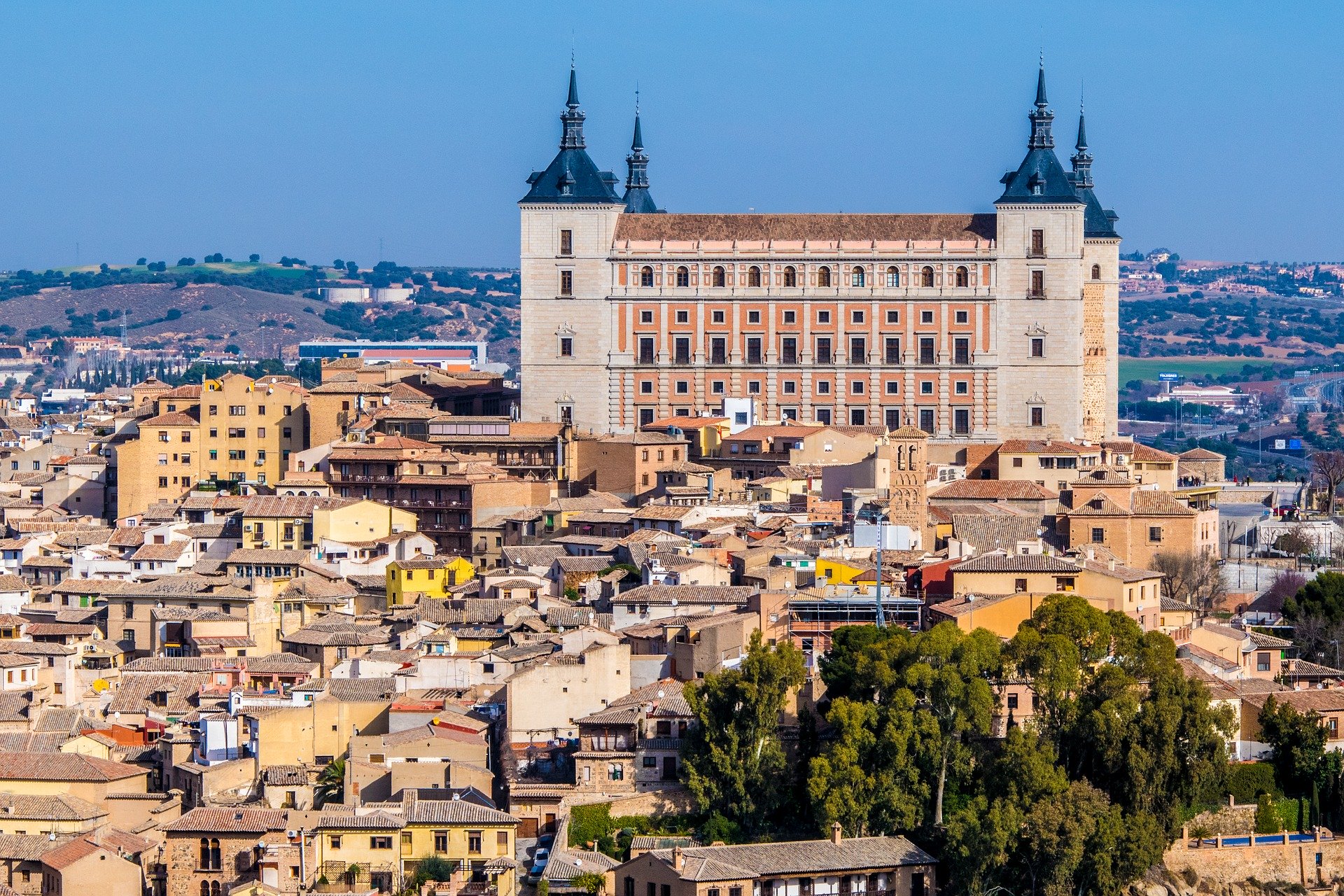
Standing on a hill overlooking the Tagus River in central Spain, Toledo’s rich history as a Roman settlement dates back to its establishment as Toletum in the 2nd century BCE. Situated at a key geographic crossroads, Toledo became an important administrative, military and economic centre in Roman Hispania. Its strategic location, easily defensible and connected by major Roman roads, allowed it to flourish as a hub of commerce and governance.
Roman Toledo was known for its well-planned urban layout, a hallmark of Roman city-building. While much of the Roman infrastructure is buried beneath the layers of later medieval and Renaissance architecture, significant remnants still hint at the city’s ancient past. Amongst these is the remarkable Roman circus, a vast arena built during the 1st century CE for chariot races and public spectacles. The circus, one of the largest in Roman Hispania, could accommodate tens of thousands of spectators and demonstrates the cultural importance of games and entertainment in the city’s social life.
Another enduring feature of Roman Toledo is its network of roads and bridges, which connected the city to the wider empire. The Puente de Alcántara, though rebuilt in later periods, retains elements of its Roman origins. This bridge, spanning the Tagus River, was vital for trade and military movements, ensuring Toledo’s role as a critical node in the Roman road system.
Toledo was also home to temples and public buildings typical of Roman urban centres. Although many of these have been lost to time or transformed during subsequent periods of history, archaeological finds, such as inscriptions and architectural fragments, offer glimpses of its grandeur. Excavations have revealed Roman baths, indicating the importance of communal bathing and hygiene in daily life. Additionally, scattered mosaics and artifacts, displayed in local museums, testify to the wealth and sophistication of the city’s Roman elite.
As an administrative centre, Toledo played a role in governing the central plains of Hispania. The city facilitated the collection of taxes, the administration of justice and the maintenance of Roman authority over the surrounding rural areas. Its prominence grew during the empire’s height and its prosperity was sustained by agriculture, trade and local industries.
The decline of the Roman Empire in the 4th and 5th centuries CE marked a period of transformation for Toledo. Like much of Hispania, the city suffered from invasions by Germanic tribes, including the Visigoths, who would later establish Toledo as their capital in the early medieval period. This transition marked the beginning of Toledo’s evolution into one of Spain’s most historically layered cities, blending Roman, Visigothic, Islamic and Christian influences over the centuries.
Today, Toledo’s Roman legacy is overshadowed by its later medieval and Renaissance landmarks, yet it remains a vital chapter in the city’s long history. Visitors can explore remnants of its Roman circus, walk along ancient roads and imagine the bustling life of Toletum during the height of the Roman Empire. The city’s enduring appeal lies in its ability to weave together the threads of its Roman past with the cultural richness of subsequent eras, making it a must-visit destination for those interested in Spain’s layered history.
Lugo (Lucus Augusti)
Situated in the north-western region of Galicia, Lugo is a city whose origins trace back to the Roman era, when it was founded as Lucus Augusti in 13 BCE. Established under the orders of Emperor Augustus, Lugo served as an administrative and military centre in the province of Hispania Tarraconensis. Today, it is best known for its extraordinarily well-preserved Roman walls, a UNESCO World Heritage Site and one of the most remarkable examples of Roman military architecture in Spain.
The Roman walls of Lugo, constructed in the late 3rd century CE, were designed to protect the city during a period of heightened insecurity as the Roman Empire faced external threats and internal instability. Encircling the old city, the walls stretch for over two kilometres and are punctuated by 85 towers and 10 gates. These gates, such as the ‘Porta Miñá’ and the ‘Porta de Santiago’, provide access to the historic core of Lugo whilst showcasing the architectural ingenuity of their designers.
Built using a combination of slate and granite, the walls are notable for their immense durability and engineering precision. They stand up to 10 metres in height and 7 metres in thickness, making them a formidable defensive structure. What sets the walls of Lugo apart is their exceptional state of preservation; the entire perimeter remains intact, allowing visitors to walk along the top of the walls and experience the city as it might have appeared during the Roman era.
The walls were not just a defensive measure but also a symbol of Roman power and urban sophistication. Within the fortified area, the city of Lucus Augusti flourished with the construction of public baths, a forum and temples, including one dedicated to the Roman god Jupiter. Whilst many of these structures have faded over time, ongoing archaeological efforts continue to reveal insights into the daily lives of its inhabitants. In addition to the walls, Lugo boasts other remnants of its Roman heritage, such as the bridge over the Miño River, which remains in use today.
Numancia (Numantia)
Perched on a hill near the modern city of Soria in north-central Spain, Numancia occupies a unique place in the country’s Roman history. This ancient Celtiberian settlement became famous for its steadfast resistance against Roman conquest, symbolizing the fierce independence and resilience of the Iberian tribes. Numancia’s story is one of defiance, sacrifice and eventual assimilation, offering profound insights into the dynamics of Roman imperialism and local resistance.
The significance of Numancia emerges in the context of Rome’s long and arduous efforts to subdue Hispania. Following the Punic Wars and Rome’s initial forays into the Iberian Peninsula, the Celtiberian tribes posed a formidable challenge to Roman expansion. Numancia, strategically located on a plateau with natural defenses, became the epicenter of resistance during the Celtiberian Wars (153–133 BCE).

The most famous episode in Numancia’s history unfolded during the siege led by the Roman general Scipio Aemilianus in 134–133 BCE. After years of failed attempts to conquer the city, Scipio employed a brutal strategy of encirclement and starvation. Building a ring of fortifications around Numancia, he cut off all supplies and escape routes. The siege, which lasted for over a year, tested the resilience of Numancia’s inhabitants to their limits.
Rather than surrender, the people of Numancia chose death over subjugation. Historical accounts, such as those by Roman historians Appian and Plutarch, describe how many of the city’s defenders took their own lives rather than fall into Roman hands. This act of collective defiance turned Numancia into a potent symbol of freedom and resistance, celebrated in Spanish history and literature for centuries.
After its fall in 133 BCE, Numancia was razed and its survivors were enslaved or relocated. The site was later partially rebuilt as a Roman settlement, though it never regained its former prominence. Archaeological remains at Numancia today include evidence of both its Celtiberian origins and its Roman-era occupation, offering a layered perspective on its historical trajectory.
Visitors to Numancia can explore the ruins of the ancient settlement, including its defensive walls, residential structures and remnants of public spaces. The layout of the Celtiberian town, with its narrow, irregular streets, contrasts with the organized grid patterns typical of Roman cities, reflecting the cultural differences between the two civilizations. Excavations have also uncovered artifacts such as pottery, weapons and coins, shedding light on the daily lives of Numancia’s inhabitants.
Numancia’s legacy extends far beyond its physical remains. The site has become a symbol of resistance to oppression, celebrated in Spanish art, literature and national identity. Works like Miguel de Cervantes’ play La Numancia immortalize the city’s heroic stand, ensuring its place in the collective memory of Spain.
Other Roman Sites in Spain
Carmona (Carmo)
A short distance from Itálica lies Carmona, another site rich with Roman heritage. Known for its impressive necropolis and amphitheatre, Carmona offers a complementary perspective on Roman life in the region. The necropolis, containing the remains of over a thousand Roman families, provides valuable insights into burial practices and social hierarchies. Amongst its most striking features is a tomb the size of a nobleman’s villa, reflecting the wealth and status of its occupants.
Sagunto (Saguntum)
Located near Valencia, Sagunto played a pivotal role in the Second Punic War as the city whose siege by Hannibal sparked the conflict. Today, visitors can explore its Roman theatre, one of the oldest in Spain and the remains of the forum and city walls.
Astorga (Asturica Augusta)
Situated in the province of León, Astorga was an important Roman city along the Via de la Plata. It features remnants of Roman baths, a forum and city walls. It was also a hub for gold mining and military logistics.
León (Legio VII Gemina)
León was originally a Roman military camp established by the ‘Legio VII Gemina’. The city retains sections of Roman walls and ruins, reflecting its strategic importance during the Roman Empire.
Clunia Sulpicia
In the province of Burgos, Clunia was a significant Roman city in northern Spain. Its well-preserved theatre, forum, baths and mosaics make it an exceptional site for exploring the urban and cultural life of Roman Spain.
Málaga (Malaca)
While primarily known for its Moorish heritage, Málaga (‘Malaca’ in Roman times) has Roman ruins, including a theatre at the foot of the Alcazaba, showcasing the blending of Roman and later Islamic influences.


Hi there, I think you should not overlook the city of Lugo in this article. It has one of the most well-preserved roman walls in the world (it was declared a Unesco World Heritage site), among other remains from that age:
http://en.wikipedia.org/wiki/Roman_Walls_of_Lugo
Thanks Dan
You’re absolutely right. Thanks for the recommendation.
Best Regards
Gerry
Looked up a picture of Lugo. It was so beautiful and well-preserved that I started crying. Thank you, Dan.
Alicante has a lot to offer and a great museum
I absolutely loved this article. I used it for a project in one of my classes and really appreciated the work that went into creating it. The information was all thorough and valid. Thank you again
Sincerely,
Jeb
I have a soft spot for Cartagena – think Hannibal . Have lived around there on/off for over 30 years : I am English. Be careful though – it has always been “rough ” – probably best to keep to the town centre , unless you speak fluent Spanish and are streetwise !
Loved the article though so thanx !
Gracias por la informacion! Estoy estudiando el libro de Romans en la Biblia…