
Spain has long suffered from typecasting. To many Britons, it represents little more than package holidays, crowded beaches and the relentless July-August tourist crush along the Mediterranean coast. This reductive view does a profound disservice to one of Europe’s most culturally rich and geographically diverse nations.
The reality is that Spain transforms entirely during the winter months, revealing an authenticity that the summer season obscures. The climate remains remarkably temperate – particularly in the southern regions – without the oppressive heat that can make summer sightseeing an ordeal. Overcast skies and coastal breezes create ideal conditions for exploration, whilst the absence of tourist hordes means you’ll experience Spain as the Spanish do: unhurried, genuine and infinitely more rewarding.

Whether you’re seeking to sidestep a conventional British Christmas, pursue winter sports in unexpected locations, immerse yourself in centuries of cultural heritage, or simply enjoy Mediterranean warmth whilst your neighbours scrape ice from their windscreens, there are many winter holiday destinations in Spain which offer experiences that rival – and often surpass – its summer attractions.
Understanding Spain’s Winter Climate
Before we explore specific destinations, it’s worth understanding Spain’s remarkable climatic diversity during winter months. Unlike Britain’s uniformly grey winter, Spain offers distinct microclimates that cater to vastly different preferences.
The Mediterranean coast (Costa del Sol, Valencia, Catalonia) maintains daytime temperatures between 15-18°C, with abundant sunshine and minimal rainfall. The Canary Islands hover around 20-22°C year-round, making them Europe’s true winter sun destination. Inland cities (Madrid, Toledo, Córdoba) experience cooler but dry winters, typically 8-15°C, whilst northern regions (Bilbao, Santiago de Compostela) see temperatures of 10-14°C with higher precipitation – still considerably milder than northern Europe.
Most remarkably, mountain regions like the Sierra Nevada offer genuine winter sports conditions whilst remaining less than two hours from beaches where you might comfortably have lunch outdoors. This geographical compression of climates is uniquely Spanish.
Granada & Sierra Nevada: Alpine Majesty Meets Moorish Splendour
Granada presents one of Europe’s most compelling winter holiday possibility: the opportunity to ski in the morning and stroll through one of the world’s most exquisite palaces by afternoon. Alternatively, you can drive down to the Costa Tropical for a seaside lunch and a dip in the sea.
The Alhambra: Architecture as Poetry
The Alhambra palace complex requires little introduction, yet winter visits offer distinct advantages. Summer crowds can see visitor numbers exceed 8,000 daily; winter reduces this considerably, allowing proper contemplation of the intricate Islamic geometric patterns, the play of light through carved screens, and the sophisticated water engineering that creates the palace’s famous acoustic effects. The cooler temperatures also make the extensive walking involved far more pleasant.
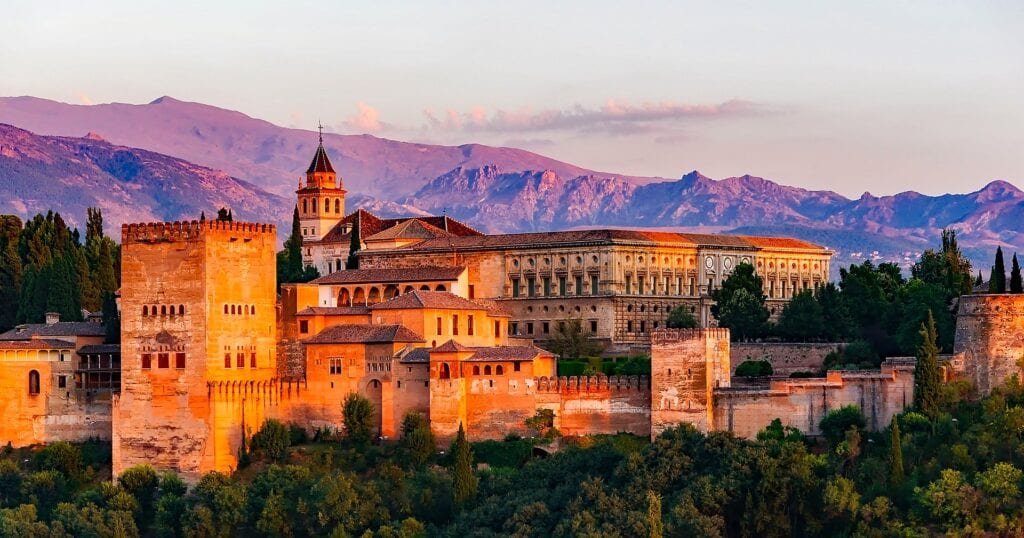
Book your Alhambra tickets well in advance – the palace limits daily visitors regardless of season. Consider staying in the Albayzin quarter, the old Moorish neighbourhood whose narrow, climbing streets and white-washed houses offer stunning views of the Alhambra, particularly at sunset when the palace glows golden against the snow-capped Sierra Nevada behind.
Sierra Nevada: Unexpected Alpine Adventures
The Sierra Nevada ski resort, at 2,100-3,300 metres, is Spain’s premier winter sports destination and one of Europe’s southernmost ski areas. The surreal experience of skiing beneath reliably sunny skies, with views extending to North Africa on clear days, makes this far more memorable than conventional Alpine resorts.
The season typically runs December through April, with the resort offering 110 kilometres of pistes. Advanced skiers should note that whilst the skiing is competent, it doesn’t rival the French or Swiss Alps for challenge or extent. However, the combination of excellent snow conditions, guaranteed sunshine, and proximity to Granada’s cultural offerings creates a holiday experience that purely ski-focused resorts cannot match.
Practical considerations: Granada lies 140km from Málaga airport (roughly 90 minutes by hire car). Winter accommodation rates drop by 40-50% compared to spring peak season. The city is compact and walkable, though the climb to Albayzin requires reasonable fitness. Allow a minimum of three full days to properly experience both Granada and the mountains.
Madrid: Capital Sophistication Meets Festive Tradition
Madrid in winter reveals why it functions as Spain’s political and cultural heart. The city’s elevation (650 metres) means winters are crisp and dry rather than mild, but this climate lends itself perfectly to the season’s indoor cultural pursuits and outdoor festive markets.
Christmas Markets & New Year Celebrations
The Plaza Mayor Christmas market transforms the city’s historic centre throughout December, specialising in traditional nativity scene figurines (belenismo is taken seriously in Spain) alongside artisan crafts and seasonal delicacies. Unlike the Germanic Christmas markets that have become ubiquitous across Britain, Madrid’s markets retain distinctly Spanish character – expect jamón stalls, churros con chocolate and turrón rather than bratwurst and glühwein.

New Year’s Eve in Puerta del Sol is Madrid’s signature celebration, where crowds gather to eat twelve grapes at the twelve bells of midnight—one for each month of good luck ahead. This tradition, broadcast nationally, represents Spanish festivity at its most exuberant and inclusive.
World-Class Museums in Ideal Conditions
Madrid’s “Golden Triangle of Art“ – the Prado, Reina Sofía, and Thyssen-Bornemisza museums – houses one of the world’s finest concentrations of masterworks. Winter visits mean shorter queues and comfortable temperatures for the extensive walking these vast collections require. Velázquez’s Las Meninas at the Prado and Picasso’s Guernica at the Reina Sofía are worth the trip alone.
Culinary Excellence
Madrid’s gastronomic scene has matured remarkably in recent decades. Beyond the famous Sobrino de Botín (certified by Guinness as the world’s oldest restaurant, operating since 1725), the city offers everything from Michelin-starred innovation to traditional tabernas serving perfect cocido madrileño – the hearty chickpea stew that epitomises winter comfort food.
Insider tip: Book a table at Casa Lucio for their legendary huevos rotos (broken eggs over chips), a dish so beloved that Spanish royalty and visiting dignitaries make pilgrimages to this unassuming taberna. Reservations are essential, even in winter.
Costa del Sol: Reassessing Spain’s ‘Retirement Coast’
The Costa del Sol suffers from perhaps the worst reputational damage of any Spanish region – associated with package tourism, expatriate enclaves and cultural superficiality. This perception, whilst not entirely unearned in certain pockets, overlooks the genuine appeal of a 150-kilometre coastline blessed with some of Europe’s most reliable winter sunshine.

Winter transforms the Costa del Sol into something approaching its potential. Temperatures regularly reach 17-18°C – genuinely pleasant for outdoor activities – whilst the surrounding mountains block cold northerly winds. The omnipresent British and German tourists largely vanish, revealing a coastline where Spanish families still holiday and local culture persists.
Beyond the Stereotypes
Marbella’s old town retains considerable charm despite the development surrounding it. The whitewashed Plaza de los Naranjos, scented with orange blossom even in winter, hosts excellent tapas bars largely patronised by locals during the off-season. Ronda, an hour inland, offers one of Spain’s most dramatic townscapes – buildings perched atop a 120-metre gorge – alongside the country’s oldest bullring and excellent wine production in the surrounding Serranía.

Málaga city has undergone remarkable gentrification, transforming from a gritty port into a genuinely sophisticated cultural destination. The Picasso Museum, Pompidou Centre outpost and renovated old quarter now rival Barcelona for urban appeal, whilst retaining far fewer tourists and more affordable prices.
Where to stay: Avoid Torremolinos and Benalmádena unless package tourism is precisely what you’re seeking. Instead, consider Nerja (retaining more Spanish character), Estepona (less developed, more authentic), or Málaga city itself for cultural depth.
Seville: Andalucían Soul in Perfect Climate
Seville in winter offers what may be Spain’s most perfect urban climate: reliably sunny, 16-18°C days and cool evenings ideal for the city’s legendary tapas culture. Summer sees temperatures regularly exceed 40°C, making sightseeing genuinely uncomfortable; winter reveals why Sevillanos famously reject central heating – it’s simply unnecessary.
Architectural Marvels
The Cathedral of Seville, the world’s largest Gothic cathedral, dominates the city physically and spiritually. Its Giralda tower (originally a minaret) offers panoramic views across terracotta rooftops. Adjacent Real Alcázar palace complex represents the pinnacle of Mudéjar architecture—a uniquely Spanish style blending Islamic and Christian elements. The gardens alone warrant hours of exploration.

Festivals & Traditions
The Three Kings Festival (5th January) sees Seville stage one of Spain’s most elaborate celebrations, with costumed parades and the distribution of gifts – traditionally more important than Christmas Day in Spanish culture. Winter also offers flamenco in more intimate venues, away from summer’s tourist-oriented tablao shows. Seek out peñas flamencas – private clubs where the art form remains pure and uncompromising.
Tapas culture: Seville perfected the art of bar-hopping (tapear). Start in Triana, cross the river to El Arenal, and finish in Barrio Santa Cruz. Order fino sherry, never wine and embrace the controlled chaos of crowded bars – this is Seville at its most authentic.
Barcelona: Catalonian Character Without the Crowds
Barcelona’s summer overcrowding has become genuinely problematic, with locals mounting anti-tourism protests in recent years. Winter offers an entirely different proposition: a chance to experience Gaudí’s architectural legacy, world-class museums and sophisticated urban culture without the crush that now defines peak season.
Modernisme Architecture
Winter is ideal for exploring Barcelona’s Modernisme masterpieces properly. The Sagrada Família, Casa Batlló, and Park Güell see significantly reduced queues, allowing proper appreciation of Gaudí’s extraordinary vision. Book early-morning time slots for the best light and fewest visitors.

Festive Traditions
The Fira de Santa Llúcia, Barcelona’s traditional Christmas market running throughout December, specialises in nativity scenes and handcrafted decorations rather than generic tourist tat. The adjacent Gothic Quarter comes alive with street musicians and impromptu performances.
Culinary Excellence
Barcelona’s restaurant scene rivals any European capital. Moments Restaurant at the Mandarin Oriental, and Disfrutar represent Catalan cuisine’s creative pinnacle, whilst traditional establishments like Cal Pep and Quimet y Quimet have stood the test of time.
Consider: Barcelona’s winter can be cool (10-15°C) and occasionally rainy. Pack layers and a decent waterproof. The city’s extensive metro system makes navigation simple, but the most atmospheric exploration happens on foot through neighbourhoods like El Born and Gràcia.
The Canary Islands: Europe’s True Winter Sun
When Britain’s weather turns genuinely grim, the Canary Islands offer the nearest approximation to guaranteed warmth without leaving European territory. Their location off Africa’s northwest coast creates a subtropical climate that maintains 20-22°C temperatures throughout winter.
Tenerife: Volcanic Grandeur
Mount Teide, Spain’s highest peak at 3,718 metres, dominates Tenerife’s interior. The surrounding national park, a UNESCO World Heritage site, offers otherworldly volcanic landscapes that feel distinctly extraterrestrial – NASA has used the area for Mars simulation training. Take the cable car to near-summit, but book well in advance as daily numbers are limited.

The island’s north (greener, cooler, more Spanish in character) contrasts sharply with the south (drier, sunnier, more tourist-developed). La Laguna, the island’s historic capital, offers colonial architecture and university-town atmosphere largely ignored by beach-focused tourists.
Lanzarote: Artistic Meets Volcanic
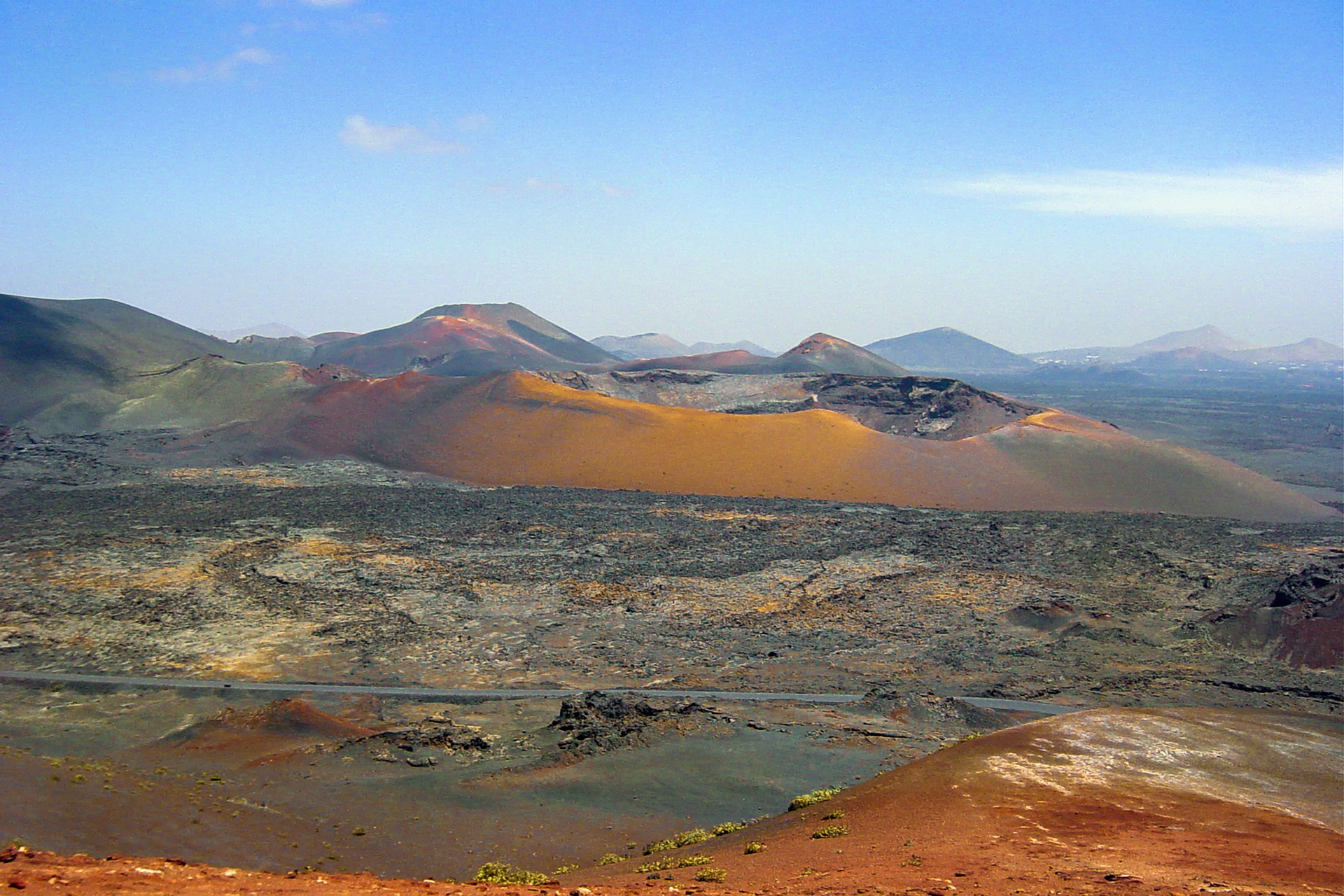
Timanfaya National Park’s volcanic badlands create landscapes of genuine drama—black and red lava fields stretching to turquoise Atlantic waters. Artist César Manrique’s influence pervades the island, his architectural interventions blending seamlessly with volcanic geography. Visit the Jameos del Agua and Mirador del Río for examples of this uniquely harmonious approach to development.

Gran Canaria & Fuerteventura
Gran Canaria offers the most geographic diversity, from sand dunes at Maspalomas to pine forests in the interior. Fuerteventura attracts windsurfers and kitesurfers to conditions that rival Hawaii, whilst offering the Canaries’ most extensive beaches and most developed surf culture.

Reality check: The Canaries attract significant winter tourism, so don’t expect solitude. However, the islands’ size means that quieter corners remain accessible to those willing to hire a car and explore beyond resort areas. The volcanic landscapes, in particular, see far fewer visitors than beaches.
Bilbao: Industrial Reinvention & Basque Pride
Bilbao represents one of Europe’s most successful urban regeneration stories – a former industrial port transformed into a cultural destination through architectural ambition and fierce Basque cultural identity. Winter temperatures hover around 12-14°C, cool but rarely unpleasant, with higher rainfall than southern Spain but far less than northern Britain.
Architectural Landmarks
Frank Gehry’s Guggenheim Museum, opened in 1997, catalysed Bilbao’s transformation. The building itself, clad in titanium and reflecting the Nervión River, arguably overshadows its collection—but the combination creates one of Europe’s essential modern architecture experiences. The surrounding riverside development continues this contemporary aesthetic.

The Bilbao Fine Arts Museum, often overlooked in the Guggenheim’s shadow, houses an excellent collection spanning medieval to contemporary work, including significant Basque artists whose work rarely travels internationally.
Pintxos Culture
Bilbao’s interpretation of tapas – called pintxos – has evolved into high art. The old quarter’s bars compete in culinary creativity, presenting miniature gastronomic compositions that rival formal restaurants for technique and flavour. Expect to pay €3-5 per pintxo—this isn’t cheap eating, but represents remarkable value for the quality delivered.
Essential experience: The pintxos crawl through Casco Viejo (old quarter). Start at Plaza Nueva around 19:00, hit Gure Toki, Víctor Montes, and La Viña del Ensanche, and prepare for creative excellence. Wash down with txakoli – the local slightly sparkling white wine.
Córdoba: Where Islamic Spain Endures
Córdoba once ranked among the world’s most important cities – capital of Islamic Spain and, in the 10th century, possibly the globe’s most populated urban centre. That glory has long faded, but extraordinary architectural remnants survive, creating one of Spain’s most historically significant destinations.
The Mezquita: Architectural Anomaly
The Mosque-Cathedral of Córdoba (Mezquita) represents one of the world’s most unusual religious buildings—a vast mosque with a Renaissance cathedral awkwardly inserted into its centre following the Christian reconquest. The result, architecturally contentious yet undeniably powerful, features 856 columns supporting horseshoe arches in alternating red and white stone. The effect, particularly in winter’s low-angle light, approaches the sublime.

Winter visits allow proper contemplation without summer’s overwhelming crowds. Arrive at opening (10:00) for the building at its most peaceful, when morning light streams through eastern windows.
The Jewish Quarter
Córdoba’s medieval Judería preserves the intricate street plan of its Jewish heritage. Whitewashed houses with flower-filled patios create intimate spaces that summer heat makes uncomfortable; winter allows leisurely exploration. The small synagogue (one of only three surviving in Spain) and Casa de Sefarad museum document the Spanish Jewish experience before the 1492 expulsion.
February timing: The Carnival of Cordoba in mid-February sees street theatre, music, and costumed groups parading through the old town—less internationally famous than Cádiz’s carnival but more accessible and equally exuberant. This marks winter’s traditional end in Andalusia.
Toledo: Imperial City of Three Cultures
Toledo, perched on a granite hill encircled by the Tagus River, served as Spain’s capital until 1561 and remains one of Europe’s most historically layered cities. Christian, Muslim, and Jewish communities coexisted here (if not always peacefully) for centuries, leaving architectural evidence of this confluence.
Architectural Heritage
The Cathedral of Toledo, among Spain’s finest Gothic structures, took 267 years to complete and houses works by El Greco, Goya and Velázquez. The Alcázar de Toledo is Toledo’s other most obvious attraction, perched on the city’s highest point. Over the centuries it served as a Roman palace, royal residence and military academy. The nearby Sinagoga del Tránsito preserves exquisite Mudéjar decoration, whilst the Mezquita del Cristo de la Luz—a tiny mosque converted to a church—demonstrates the architectural evolution following Christian reconquest.

El Greco’s Legacy
The Greek painter Doménikos Theotokópoulos – known as El Greco – spent most of his career in Toledo, and the city preserves several in-situ works. The Museo del Greco and the remarkable Burial of the Count of Orgaz in the Iglesia de Santo Tomé represent Spanish Mannerism at its most distinctive.
Day Trip or Destination?
Toledo lies only 70km from Madrid, making day trips popular and straightforward (30 minutes by high-speed train). However, the city reveals itself most fully to those who stay overnight. When day-trippers depart by late afternoon, Toledo’s medieval streets empty, restaurants fill with locals, and the city’s essential character emerges.
Winter considerations: Toledo’s elevation means cooler temperatures (8-13°C) than coastal regions. The city’s hills require good walking shoes and reasonable fitness. The old town is compact enough to explore entirely on foot, and parking outside the walls is essential as most streets are pedestrianised or too narrow for cars.
Murcia: Spain’s Overlooked Southeast
Murcia—both the region and its capital city—remains genuinely off most international tourists’ radar. This seventh-largest Spanish city functions primarily as a university town and agricultural centre, offering authentic urban Spanish life without tourist infrastructure or pretension.
Baroque Excellence
The Cathedral of Murcia presents one of Spain’s finest Baroque façades—an exuberant explosion of carved stone added to a Gothic structure. The interior mixes Gothic, Renaissance, and Baroque elements with surprising coherence. Climb the 95-metre bell tower for views across terracotta roofs to the surrounding huerta (market gardens) and mountains beyond.

University Town Culture
Murcia’s large student population creates vibrant nightlife and café culture often absent in more tourist-focused cities. The old quarter around Plaza de las Flores offers excellent tapas bars and restaurants at prices that seem anachronistic to anyone familiar with Barcelona or San Sebastián. This is Spain untouched by tourism’s economic distortions.
Proximity to Coast & Mountains
Murcia city lies 50km inland, but the Costa Cálida coastline offers uncrowded beaches and the remarkable Mar Menor—Europe’s largest saltwater lagoon, ringed by beaches and known for exceptionally calm, warm waters ideal for families. The inland mountains provide hiking and climbing opportunities rarely associated with Spain’s southeast.
Why visit? Honestly, Murcia won’t top many people’s Spanish wish lists. However, for travellers seeking authentic contemporary Spanish life away from tourist circuits, this offers precisely that—a functioning modern city that happens to contain architectural treasures and excellent food, without the self-consciousness that tourism brings.
Winter Holiday Destinations in Spain: Practical Planning
When to Visit
December offers Christmas markets and festivities but shorter days and potential crowds around the holidays. January-February sees the quietest periods, lowest prices, and most authentic local atmosphere—though also the coolest temperatures. Late February-March brings warming weather, longer days, and carnival season, but prices begin rising as Easter approaches.
Transport Considerations
Spain’s high-speed rail network (AVE) connects major cities efficiently. Madrid serves as the hub, with services to Barcelona (2.5 hours), Seville (2.5 hours), Málaga (2.5 hours), and Valencia (1.5 hours). This makes multi-city itineraries highly practical without flying.
Hire cars offer freedom for exploring beyond cities, particularly in Andalusia where distances are manageable and roads excellent. Winter sees far less traffic than summer, making driving more pleasant. Be aware that mountain areas may require snow chains in January-February.
Accommodation Strategy
Winter rates drop 40-60% compared to peak summer season, making luxury hotels surprisingly affordable. Consider paradores—state-owned historic buildings converted to hotels—for uniquely Spanish accommodation in castles, monasteries, and palaces. Book directly for best rates and flexibility.
Cultural Considerations
Spanish meal times remain later than British norms even in winter. Lunch runs 14:00-16:00, dinner 21:00-23:00. Most museums close Mondays. Siestas persist mainly in smaller towns, with shops closing 14:00-17:00. Sunday opening varies by region—major tourist cities maintain services, smaller towns largely close.
Language
English penetration varies dramatically. Barcelona, Madrid, and tourist-heavy coastal areas offer widespread English. Smaller cities and rural areas see far less. Basic Spanish courtesy phrases (buenos días, por favor, gracias) smooth interactions considerably. Making the effort, however imperfectly, is invariably appreciated.
Why Spain Deserves Winter Attention
Spain’s summer overcrowding has become genuinely problematic in recent years. Venice-style “overtourism” now affects Barcelona, the Balearic Islands, and sections of the Andalusian coast. Residents face reduced quality of life, infrastructure strains, and cultural dilution. Winter travel addresses these concerns directly—you’ll encounter Spain functioning primarily for Spaniards, with tourism a welcome supplement rather than dominant industry.
The climate advantage becomes obvious when your British colleagues endure grey, damp January whilst you’re dining outdoors in Seville sunshine. Even “cooler” Spanish winter destinations maintain temperatures and daylight hours that Britain won’t see until April.
Perhaps most importantly, winter travel reveals Spain’s genuine character. The cultural depth, architectural heritage, culinary sophistication, and regional diversity that make Spain genuinely fascinating—rather than merely convenient—emerge when the beach-focused masses aren’t obscuring them.
Whether you’re drawn to mountain landscapes, medieval cities, world-class museums, winter sports, culinary excellence, or simply reliable sunshine when Britain offers none, Spain’s winter destinations deliver experiences that transcend the package holiday stereotypes. The country deserves better than its summer reputation suggests. Visit in winter, and you’ll discover why discerning travellers have been quietly enjoying Spain’s secret season for years.




Reading through I must admit that our choice for the winter period would without a doubt be the Canary Islands and Tenerife {Puerto de la Cruz} our number one as it not only gives fair weather but also everything is open and running.
While the mainland does have a lot to offer personally I find that it is too cool for the deep winter months .
Hi Lawrence
Landing in the Canary Islands after a dismal few months up in northern Europe really is a treat. Last time we did it was to Puerto Mogan in Gran Canaria which is a lovely spot.
Thanks for your comment.
Gerry
Hi Gerry
We go to Tenerife (Playa de las Americas) every Christmas we don’t see rain very often and its quite hot.
Thanks Linda … one of the great winter hotspots 🙂
I guess everything is relative. We have just booked a 2 month stay in Cadiz for February and March. It may not be the heat of the Canaries but as we live in Canada it seems warm at 15 degrees C !
We have stayed here before and found that it has lots to offer culturally and the surrounding beaches provide great daily walks. The city is easy to navigate without a car and when we do hire one, travel to Seville, Cordoba, Jerez, Zahara as well as the Algarve is easy. Can’t wait to be back.
Hi Jan
Fabulous choice. The whole Cadiz region is fascinating and I can think of fewer place which are more attractive to spend some of the winter.
All the Best
Gerry
Good choices. Skiing in the Sierra Nevada or visiting any of Spain’s top cities are great in the winter. It’s a good time to visit the cities as they are not as crowded as they are in the summer.
I would also include Benidorm which is very popular in the winter with older holidaymakers. It has it’s own micro climate so is still warm and there is so much to do. The beaches are beautiful. The old town with its narrow streets and traditional tapas bars is lovely too. From Benidorm you can take the little train up the coast to Denia or head south to Alicante.
Thanks Sarah … Benidorm is a great addition to the list.
We love Nerja in the Costa del Sol for the winter! So much sunshine and such a pretty town.
For a first time trip to Spain I still say Madrid, Seville and Granada is the best introduction. Easter processions are intense in Sevilla but it will be an unforgettable experience, quite moving even if you’re not Catholic.
All the mentioned cities are good choices, but as galician i must say that Santiago de Compostela has a place in that list. For sure, we don’t have the Canary Islands climate, but we do have a lot to offer: history, gastronomy and one of the most beautiful old cities in Spain.
I would like to spend 30 to 45 days Feb & March. Would like to stay in one place, howevertravel to others. What do some of our readers recommend .