
San Sebastián has been pulling off this remarkable balancing act for over a century – maintaining Belle Époque elegance whilst remaining genuinely Basque, functioning as a sophisticated resort town without losing its soul, achieving world-class culinary status without becoming insufferable about it. The city sits on Spain’s northern coast just 20 km from the French border, blessed with what many consider Europe’s finest urban beach and a concentration of Michelin stars that would make cities ten times its size envious.
I’ve been stopping off in San Sebastián since the early ’90s, back when it was known primarily to Spanish holidaymakers and French weekenders rather than the international food pilgrims who descend now. What’s remarkable is how the city’s absorbed that attention without fundamentally changing character. Yes, there are more tourists, property prices have climbed and the pintxos bars can be rammed in peak season. But San Sebastián hasn’t become a performance of itself the way some destinations do once they hit global recognition.
The setting helps enormously – La Concha Bay is legitimately one of those views that stops you mid-conversation. That perfect crescent of golden sand, the emerald waters, Santa Clara Island sitting in the bay like a full stop, the green hills rising on either side. Spanish royalty chose this as their summer retreat in the 19th century for good reason, and their Belle Époque legacy of grand hotels and elegant promenades remains intact.

But what makes San Sebastián work beyond the obvious beauty is how seriously it takes food whilst maintaining accessibility. You can eat at Arzak or Akelarre if you’ve booked months ahead and brought your flexible spending account. Or you can wander the Parte Vieja hopping between pintxos bars, spending affordable amounts on exceptional food and perfectly decent wine whilst standing elbow-to-elbow with locals who are doing exactly the same thing. That democratic approach to gastronomy – excellence matters but pretension doesn’t – feels fundamentally Basque.
The city’s compact enough to walk everywhere significant, the beaches are genuinely swimmable and the Basque identity remains fierce without being aggressive. When it comes to things to do in San Sebastián, you’re looking at a city that’s earned its reputation without losing what made it appealing in the first place.
Best Things to Do in San Sebastián
Thirteen attractions for a city this size might seem excessive, but San Sebastián justifies the list through sheer variety – world-class beaches, serious gastronomy, cultural institutions, natural viewpoints and proper Basque traditions all compressed into a walkable urban area. Some are universally appealing regardless of your interests. Others depend on whether you’re here for beaches, food, culture or simply absorbing the atmosphere.
La Concha Beach
Playa de la Concha regularly appears on those “world’s best urban beaches” lists, and having seen it across different seasons and decades, the acclaim is entirely justified. That crescent shape creates a sheltered bay with calm waters ideal for swimming – genuinely swimmable, not just theoretically possible. The golden sand is fine and extensive, the promenade elegant with its Belle Époque railings and lamp posts, and the view across to Santa Clara Island provides that postcard perspective everyone photographs.
What makes La Concha exceptional beyond obvious beauty is its accessibility and functionality. This isn’t some remote paradise requiring complicated logistics – you walk from the old town in ten minutes. The beach infrastructure works properly – showers, changing facilities, lifeguards in season, beach clubs if you want that level of service. Yet it never feels overdeveloped or commercialised the way some urban beaches become.
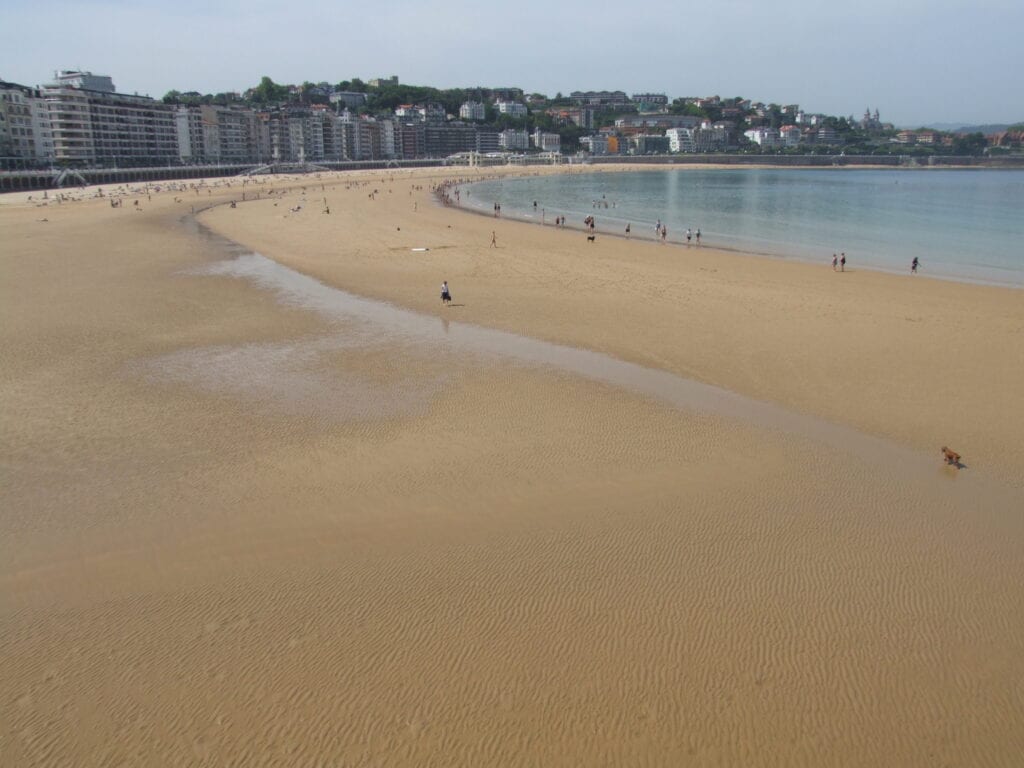
The promenade walk from one end to the other takes perhaps 45 minutes at a stroll, offering constantly shifting perspectives on the bay, the city and the surrounding hills. Early morning before crowds arrive is particularly lovely, though sunset draws everyone for good reason – watching the sun drop behind Monte Igueldo whilst the bay glows golden is reliably spectacular.
Summer sees the beach absolutely packed – locals, Spanish holidaymakers, international tourists all claiming their patches of sand. If you’re after tranquillity, visit in spring or autumn when the weather’s often still swimmable but the crowds have thinned. Winter brings dramatic wave displays when Atlantic storms roll in, the beach empty except for hardy joggers and dog walkers.
The Old Town (Parte Vieja)
San Sebastián’s Parte Vieja is where the city’s social life concentrates – narrow streets packed with bars, restaurants and shops creating this perpetual buzz that intensifies as evening arrives. This is pintxos territory, where the ritual of hopping between bars sampling small bites constitutes both meal and entertainment.
The architectural legacy is 19th century – the old town was almost entirely destroyed by fire during the Peninsular War in 1813, then rebuilt in a grid pattern that’s unusual for Spanish old quarters. The Basque Baroque Basilica of Santa María del Coro dominates Plaza de la Constitución, whilst San Vicente Church represents the few medieval survivors, dating from the 16th century.
But honestly, you’re not here for architectural study – you’re here for the atmosphere and the food. The bars compete fiercely, displays of pintxos covering counters in increasingly creative arrangements. The ritual involves ordering a drink (txakoli, beer, wine), pointing at pintxos that look appealing, eating standing up whilst chatting, paying as you go based on toothpick count, then moving to the next bar. You’re not trying to fill up at one place – the point is variety and movement.

Quality varies dramatically. Some bars are genuine culinary destinations where chefs create miniature masterpieces. Others rely on volume and location. The difference becomes obvious once you’ve tried a few. Don’t be afraid to abandon underwhelming bars quickly – the density means better options are literally next door.
The Parte Vieja transforms completely between day and night. Mornings it’s locals buying groceries and elderly residents going about their business. Afternoons are relatively quiet. Then early evening the bars start filling, and by 9pm it’s absolutely heaving – tourists mixing with locals, groups spilling onto streets, that particular Spanish talent for making noise and crowding feel convivial rather than chaotic in full effect.
Monte Urgull
Rising directly behind the old town, Monte Urgull provides green escape and panoramic perspectives without requiring serious hiking. The paths winding up through trees are well-maintained, offering regular viewpoints as you climb. At the summit sits Castillo de la Mota, the fortress that protected San Sebastián for centuries, and the imposing Sacred Heart statue that’s visible across the city.
The climb takes 20-30 minutes from the old town depending on pace and how often you stop for views (frequently, if you’re sensible). The paths are shaded, which matters in summer heat, and the elevation gain is moderate rather than challenging. Families manage it comfortably, though the cobbled sections and steps might pose issues for those with mobility limitations.

What strikes you from various viewpoints is how San Sebastián’s geography shaped its character – that protected bay, the strategic position, the way the city fits into the landscape rather than dominating it. The Castillo houses a small history museum tracing San Sebastián’s evolution, though honestly the views matter more than the exhibits.
The summit can get crowded on summer weekends when everyone has the same idea about escaping beach crowds. Weekday mornings or late afternoons offer more peaceful experiences. Come sunset the light is extraordinary, though you’ll share the moment with others who’ve figured out the timing.
Descending via different paths reveals different perspectives – some routes emerge near the aquarium, others deposit you back into the Parte Vieja from unexpected angles. Getting slightly lost is part of the experience and impossible to sustain for long given the hill’s modest size.
Monte Igueldo Funicular
For even more dramatic views, Monte Igueldo at the western end of La Concha Bay offers the classic postcard perspective. The vintage funicular dating from 1912 is half the experience – creaking its way up the hill in what feels distinctly pre-health-and-safety-regulation fashion. At the summit, the bay unfolds below in that perfect crescent, the city spread out, the surrounding coastline extending towards Bilbao.
The small amusement park at the top retains this nostalgic quality – old-fashioned rides, basic attractions, the sort of place that wouldn’t survive modern expectations anywhere else but works perfectly here because it’s not trying to compete with contemporary theme parks. Kids enjoy it for the novelty, adults appreciate the retro charm, and the location transforms it from generic to memorable.
Sunset from Monte Igueldo is spectacular but also crowded – everyone knows the timing. Consider late afternoon or morning visits for better light and fewer people blocking the viewpoints. The contrast between Monte Igueldo’s developed summit (funicular, amusement park, hotel) and Monte Urgull’s wilder character reflects how different eras approached the same desire for elevated perspectives.
The walk down takes 30-40 minutes through residential areas, offering glimpses of how locals live away from tourist concentrations. Or take the funicular both ways if your knees or schedule don’t accommodate the descent.
San Telmo Museoa
San Telmo represents San Sebastián’s most important cultural institution, dedicated to Basque society, history and identity. The building itself combines a 16th-century convent with a striking contemporary extension – that juxtaposition of old and new architecture reflecting how the Basque Country approaches its heritage generally.
The permanent exhibitions trace Basque history from prehistoric settlements through medieval periods, industrialisation and into contemporary challenges around identity, language and culture. It’s unapologetically focused on the Basque experience rather than attempting broader Spanish narratives, which provides valuable context for understanding the region’s distinctive character and the political complexities you’ll encounter if you spend any time here.
Temporary exhibitions often explore contemporary art or specific aspects of Basque culture. Quality varies – some are genuinely engaging, others feel like they’re filling space. Check what’s on before visiting to see if it aligns with your interests.
The museum doesn’t get overwhelming tourist crowds, which means you can actually engage with exhibits rather than shuffling through in queues. English information is available but not comprehensive – some exhibitions assume Spanish or Basque language ability, which can frustrate non-speakers.
Allocate 90 minutes to two hours if you’re genuinely interested. If you’re just checking boxes, 45 minutes covers highlights. The museum café has decent coffee and overlooks the cloister, making it a pleasant break between old town wandering and beach time.
San Sebastián Aquarium
Located near the harbour, the Aquarium combines marine biology with maritime history – San Sebastián’s fishing heritage and the Bay of Biscay’s ecosystem explored through tanks, exhibits and a genuinely impressive oceanarium with walk-through tunnel.
The highlight is that ocean tank where you walk beneath sharks, rays and schools of fish in glass tunnel that creates surprisingly immersive experience. It’s not competing with massive modern aquariums in scale but the quality is high and the maritime history context adds depth beyond just displaying sea creatures.
For families it works brilliantly – kids engage with the touch pools and the tunnel experience, whilst adults appreciate the historical exhibits about Basque whaling and fishing traditions. The location near the harbour means you can combine it with watching actual fishing boats and connecting the museum content to the working port outside.
It’s not going to occupy an entire day unless you’re marine biology enthusiasts or have very young children who want to revisit favourite sections repeatedly. Budget 60-90 minutes, longer if the kids are captivated.
Real Sociedad Stadium Tour
Football enthusiasts visiting San Sebastián should not miss the opportunity to take a stadium tour of Real Sociedad’s Reale Arena (previously called Anoeta). This comprehensive stadium tour offers an insight into this modern sporting venue and the club’s rich history. Visitors can walk in the footsteps of players, from the dressing rooms through the tunnel and onto the pitch. The fascinating tour provides football fans with an understanding of Real Sociedad’s place in Basque society and Spanish football as a whole.

Pintxos Culture and Gastronomy
San Sebastián’s pintxos culture operates democratically – anyone can participate regardless of budget, the ritual welcomes newcomers and locals equally, and excellence is the standard rather than the exception. Those small bites displayed across bar counters represent serious culinary ambition compressed into a few ingredients and a piece of bread.
The classic pintxos remain wonderful – gilda (anchovy, olive, chilli on a skewer), bacalao al pil-pil (cod with garlic emulsion), txuleta (thick-cut Basque steak), various seafood preparations. But innovation is constant – chefs experimenting with techniques and presentations, creating miniature tasting menu experiences for a few euros each.

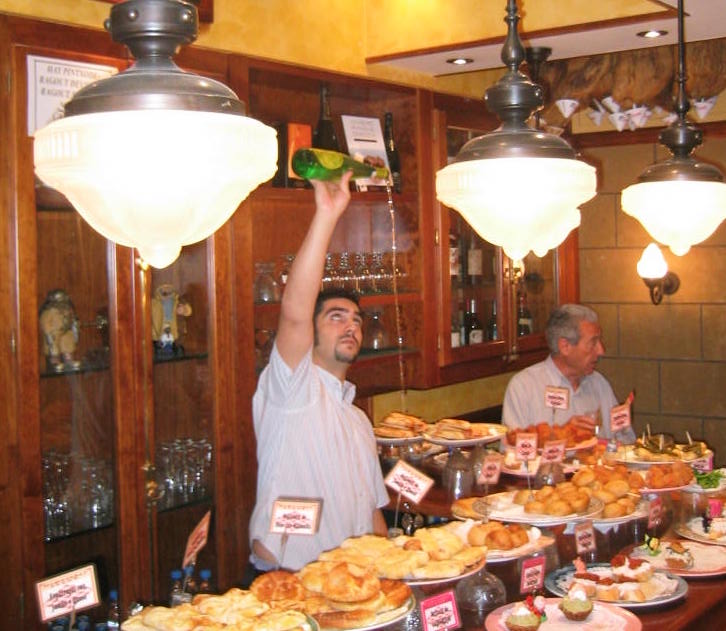


The bars worth seeking out include those in the Parte Vieja and the Gros neighbourhood. Ask locals for recommendations rather than relying on guidebooks – pintxos quality shifts as chefs move, standards change and new places emerge. What was exceptional three years ago might be coasting on reputation now, whilst some recently opened bar could be producing the best work in the city.
Txakoli – the slightly sparkling Basque white wine – is the traditional accompaniment, poured from height to aerate it. The wine’s light, slightly acidic profile cuts through rich food beautifully. Beer and vermouth are also common, whilst ordering cocktails in pintxos bars marks you as someone who doesn’t understand the context.
The ritual involves moving between bars rather than camping at one place all evening. You’re not trying to fill up – you’re sampling, comparing, experiencing variety. That mobility is central to the social function – you encounter different crowds, different atmospheres, different culinary approaches across an evening.
Michelin-Starred Dining
Beyond pintxos bars, San Sebastián boasts a concentration of Michelin stars that’s extraordinary for a city of 190,000 people. Arzak, run by the Arzak family since 1897 and transformed by Juan Mari Arzak into nueva cocina vasca (new Basque cuisine) pioneering, remains at the forefront. His daughter Elena continues that legacy, maintaining three Michelin stars through work that balances tradition and innovation.
Akelarre, perched on cliffs overlooking the Bay of Biscay, offers Pedro Subijana’s precision-focused cuisine in a setting where the views compete with the food for attention. The tasting menus showcase technical mastery and playful creativity – dishes that surprise and delight whilst remaining grounded in Basque ingredients and traditions.
Martín Berasategui in nearby Lasarte-Oria holds more Michelin stars than any other Spanish chef across his various restaurants. The flagship remains his most ambitious work – tasting menus that demonstrate why he’s considered amongst Europe’s finest chefs.
These aren’t isolated examples – numerous other establishments hold one or two stars, creating this ecosystem where chefs trained in top kitchens open their own places, maintaining standards and innovation. The competition drives excellence whilst the Basque emphasis on local ingredients and seasonal cooking prevents it becoming purely technical showmanship.
Booking months ahead is essential for the most celebrated restaurants, particularly during summer and around the film festival. Prices reflect Michelin status – expect €200+ per person for tasting menus before wine. Whether that’s worthwhile depends on your interest in high-end gastronomy and disposable income. The food is genuinely exceptional, but pretending €400 for two people is accessible or necessary for everyone would be dishonest.
Traditional Basque Cider Houses
For complete contrast to Michelin refinement, the sagardotegiak (cider houses) in the countryside around San Sebastián offer rustic, communal dining rooted in Basque tradition. Open seasonally from January through April during cider season, these farmhouse-style establishments serve set menus in large halls at communal tables.
The ritual involves periodically leaving your table to gather around massive wooden barrels, where cider pours directly from taps into glasses held at arm’s length. The aeration releases aromas and creates this social moment that punctuates the meal. The cider itself is quite different from English or French styles – drier, more acidic, lower alcohol, meant to accompany rich food rather than sipped alone.
The menu is fixed and hearty – salt cod omelette, fried cod with peppers, thick steaks cooked over wood fires, Idiazabal cheese with walnuts and quince paste. The portions are generous, the atmosphere convivial, the focus on quantity and tradition rather than innovation. It’s not refined dining – it’s celebration of abundance and community.
Reaching cider houses requires transport – they’re in villages like Astigarraga, about 20 minutes from San Sebastián. Organised tours operate during season, or rent a car if you’re comfortable driving (though designate a driver given the cider consumption involved). Book ahead – these places fill up, particularly weekends.
The experience provides perspective on Basque food culture beyond the pintxos and Michelin stars – this agricultural, communal tradition that remains vibrantly alive rather than preserved as heritage.
Zurriola Beach and Gros
Whilst La Concha suits relaxation, Zurriola Beach in the Gros neighbourhood attracts surfers, younger crowds and a distinctly different energy. The Atlantic waves that make La Concha calm create proper surf at Zurriola, making it San Sebastián’s surfing hub. Surf schools offer lessons, equipment rental is readily available, and watching skilled surfers work the waves provides entertainment even if you’re not participating.
Gros has evolved into the city’s alternative quarter – younger demographic, hipper bars and restaurants, slightly rougher edges than the polished centre. The Kursaal Congress Centre, Rafael Moneo’s striking twin glass cubes, anchors the seafront and hosts the International Film Festival events.
The beach itself is lovely – wide golden sand, backed by promenade, good infrastructure. It simply attracts a different crowd than La Concha – surfers, skaters, younger tourists, locals who find the other beach too refined. The sunset from Zurriola, with Urgull and the old town silhouetted against the sky, rivals Monte Igueldo’s elevated perspectives.
Gros’s pintxos bars compete seriously with the Parte Vieja but with less tourist saturation. You’ll eat well here surrounded predominantly by locals, which provides its own atmosphere. The neighbourhood’s less obviously picturesque but more genuinely lived-in, which some visitors prefer.
San Sebastián International Film Festival
Founded in 1953, the Festival Internacional de Cine de San Sebastián ranks amongst Europe’s major film festivals. It hasn’t achieved Cannes’ global celebrity focus or Berlin’s political weight, but maintains serious credibility amongst cinephiles and industry professionals. The festival premieres international cinema, awards prizes that matter for distribution, and attracts directors, actors and producers every September.
The festival transforms San Sebastián for ten days – screenings across multiple venues, red carpet events at the Kursaal, industry parties, and that particular buzz festivals create when ordinary routines suspend temporarily. Getting tickets requires planning and luck – popular screenings sell out rapidly, though locals are often surprisingly generous about passing along unwanted tickets outside venues.
Even if you’re not attending screenings, the festival atmosphere permeates the city. You’ll encounter film crews, spot actors at pintxos bars (they’re remarkably accessible compared to some festivals), and feel the energy of a city celebrating cinema seriously without excessive glamour.
If your visit coincides with the festival, embrace it – book accommodation well ahead because the city fills completely, and accept that restaurants will be busier and beaches more crowded. The compensation is experiencing San Sebastián at peak cultural vibrancy.
Santa Clara Island
The small island sitting in La Concha Bay is reachable by regular boat service during summer months. It’s a brief excursion – the crossing takes ten minutes – offering beaches, a lighthouse, walking paths and different perspectives on San Sebastián from the water.
The island isn’t developed beyond basic facilities – a small beach, toilets, not much else. That’s precisely the appeal. You’re escaping temporarily whilst remaining visible to the mainland, creating this odd sensation of isolation and accessibility simultaneously. Swimming around the island is popular, as is simply claiming a patch of beach quieter than La Concha’s crowds.
The boats run regularly in July and August, less frequently in shoulder season, not at all in winter. It’s weather-dependent – rough seas cancel service. The island gets busy on peak summer weekends when everyone has the same escape idea. Weekday mornings offer more tranquillity.
It’s not going to occupy a full day unless you’re extremely committed to doing absolutely nothing. Two-three hours is typical – boat over, swim or explore, return. Perfect for families with children who need activity variety, or adults seeking temporary escape from urban energy.
Day Trips Along the Basque Coast
San Sebastián’s location makes it an excellent base for exploring the Basque coast. Getaria, 20 minutes west, is a fishing port famous for seafood restaurants and as birthplace of Juan Sebastián Elcano (first person to circumnavigate the globe) and fashion designer Cristóbal Balenciaga, whose museum in the town explores his legacy.
East towards France, Hondarribia’s colourful old quarter, fishing harbour and bay views make it popular for day visits. The town maintains its medieval character whilst functioning as active fishing port and marina, creating that combination of heritage and working life that’s appealing when done well.
Further along the coast, Zumaia’s cliffs reveal extraordinary geological formations – the flysch, layers of rock laid down over millions of years now exposed and tilted dramatically. It appeared in Game of Thrones as Dragonstone, though the geology was spectacular long before HBO discovered it.
These trips work easily by car, giving flexibility to stop at viewpoints and beaches along the coast road. Public transport operates but is slower and less convenient. Having a car for a day or two lets you explore at your own pace, though San Sebastián itself doesn’t require one.
Basque Festivals and Traditions
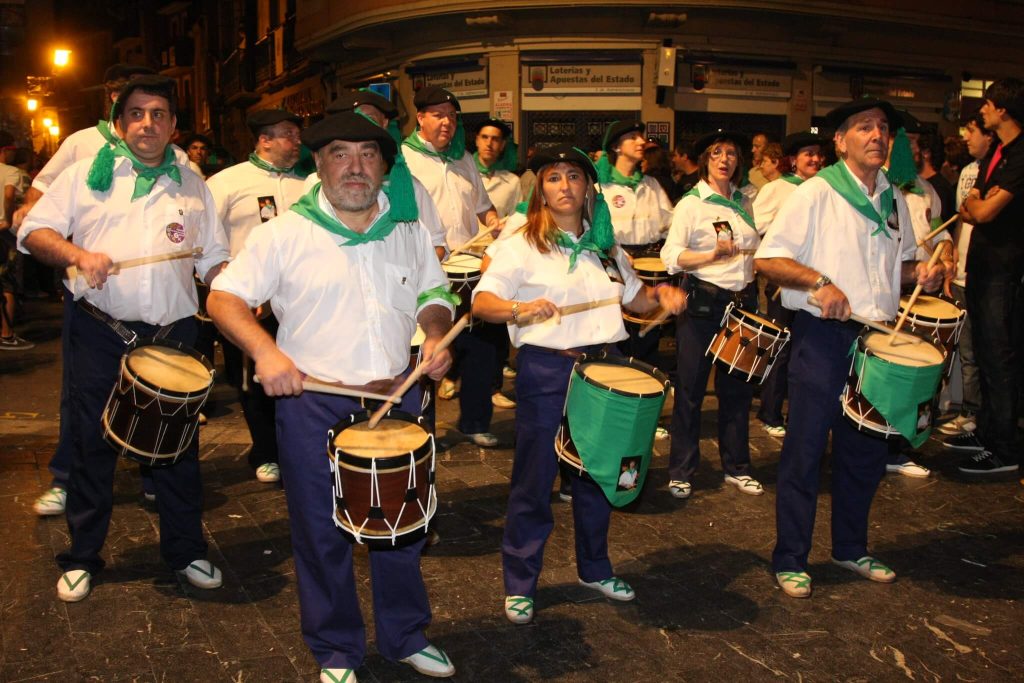
San Sebastián’s festival calendar reveals the city’s character beyond tourist activities. Tamborrada on January 20th is the most distinctive – thousands of participants dressed as soldiers and cooks parade through streets playing drums for 24 hours straight. It’s loud, repetitive, utterly unique and completely beloved by locals. The origins trace to 19th-century mockery of occupying military forces, evolved into celebration of civic identity.
Semana Grande in August brings concerts, regattas, fireworks and general festivities for a week. The whole city participates, creating atmosphere that’s celebratory rather than exclusive. It gets crowded and loud, but the energy is genuine rather than manufactured for tourists.
These festivals and others throughout the year demonstrate how San Sebastián maintains traditions whilst adapting them to contemporary life. They’re not heritage performances – they’re living culture that matters to residents, which visitors can witness and even partially participate in if timing aligns.
Frequently Asked Questions about San Sebastián
How do I get to San Sebastián?
San Sebastián Airport is small with limited connections – mainly Madrid and Barcelona. Most international visitors arrive via Bilbao Airport (100 km west), which offers broader European connections. Buses from Bilbao Airport to San Sebastián take 75-90 minutes. From France, trains connect via Hendaye just across the border. From Madrid, flying is quickest (1 hour) whilst buses take 5-6 hours. The city’s accessible but not as conveniently connected as larger Spanish destinations.
How do I get to San Sebastián from Bilbao?
Buses run frequently between Bilbao and San Sebastián, journey time around 75 minutes. The route along the coast offers excellent views if you’re driving – allow 90 minutes and consider stops at coastal towns. There’s no direct train, which seems odd but reflects Basque rail infrastructure quirks.
Where should I stay in San Sebastián?
The Parte Vieja puts you at the centre of pintxos culture and nightlife – atmospheric but potentially noisy. The area around La Concha offers elegant hotels with beach access and quieter nights. Gros attracts younger travellers and surfers with slightly lower prices and good local atmosphere. The city’s compact enough that location matters less than in sprawling metropolises – everywhere is walkable.
When is the best time to visit San Sebastián?
Summer offers beach weather and longest days but also peak crowds and prices. September brings the film festival, pleasant temperatures and spectacular light – possibly the ideal month if you can manage timing. Spring and autumn provide good weather without summer intensity. Winter is quiet, relatively mild by European standards but not beach weather. The city works year-round depending on what you prioritise.
Is San Sebastián suitable for families?
Absolutely. The beaches are genuinely family-friendly with calm water at La Concha. The aquarium, Monte Igueldo amusement park, boat trips to Santa Clara Island and manageable distances make it practical with children. Spaniards bring their families here, which means infrastructure and attitudes accommodate children naturally rather than treating them as inconvenient.
How many days should I spend in San Sebastián?
Two to three days covers major attractions comfortably – beaches, old town, pintxos crawls, one of the monte climbs, museum visits. Four to five days allows relaxed exploration, day trips along the coast and properly engaging with the food culture without rushing. A week makes sense if you’re using San Sebastián as a base for broader Basque Country exploration or simply want extended beach relaxation combined with urban culture.
What’s the difference between San Sebastián and Donostia?
Same city, different languages. San Sebastián is Spanish, Donostia is Basque (Euskera). You’ll see both used on signs, maps and locally. The Basque name has become more prominent as the language has been revived and promoted. Either is acceptable though using Donostia amongst Basque speakers shows cultural awareness.
Final Thoughts on San Sebastián
San Sebastián has managed something remarkable – achieving international recognition for its gastronomy and natural beauty whilst maintaining the qualities that made it appealing originally. The Belle Époque elegance remains intact, the beaches genuinely rival anywhere in Europe, and the food culture operates at levels from accessible pintxos bars to world-class Michelin dining without losing democratic accessibility.
What strikes me after decades of visiting is how the city hasn’t become a performance of itself. Yes, there are more tourists and property prices have risen dramatically. But San Sebastián still functions for locals, Basque identity remains fierce, and the traditions continue evolving rather than freezing as heritage displays.
The compact geography helps – everything significant is walkable, creating this virtuous cycle where exploration feels natural rather than logistically challenging. You wander from beach to old town to viewpoint to museum without requiring transport or complicated planning. That ease of movement lets you actually experience the city rather than spending half your time figuring out logistics.
When it comes to things to do in San Sebastián, you’re looking at genuine variety without the Barcelona-style overwhelming choices or Madrid’s sprawling distances. The city offers enough to justify several days whilst remaining comprehensible and manageable. Whether you’re here for beaches, gastronomy, Basque culture or simply quality Mediterranean urban life, San Sebastián delivers without overselling itself.
The most common reaction from first-time visitors is wishing they’d allocated more time. That regret stems from discovering the city’s more substantial than its modest size suggests – there’s depth here beyond the obvious attractions. Second visits reveal layers first trips missed, which says something about a destination’s staying power.
Pack comfortable walking shoes (those cobbles and hills demand it), bring appetite for both pintxos and Michelin experiences if budget allows, and accept that La Concha’s beauty will exceed expectations regardless of how many photos you’ve seen. That’s the San Sebastián experience – meeting high expectations whilst revealing additional dimensions photos don’t capture.