
The first thing that the visitor will notice is that Christmas in Spain is not as huge a commercial occasion as is the case in many other western countries. Christmas lights are usually lit in the main cities in the first week of December by which time the shops are fully stocked with Christmas supplies. Nothing like the US and UK where the end of summer marks the build up to Christmas.
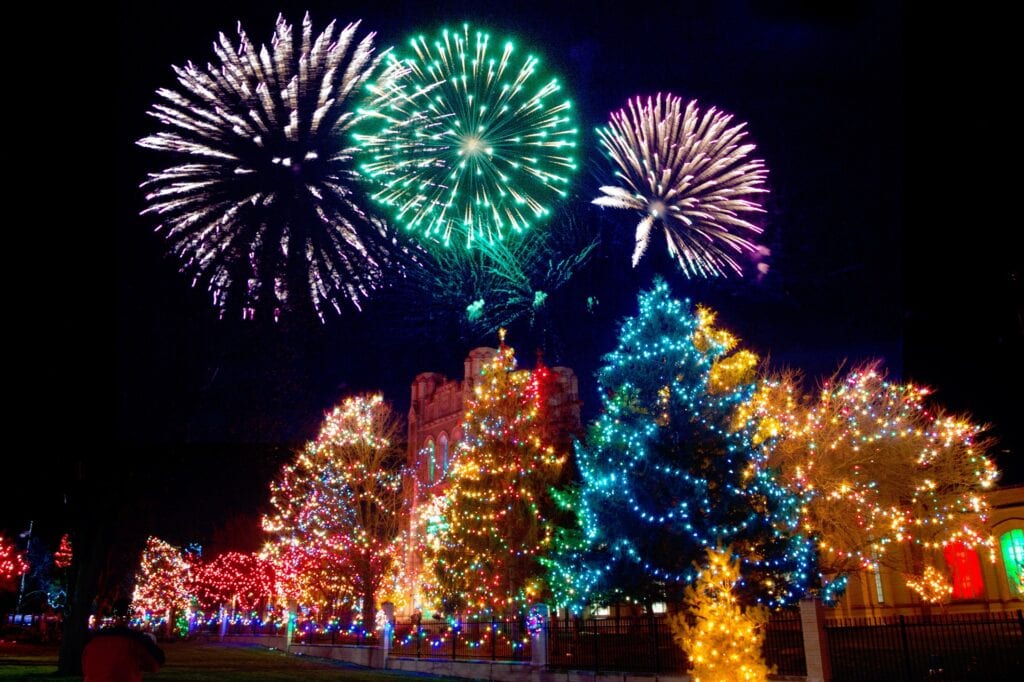
Christmas trees are common in the home but again they don’t appear until the second half of December. Also in the home there are intricate, miniature nativity scenes called Belénes which depict life in the village where Jesus was born. The Belén always include the baby Jesus, Mary, Joseph as well as the Three Kings, Baltasar, Melchior and Gaspar.
Calendar of Christmas Events:
December 8th – This is the public holiday of Immaculada (Feast of the Immaculate Conception) which marks the beginning of the religious Christmas celebrations. Most notable in Seville.
21st December – In a few cities including Granada the celebration of Hogueras (bonfires) takes place. This date marks the winter solstice (shortest day) and where it is celebrated involves people jumping through fires to protect themselves against illness.
22nd December – All over Spain people never stray far from a TV or radio as the Christmas lottery is drawn over a period of many hours. Everybody in Spain buys tickets for this lottery in the hope of winning El Gordo (the fat one) and the winning number usually means that a good number of people from the same village become a lot better off overnight. Besides the big three prizes there are thousands of smaller prizes shared by people all over Spain.
24th December – Christmas Eve is called Nochebuena in Spanish (Goodnight) and it is the most important family gathering of the year. In the evening people often meet early for a few drinks with friends then return home to enjoy a meal with the family. Most bars and restaurants close in the evening. Prawn starters followed by roast lamb would be a typical meal rounded off with a typically Christmas sweet called turrón which is a nougat made of toasted sweet almonds. Another typical festive sweet is called Polvorones which is made from almonds, flour and sugar. Cava, Catalan champagne, would be the chosen drink for the Christmas toast though plenty fine Spanish wines will also be consumed with the meal.
25th December – Children may receive a small gift on Nochebuena or this morning but the day for presents is 6th January, Epiphany, when the Three Kings bring gifts for the children. Christmas Day is a national holiday in Spain so shops are closed yet it is not a day of great celebration but rather a calm day when people go out for a walk, drop into a bar, etc. Another large family meal at lunchtime is common though it’s becoming more common to see families eating out on the afternoon of Christmas day.
28th December – This is the day of Santos Inocentes (Holy Innocents) and is the equivalent of April Fools’ Day when people play practical jokes on one another. Often the national media will include a nonsense story in their broadcasts. In some villages youngsters light bonfires and one of them acts as the mayor who orders townspeople to carry out civic tasks such as sweeping the streets. Refusal to comply results in fines which are used to pay for the celebration.
31st December – New Year’s Eve is known as NocheVieja. It is a big celebration all over the country with street parties and special nights in hotels and clubs everywhere. Until midnight people tend to stay at home and on the stroke of midnight it is traditional to eat 12 grapes, one on each stroke of the clock to bring good luck for the new year. In Madrid and other main cities revellers congregate in the main square (Puerta del Sol in Madrid) and eat the grapes along with a celebratory bottle of cava then head out into the night until after sunrise.
1st January – A low key public holiday with plenty people sleeping off their excesses.
5th January – There are processions all over Spain this evening where sweets are thrown from the floats to all the people who come out to watch. Every town has its own variation such as in the Sierra Nevada where the Three Kings (Wise Men) can be seen to ski down to the village.
6th January – This is the Feast of the Epiphany (Día de los Reyes Magos) when the Three Kings arrived in Bethlehem. For Spanish children this is the most important day of the year when they wake up to find that Los Reyes Magos (the Three Kings/Wise Men) have left gifts for them in their house. Santa may leave them a token gift on December 25th but the Three Kings are their favourites, especially Baltasar who rides a donkey and is the one believed to leave the gifts. During the day of 6th the Three Kings continue their good work and are seen distributing gifts to children in hospitals all over Spain.
7th January – The day after receiving their gifts children return to school, their parents go back to work and Christmas in Spain is all over for another year.
“Feliz Navidad” from Spain
“Bon Nadal” from Catalonia and Valencia
“Gabon Zoriontsuak” from the Basque Country
“Bo Nadal” from Galicia



On being asked by my 14 year old son “Dad, can you help me with my Spanish homework?” I thought it best to research the Spanish Christmas. This site has by far the most clear and concise information I required without having to trawl through pages of information. The set out of the calendar of events almost exactly duplicated the questions my son had to answer. My thanks to the publisher and all who worked on it. 10 out of 10.
Thanks Adam … Hope you have a great Christmas
hi,
lately my 13 year old daughter has been struggling with homework this website has been very useful and i would definately use it for my 8 year old when he needs it!
thank you very much.
Hi,
Very useful information since I am in Spain on holiday and have a better understanding of what is going on around me. Thank you very much for your help
Hi
Great news letters very use full information Have a great Christmas
Gracias
I guess we learn something new every day.
I never realised how different, Christmas was for Spanish people. thanks.
Thanks For your news letter great content as always
have a great Christmas & New Year
Feliz Navidad
This really helped me with my Spanish homework and as I have some new family in Spain it’s nice to know what they do for Christmas.
This was SOOOOOOO helpful for my Spanish project! I almost cried!! They sent me to the nurse’s office because they thought I was insane! LOL! Anyways, please use this website! I will be using this website for my vows one day!!! LOVE YOU!!!!
Wonderfully informative Thankyou
We are in Tenerife on holiday over the new year & hadn’t a clue why everyone was getting so excited about the 6th Jan. Looked it up on your informative website and wow, who knew they celebrated the 3 kings, so interesting, thank you!