
Driving in Spain can be a dream or a nightmare depending on where you are. On the plus side the quality of major roads all over the country is quite outstanding and there seems no end to the number of new motorways which not only connect major cities but also link relatively unknown parts of the country. It’s quite incredible to learn that a country of Spain’s modest size has over 16,000km of top class highways making it the world’s 5th largest motorway network after huge countries such as the USA, Canada, China and Russia.
On the negative side there is a lot of erratic driving particularly in urban areas: jumping red lights is a national pastime so don’t brake suddenly as a light is turning to red as the car behind you intends getting through that light; indicators seem to be optional extras on Spanish cars and are rarely used; few drivers seem to have any idea how to use a roundabout so be particularly careful when using them and never expect to be allowed into a lane by another driver as this somehow seems to be considered a sign of weakness!
Having worked in Madrid city centre for quite a few years I learned to drive like a Madrileño when required. The key to such driving was to never hesitate. If there’s a space in the traffic go for it, aggressive driving felt a lot safer than defensive driving. In such a city you also learn to drive in restricted areas with four other cars within a very small distance of your vehicle. Without adapting your driving mentality it would be very difficult to cope with the fast, inner city roads of Madrid. The good news for visitors is that you can easily avoid the worst of Madrid’s traffic thanks to the excellent motorways such as the M50 which circle the capital from a distance.
Words of Warning for Driving in Spain
Obey the Speed Limits
In years gone by there seemed to be little in the way of vigilance of the speed cars were travelling at. Living in Madrid we used to have an unofficial competition as to who could get back from a trip to Barcelona the quickest! Although you’ll still see cars driving way above the 120km/h speed limit on major highways it’s not a good idea, especially in a car with foreign plates, as speed cameras have cropped up all over the place. Foreigners caught speeding by the Guardia Civil are likely to be presented with an on the spot fine. Failure to pay the fine will lead to your car being immobilised. It’s illegal to carry radar detection devices in your car.
Respect the Outside Lane on Autovías
Don’t sit out in the fast lane doing the speed limit as you’ll soon have a large BMW or Mercedes flashing you to get out of the way. Too many drivers seem to think they are Fernando Alonso which doesn’t help Spain improve its road death toll which is far too high, especially during extended public holidays when the majority of the population of the main cities hits the road to head away to beach locations.
Drinking and Driving in Spain is a Serious Offence
The attitudes of many drivers towards drinking and driving seems to have improved over the years as the authorities now take a very serious approach to positive breath tests. Driving after ‘a few beers’ never seemed to be a concern for most car owners that I’ve known over the years but today a strict blood-alcohol drink-drive limit of 0.05% (50mg of alcohol per 100ml of blood) makes Spain one of the strictest countries in Europe with regard to drink driving. If you’ve only passed your test within the past two years the limit is even stricter at 0.03%.
I was once breathalysed in the Basque Country by a very pleasant Ertzaintza officer who asked me why I thought British drivers were more concerned about the issue of drink-driving than many Spanish drivers. At the time I felt that the Spanish police didn’t take the issue seriously enough themselves and told him so. The law was changed and more strictly enforced shortly after that so I’m taking full credit for saving countless lives on the roads of Spain 🙂 By the way, my breath test was negative!
Another factor to bear in mind with regard to alcohol is that you shouldn’t plan on an early morning car excursion if you had ‘one too many’ the night before. The risk just isn’t worth it. I find it more than a little alarming that the motivation for most of us to avoid drink-driving is the fear of getting caught rather than the unspeakable consequences of being responsible for an accident whilst under the influence! Spain is a country where alcohol is never far away, so if you’re planning on a party style holiday don’t be tempted to drive. Public transport is rarely far away.
Toll Roads in Spain
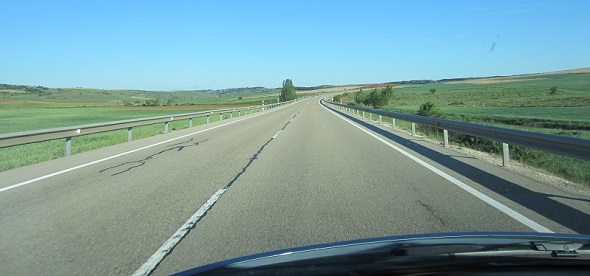
Some roads in Spain are toll roads (marked “Péage”) which can prove quite an additional cost to your journey. For speed I usually choose to use them but if I’m casually touring around I prefer free roads unless the alternative goes through a coastal resort which is just too time consuming and frustrating. Take a look at the AA’s toll routes and prices to decide what’s best for you.
Theft from Hire Cars
Never leave anything valuable in your car or anything on view as breaking into cars is rife. This is particularly the case with rental vehicles and cars with foreign number plates. Such theft has increased in recent times as the economy has collapsed.
Spain Driver’s Checklist
I’m assuming that you know that in Spain cars travel on the right, you must wear your seatbelt and that you’ll need a driving licence and insurance, etc. There are, however, a few points worth bringing to your notce that you might not be aware of when bringing a car into the country or driving a hire car:
- Vehicles must carry two warning triangles in their car which should be placed in front and behind the car if you breakdown.
- Drivers should have easy access to a fluorescent jacket which they must wear outside their vehicle in the event of a breakdown.
- Children under 12 years of age are not allowed to sit in the front seat.
- Drivers who wear glasses must carry a spare pair.
- Your car should have a first aid kit, a spare tyre, spare bulbs, a spare fan belt and the tools to fit them.
- You only need a national identification sticker on your car if you don’t have the new Euro-plates which identify the car’s nationality.
- British cars should fit headlight convertors before arriving to avoid blinding oncoming traffic
To Drive or Not to Drive?
A few of my comments above may have raised a few eyebrows amongst drivers who are feeling a little tentative about driving in Spain for the first time. I hope that’s not the case as there’s little to worry about provided you plan your journey carefully.
Motorists can look forward to driving thousands of trouble free kilometres on some of Europe’s finest highways often surrounded by stunning scenery. Many visitors are quite surprised at the great quality of Spain’s motorways and ongoing construction of these new roads is making getting around even easier albeit at the expense of some beautiful routes that are being bypassed by these new roads.
Most foreign visitors only experience problems when approaching major cities where many cars often drive too fast and show no mercy to other road users. In addition you’ll often find the cities tricky to negotiate and parking difficult to find and very expensive.
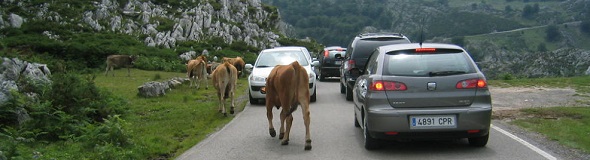
So if you’re planning a driving holiday try to stay away from the main cities where possible, try not to be on the road when it’s a national holiday and respect the speed limits.
Driving Distances in Spain (km)
Many visitors to Spain are not only surprised at the country’s size but also amazed at its overall geographic diversity. Over the years we’ve had so many enquiries from people who were planning to visit the country and asked us advice on “doing Spain” in three or four days! I’ve been travelling around the Iberian Peninsula for more than twenty years and still reckon I’ve got plenty more to see.
Spain is Europe’s fourth largest country after Russia, Ukraine and France. It consists of the Spanish mainland which occupies most of the Iberian peninsula apart from Portugal, the Balearic islands of Mallorca, Menorca, Ibiza and Formentera in the Mediterranean and the Canary Islands of Tenerife, Gran Canaria, Lanzarote, La Palma, Gomera, Fuerteventura and Hierro in the Atlantic Ocean off the coast of Morocco.
Just to give you some idea of distances within the country travelling by road:
- From the France/Spain border on the Atlantic coast to the Spain Portugal border on the Meditarranean coast is 1067km
- From the France/Spain border on the Mediterranean coast to Cabo Finisterre on the Galician coast in north-west Spain is 1332km
It’s a big place in European terms so allow enough time for your visit. It’s not just a question of visiting Madrid, Seville and Barcelona so that you can say you’ve “done Spain”, there is so much more to see and do than just these big cities.
| Alicante | Barcelona | Bilbao | Granada | A Coruña | Madrid | Malaga | Seville | Valencia | |
|---|---|---|---|---|---|---|---|---|---|
| Alicante | 0 | 515 | 817 | 353 | 1031 | 422 | 482 | 609 | 166 |
| Barcelona | 515 | 0 | 620 | 868 | 1118 | 621 | 997 | 1046 | 349 |
| Bilbao | 817 | 620 | 0 | 829 | 644 | 395 | 939 | 933 | 633 |
| Granada | 353 | 868 | 829 | 0 | 1043 | 434 | 129 | 256 | 519 |
| A Coruña | 1031 | 1118 | 644 | 1043 | 0 | 609 | 1153 | 947 | 961 |
| Madrid | 422 | 621 | 395 | 434 | 609 | 0 | 544 | 538 | 352 |
| Malaga | 482 | 997 | 939 | 129 | 1153 | 544 | 0 | 219 | 648 |
| Seville | 609 | 1046 | 933 | 256 | 947 | 538 | 219 | 0 | 697 |
| Valencia | 166 | 349 | 633 | 519 | 961 | 352 | 648 | 697 | 0 |
Spain’s geographical borders are clearly defined. The north coast of Spain is over 700km long, this is often referred toas the the Atlantic coast. The Mediterranean coast is well known for its popular holiday resorts, It runs 1660km along the east and south of the country. By land France lies to the east whilst Portugal lies to the west.
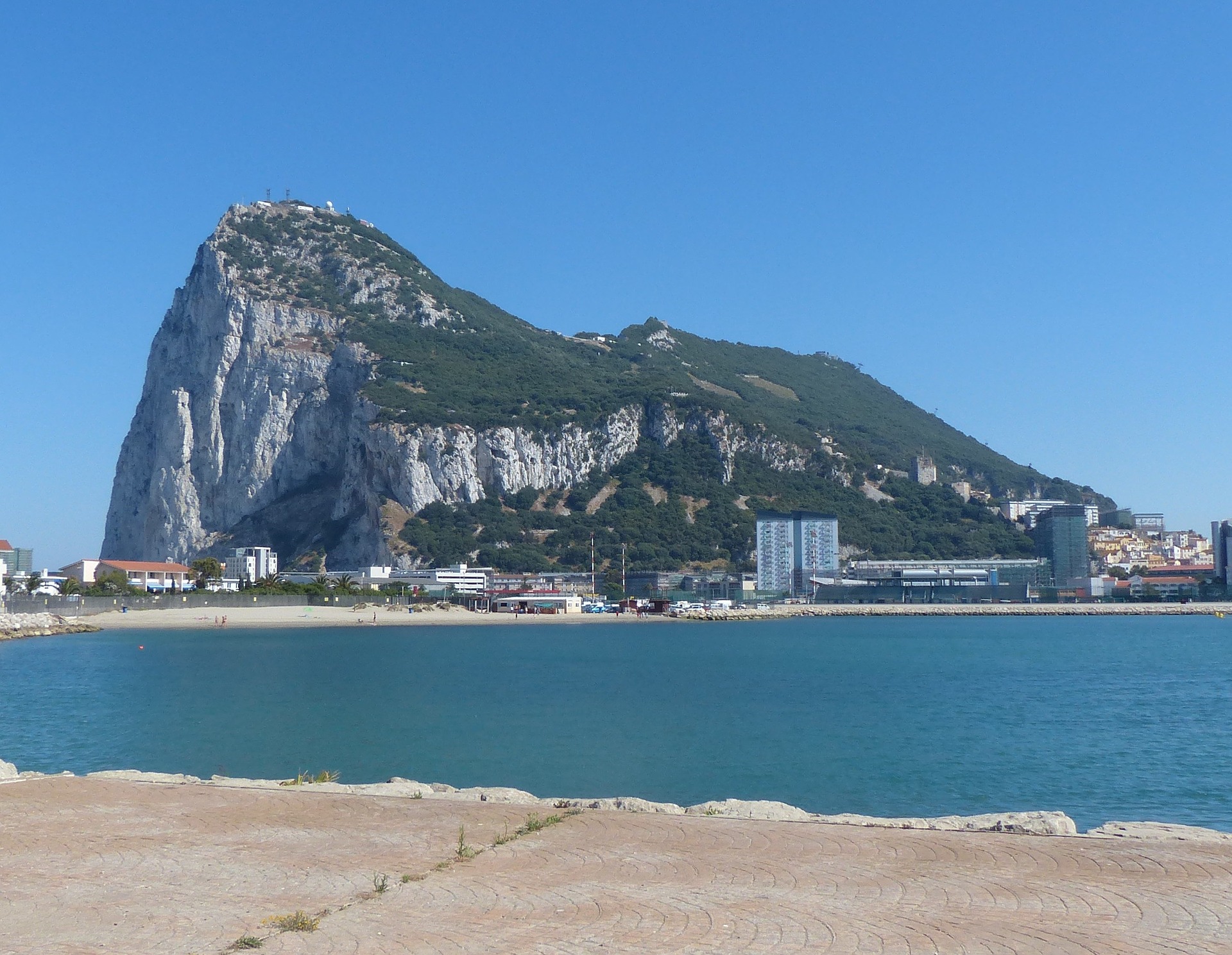
The continent of Africa lies a mere 13km off the Rock of Gibraltar, a British Overseas Territory in the south of Spain. Beyond the mainland Spain owns the Balearic Islands in the Mediterranean and the Canary Islands in the Atlantic as well as the protectorates of Ceuta and Melilla on the Moroccan mainland
Spain Car Rental
If you aren’t planning on bringing your own car you’ll find car hire is available from all major cities, main towns and airports. Some companies allow one way rentals which is very useful when you consider the driving distances in what is Western Europe’s second largest country. In order to rent a car in Spain you must be at least 21 years old and have held a full driver’s licence for one to three years depending on the company. It isn’t usually possible to pay with cash so a credit card is necessary as well as a passport.
Car hire in Spain can be excellent value provided you shop around. It pays to book your car rental before you arrive in Spain as you’ll get far better deals from the online car brokers than you will by leaving the rental until you arrive. Third party liability insurance is compulsory and although collision-damage waivers vary between companies, they usually seem worthwhile when compared with the potential loss if an accident occurred.
Booking in advance through the online brokers gives you plenty time to read the small print on your rental contract, something you wouldn’t find time to do as you are handed your keys and asked to sign the rental contract in the airport arrivals lounge.
The Geography of Spain
Regions of Spain
Spain is divided into 17 autonomous communities. Each of these regions contains a number of provinces. There are 50 provinces in total which make up the political and administrative map of Spain.
Mountains of Spain
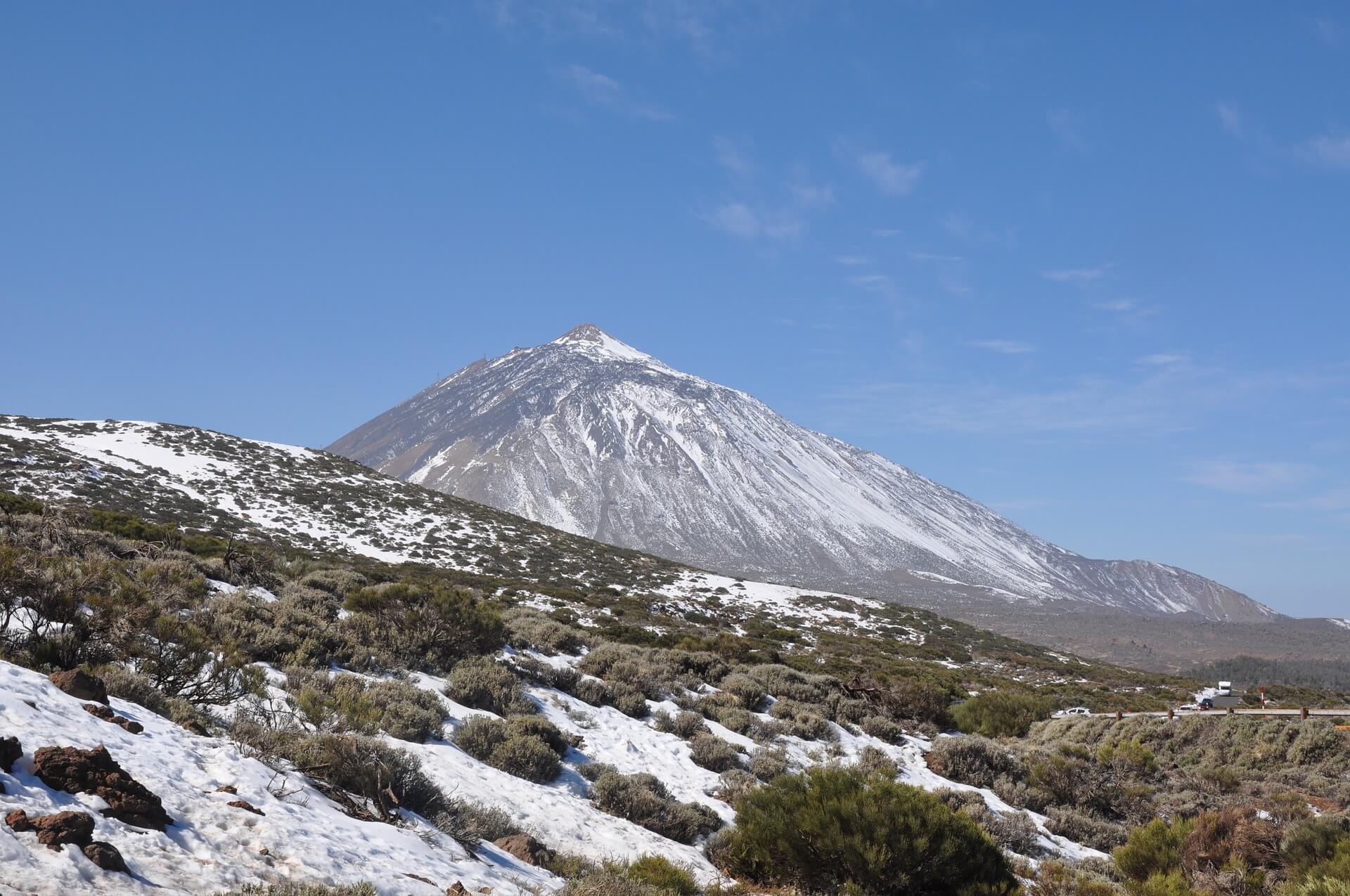
The main mountain range in is the Pyrenees which separate the country from her French neighbours. These mountains stretch more then 430km from the Atlantic to the Mediterranean coasts with Pico de Aneto the highest point at 3404 metres. On the mainland the highest peakis actually in the south of the country where Mulhacén in the Sierra Nevada montains near Granada reaches 3477 metres. However, it’s Mount Teide in Tenerife at 3715 metres which has the claim to fame as the nation’s highest peak.
Rivers of Spain
Surprisingly there are more than 1800 rivers in Spain but (not surprisingly) most of them are dry for much of the year. The longest river is the Río Tajo (or Tagus) which runs for more than 1000km from its source in central Spain to Lisbon where it enters the sea. You’ll have seen it if you’ve ever visited Toledo. The Río Ebro is 910km in length running all the way from Cantabria to the Ebro Delta near Tarragona where it enters the Mediterranean.
The Río Duero is 3rd longest and is key to the fabulous wines which come from the Ribera del Duero region. The Guadalquivir River on which Seville and Cordoba lie is the deepest and most navigable. Other important waterways include the Río Guadiana, Río Miño, Río Júcar, Río Genil and Río Turia.
Climate of Spain
Most tourists visiting Spain’s Mediterranean coast or holiday islands seem to assume that all of Spain has fantastic weather all year round. Similarly football commentators assume that any player arriving in the English league will only be used to playing in hot, sunny stadiums. Both are well off the mark. The country experiences a huge range of temperatures and rainfall depending on where you visit. Summers along the ‘Costas’ are fairly reliable for holiday weather whilst the cities of the interior are scorched during the summer months. Rainfall is fairly low for most of the year in the south but is heavy along much of the north coast.
We recently completed a driving tour of Spain starting and ending in Madrid. We made two major mistakes: We should not have picked up our hired vehicle at the airport when we arrived, but rather should have waited until we were ready to leave the city. It added the cost of several days the car and parking while we were in Madrid, not to mention the frustration of the unnecessary driving in that city. (I lived there for four years several decades ago, but my knowledge of the city did not make driving any easier.) Secondly, when we got to Lisbon we should have driven directly to the airport, parked the car and hired a taxi to take us to our hotel, then returned to the airport to retrieve our car when we were ready to continue our trip. I would make this same suggestion to any tourist spending time in any major city. Airports are always easy to get to and one’s blood pressure will remain at a safe level.
Hi Tom
This is a great tip. Thanks very much.
Best Regards
Gerry
Hi, thanks for the info, can you clarify the use of ‘doggy seatbelts’ – I have been told these are mandatory.
Hi Sandra
I know there are such rules aimed at preventing animals distracting drivers. In theory small dogs should be in some kind of container whilst larger ones can be in the boot with some kind of dog guard fitted behind the back seats. Personally, I’ve never seen this enforced in the 12 years we chauffered our dog around Spain. But nowadays it seems there are fines pending for so many ‘infringements’. Please check the details of this matter with an official body.
Regards
Gerry
Hello. A very interesting and useful article. However my experience is that the driving in Spain is not erratic or dreadful. Having driven in and around Barcelona, Tarragona, Valencia, Alicante, Malaga, Granada, Cordoba, Sevilla and Cadiz, in addition to several smaller towns and villages in recent years, I have found that Spanish drivers in general are polite and considerate. The biggest problem in my experience is their tendency to not keep a long enough distance to the car in front of them, even at high speed.
I fully agree about the quality of the roads though. They are great. As I am from Norway I am used to terrible roads, and awful drivers, so Spain is a dream.
Thank you for a very informative and useful article. My husband and I have been driving in Spain for several years now, and most of the time it is a pleasure. Roads are generally well maintained, and I do recommend paying attention to and believing the signs that warn of closures and/or road conditions. There is one sign , though, which still has me puzzled. We were driving south from Sevilla towards the marismas and found a sign on the country road which stated “Peligro Indefinido:” To this day I still wonder what that might have been. It has provided us with many moments of pleasant speculation.
Hi Brigitta
I can see how an “unspecified danger” might have you wondering what lies ahead.
Thanks
Gerry
A few years ago while driving inland from Salou we came upon road works. One side of the road was being repaired so the other was used for all traffic. There were no traffic lights, no stop go boards just a man who handed me, as first in line, with a twig with a couple or leaves on it. This was the token for right of way. He indicated that I should give the twig to a workman at the other end of the roadworks. We thought that this was very funny. Who needs expensive safety equipment when you have trees.
Great story Pete … thanks very much.
Hi Gerry.
Thanks for the resume.
Saw for the first time a saloon car towing by rope another saloon car, an activity I understood to be illegal in Spain. Do you know if my understanding is correct?
Regards.
Jim
I don’t know about that Jim – Sorry.
Very good article on driving in Spain. I personally don’t drive but my Mother had driven back and forth for 3months when she and my father moved out there in the early 80’s. She never used the motorway unless it was bad weather and they only used the side roads but took their time to and fro. My father couldn’t fly as he had heart problems but they enjoyed it by road. My Mum said back then that the roads in Spain were good and I think the U.K. have taken a leaf out of the continents book as they now do some re-surfacing of the roads here at night. I think on the whole the Europeans drive ok but I must admit, you get the few mad drivers. My boyfriend (who was Spanish) and I were forced off the road while coming back from Sevilla one time by some mad roadhog.
Hi Gerry,
Some very handy tips and advice with your article. We all think we know the rules but when it comes to another country there are some eye openers. Anyway I’m off to Spain at the end of September and I have taken some good advice from your link, and I will have a good “shop around” before I commit to hire a car.
Best Regards,
Dennis.
I just had a holiday in Spain touring around the country in a hired car however not 2 of the car hire firms you mentioned but Sixt which I have to say was pretty good but it is also a good idea to book any such hire cars well in advance when it comes to cost as prices increase nearer the summer period. Me and my companion flew to Malaga then picked up the hire car at the airport and continued on our touring journey which was to be 2 days in each place starting with 1st Granada 2nd Cordoba 3rd Ciudad Real 4th Toledo 5th Avila 6th Segovia 7th San Sebastian 8th Oviedo 9th Santiago In Galicia 10th Oviedo Again 11th Salamanca 12th Caceres 13th Seville. The End Of The Trip Back To Malaga.
I have to say the trip itself was at times a bit stressful but well worth the effort I feel that longer time was in order on the stays, say 4 days in each or 5 which gives you more time to explore each place though maybe Seville and Caceres needed more time of stay other than that I enjoyed the experience and the places and things we saw well worth a bit of stress any day to explore such landmarks, beauty, culture and history not forgetting Spain’s wine and cuisine. Can’t wait for the next trip, parking was a pain at times with the car and it’s the second time I’ve toured Spain but I have to feel I’m going by motorcycle next time as I did the first time as its much easier for parking.
Thanks Trevor – this sounds like a great trip.
Gerry
One thing you might mention is about parking issues in any city. We especially had problems in the Basque area where parking restrictions were not marked. In addition, when we did get a ticket in this area, it was written in Basque and I had no idea what to do with it. Driving through the country is fantastic, but dump the car before going into the cities. It is too much of a hassle.
Thanks for all your great articles! It always makes me look forward to my next trip.
Thanks Sonrisa (what a beautiful name :-)) – I fully agree. Most of the time driving in Spain is a pleasure provided you avoid the big cities where traffic and parking can cause major frustrations.
Regards
Gerry
Hi Gerry.
Great advice. Especially about the spare pair of glasses. I’m also informed that it’s illegal to drive in flip flops or backless sandals.
We often comment about the quality of the roads bearing in mind the state of the economy. The other thing that never ceases to amaze me is a long, tarmac’d road winding up the side of a sierra just to get to one (or seemingly) villa.
By the way, don’t forget doyouspain in your list of recommended car hire companies.
Saludos,
Brian
Thanks Brian
It is NOT illegal to drive in flip-flops or backless sandals … BUT if you are involved in an accident — especially if you are deemed to be the cause or a contributor — then if you were wearing flip-flops or backless sandals, this will adversely be held against you, adding to the fault a Court might attach to the Court’s assessment of your blame-worthiness.
BUT IT IS DEFINITELY ILLEGAL to wear sunglasses while driving through a tunnel. You will be stopped and fined if the Policia or Guardia see you.
Love your articles, We have now lived in Spain for 7 years and agree with so muuch of your driving tips. The latest thing with the Police is an instant fine for driving in sandals (which I believe also applies in UK) but they really are having a big thing about it this year with heavy fines – an easy mistake to make when driving to the beach etc, !
Thanks for this warning, Liz. I hadn’t heard this one. Have they defined “sandals”?
RE, the sandals, as usual it seems to depend on who stops you, but the sandal must be held on the foot by a strap around the ankle, certainly not flip flops or anything without back or ankle support, the shoe must not be able to fall off the foot in case it gets stuck under the pedal.
Spain had the foresight to build skyscrapercity highways well before joining the EU and most of the highways are tremendously wide and safe to travel at high speed. Although it is also true in several of the other European cities for super highways namely Germany, Poland, etc
Very interesting article. We have just returned from a 3 week road trip to Spain driving from Cardiff down to Ayamonte on the southern border with Portugal. The roads were a dream to be on. Fantastic scenery and helpful people everywhere we went. Planning another trip for the future. The downside? – none while we were there but arriving back in the UK. It took longer to drive from Folkestone to Cardiff than from Ayamonte to the French border!
Hi Sue
We recently took a similar route through Spain via Extremadura to Cadiz. The roads through Castilla y Léon and Extremadura are simply a dream.
Thanks for your comment.
Gerry
I’ve never driven in mainland Spain but I have in the Canaries and Majorca. I have generally found the roads to be much better than here and drivers are patient because they see it is a hire car so there must be a daft tourist in the drivers seat! I found the standard of driving to be on a par with here, most are fine but there is the odd speed freak and if you get caught in the outside lane and one comes up behind you it can be hairy. I love the fact that in tourist resorts there are loads of pedestrian crossings. It can be a nuisance having to stop so often but it makes the roads so much safer for people crossing and drivers seem to observe them really well. On the whole I usually quite enjoy driving and seeing a bit of the country, especially going to places off the beaten track. If I have to drive in any of the major cities I will revisit this article before I go!
Hi Gerry
Once again thank you for some very good advice and very handy tips I am off to Spain in November (Estepona). I’ve hired my car from Centauro rent a car who have always been pretty good to me in the past
Once again thanks GERRY.
Thanks for the article – we have a few tips of our own – look at the internet to find out the sites of new speed trap cameras – on our nearest N340 coast road we spent ages looking for cameras only to discover they are not brightly coloured like in the UK but are large grey metal boxes in unobtrusive places so you cannot easily spot them and slow down so the solution is to just keep to the speed limit.
Secondly book a hire car online and then just before leaving the UK check if the price has come down and 99 times out of a 100 it will have done – currently there is no penalty for cancelling the booking and rebooking so we will exploit this as long as it exists. Hope this is helpful. S
Thanks Sally for those tips … I’ve been caught going west from Malaga along the coast road. Difficult to slow down with a lorry almost in the boot! I notice more and more speed cameras around the country.
Regards
Gerry
We find that roundabout discipline – or lack of it – is quite an issue. In the UK, if the car in front was in the inside line you would reasonably expect it to take the first or second exit. In Spain we frequently find cars crossing from the inside lane on a roundabout to make a hard left exit, cutting straight across the other lane of traffic. And without signalling, of course!
All sorts of things to add …
1. Neither here nor there, but a lot of Spain’s beautiful road building was funded by the EU countries in the post-Franco years. So if Spain’s roads seem ‘more excellent than yours at home’ (wherever “home” is in the old EU), you can probably take pride in the thought that some of your taxes will have gone into the Spanish roads somewhere instead of maintaining/building your roads “at home”!
2. Too easy to criticise ‘Spanish’ drivers for this and for that … but when I was writing an article on ‘road safety’ four years ago, rent-a-car companies on the Costa del Sol alone were claiming they were putting up to 40,000 (forty thousand) cars onto the roads at any one time, mostly in the hands of out-of-Spain drivers who might hold nominal national driving licenses [a] for driving in their own countries in accordance with their own ‘local rules and practices’, whatever they might be; but who, [b] in many cases do not regularly drive ‘at home’ in the course of a year, in any case, but keep their driving “for holiday times” (!); and/or [c] feel that ‘holiday time’ is a time for ‘not bothering about anything … for ‘being laid back’ … anyway, certainly ‘not for concentrating’.
3. I asked four well-rated, substantial driving schools if they “taught” their students the meaningful, coherent use of indicators. “Yes, of course”, they all said immediately. But, under pressure, their instructors all eventually admitted … “well, not really”. Why-ever not???????? “Because it’s not part of the driving test and therefore it isn’t important.” OH WOW!
4. Spain’s motorways, at least on the Costas, have many tunnels. In addition to “you can be fined for driving in flipflops or backless shoes/sandals”, you’d better add “you can be fined for driving in tunnels wearing sunglasses”.
Finally, I personally am enormously impressed by the attention paid to “getting the advisory speed limits right” at least on my regular bits of road in Malaga and Cadiz. If the road-sign says “60” when approaching a bend, that truly means that “60” is the sensibly-safe maximum speed … or 40 or 50 … or sometimes 70 … whatever. I like that a lot.
Never seen the point of driving in Spain, so much easier to use the great public transport system, whether it’s the train or the bus.
You see so much more as you do not have to concentrate on driving, also no worries about having a drink.
Information on how to get to your destination is so easy to obtain from either the London or local tourist information centres.
Relax & enjoy the countryside let the train (or bus) take the strain
We have been travelling around Spain. We have seen 90% of Spain. The roads are busy in the big towns. But the rest of it could be quiet. We feel quite safe. Also a positive thing is that you can count the kilometers. If you are travelling from Madrid to Toledo this is about 90 km. On the road you find a number which is called 90 this is the exit to the town so you know that the road is 90km. Also for example in Madrid you have a lot of M roads. This means Madrid. In Asturias you have roads that start with A. In Cataluna you have roads that start with C. Most roads start in Madrid so the distance kilometers start counting from there. Only Cataluna have the same system like the rest of Europe. But they hate Spain.
Also a tip. If you traveling on the Peage road. the road which is paid. You can use also a credit card,it works about the same way like in France.
We have lived in Spain for over ten years and have driven all over the country. The motorways are a pleasure to drive….so quiet compared to the UK…with fantastic scenery. It’s certainly the best motorway system in Europe. Yes, it’s true you get the odd BMW behind you tailgating and flashing lights….but just get out of the way!…..the French and Italians have a similar mentality!
Cities are different. Don’t expect much courtesy or being allowed out to join traffic. Don’t expect indicators to be used….and if they are don’t believe them….! Don’t rely on sat nav in the older parts of cities…..you can end up lost in the narrowest streets with an inch to spare on either side of the car….with the locals smiling at you in a condescending way…..they’ve seen it all before.
Apart from that….Spain is a pleasure to drive in….with fresh delights around every corner….just take you’re time and enjoy….no rush….
To our surprise, we received a traffic citation from Ezcaray weeks after returning home. It was totally in Spanish. We were able to determine what it was, but then came the problem of paying it. The Spanish Consul in Miami did not know how. Eventually someone in the tourist office in Miami offered to call Ezcaray for us. Turned out they were to small to accept credit cards and not hooked into the national payment system. We found a company called “Transferwise” that handled a bank transfer for about $3.00 compared to the $40.00 it would have cost to pay the 40 Euro fine.
Small towns in Spain are not tourist friendly!