
With its rich history, beautiful beaches, rocky coves and charming villages there are many things to do in Menorca. This popular holiday destination lies in the Mediterranean, off the east coast of Spain and is the 2nd largest of the Balearic Islands. Whether you’re looking to relax and unwind or explore and discover, Menorca is the ideal place for a family holiday. Here is a list of recommended things to see and do on the island:
Visit The Top 10 Best Beaches in Menorca
Menorca is well known for its beautiful white sandy beaches with crystal clear waters and fine sand. Some of our favourites include:
Cala Galdana: With its white sands and turquoise waters, this beautiful resort beach on the south-west coast is one of the island’s popular destinations. It is well served by beach bars, restaurants and watersport operators. Not surprisingly the beach gets extremely busy during peak season.
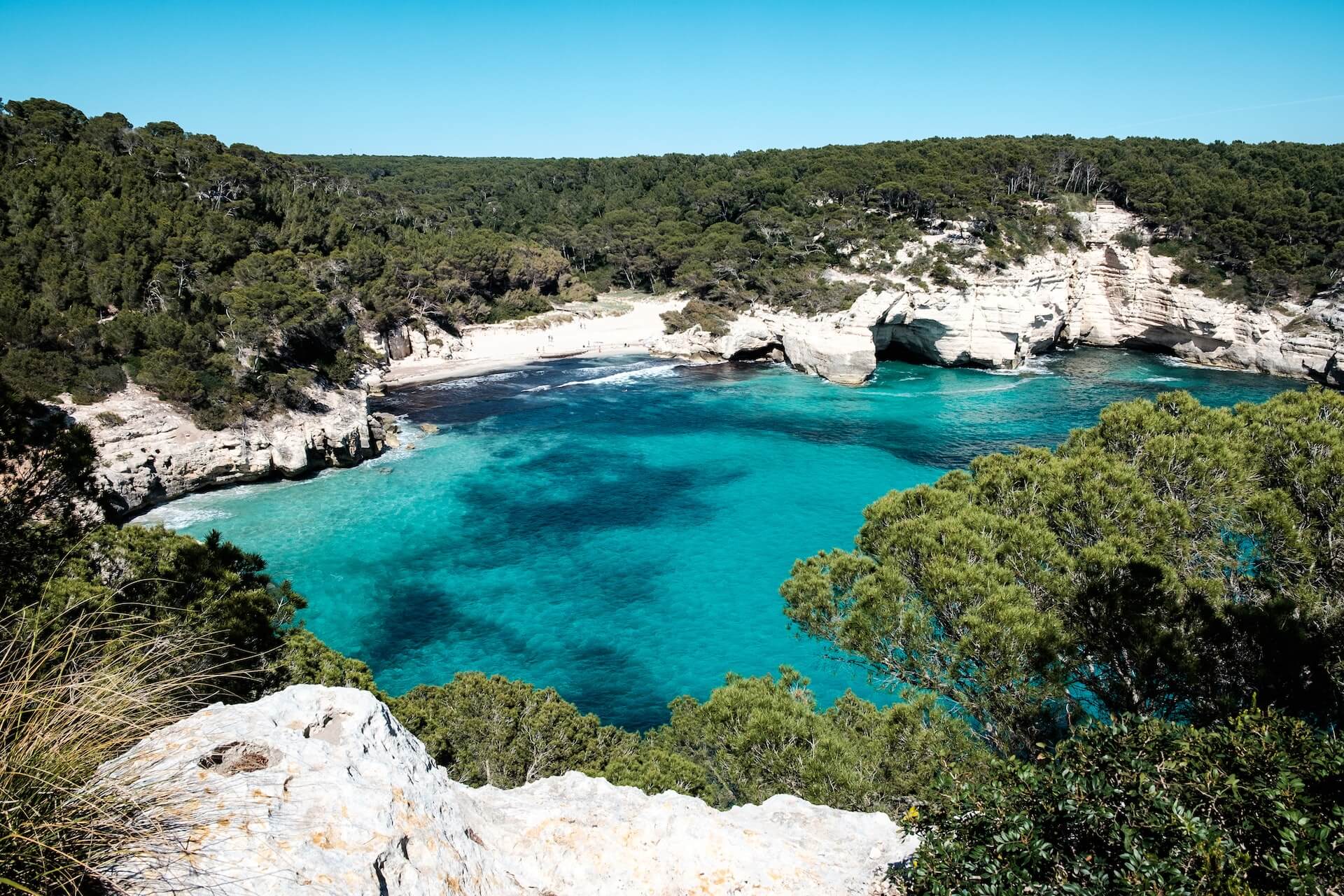
Cala en Turqueta: To the west of Cala Galdana and easily accessible from Ciutadella, this glorious beach with its turquoise waters and white sand is surrounded by pine forest. It is justifiably considered to be one of the most beautiful beaches in Menorca. In spite of its popularity there’s little in the way of amenities which has allowed to to retain much of its idyllic ambience.
Cala Pregonda: This scenic beach on the north coast with just a few private villas in the vicinity is relatively unspoilt and attracts much less tourists than the island’s popular resort beaches. Its strikingly red sand provides quite a contrast to the white sands of Menorca’s southern beaches. Thanks to two small offshore islands, which protect the bay it from the wind, its crystal clear waters are usually very calm.
Platja de Son Bou: Running for almost 3km along Menorca’s south-central coastline, this beautiful beach is the longest in Menorca. With its sand dunes is a family favourite thanks to its shallow waters. Beach bars and watersports are widely available.
Cala Mitjana: Lying just east of Cala Galdana the beautiful cove of Cala Mitjana has fine, white sand and calm, clear waters. Although off the beaten track it is a well-known spot during the summer months so a swim around to the more secluded Cala Mitjaneta is well worthwhile.
Playa Es Grau: This is a true gem on the north-east coast of Menorca which is easily accessible from Mahon. It is part of the S’Albufera des Grau nature reserve so has escaped tourist developments. It’s ideal for young children thanks to its shallow waters and is a great spot for snorkelling and kayaking.
Arenal d’en Castell: Standing on the island’s north-east coast, this popular resort beach is surrounded by hotels and apartments so it can get very busy during the summer months. It has golden sand and is well equipped with bars, restaurants and watersport options.
Platja de Punta Prima: Standing on Menorca’s southern tip, this is one of the largest beaches on the island which is popular with windsurfers and other watersport enthusiasts. Strong winds and sea currents mean that conditions aren’t ideal for young children. Bars and restaurants are located nearby.
Playa de Binibeca: Just to the west of Punta Prima is the traditional fishing village of Binibeca (Binibèquer) which is one of the island’s most visited destinations. Its small beach has safe and shallow waters set in a really pretty cove. It is home to a popular beach bar from where you get stunning views of the sunset.
Cales Coves: Just south of Cala En Porter is the simply stunning Playa de Cales Coves which is a fairly inaccessible beach. It offers nothing in the way of facilities but is highly recommended for anyone looking to just get off the beaten track.
Best Places to Visit in Menorca
Mahón – Discover The Island’s Capital
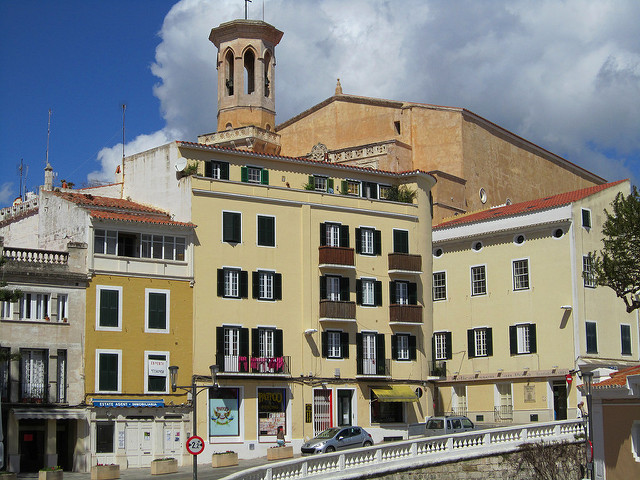
Located on the island’s east coast, Mahón is the capital of Menorca with a history dating back to the Carthaginians. The notable Georgian architecture and the city’s gin factory are reminders of British rule over the island during the 18th century. Other notable landmarks include the 17th-century La Mola fortress, the Church of Santa Maria and the historic harbour. This is one of the world’s largest natural harbours which has long been of strategic importance. Today it is a popular port of call for cruise ships.
Ciudadela – Explore this Ancient Port Town
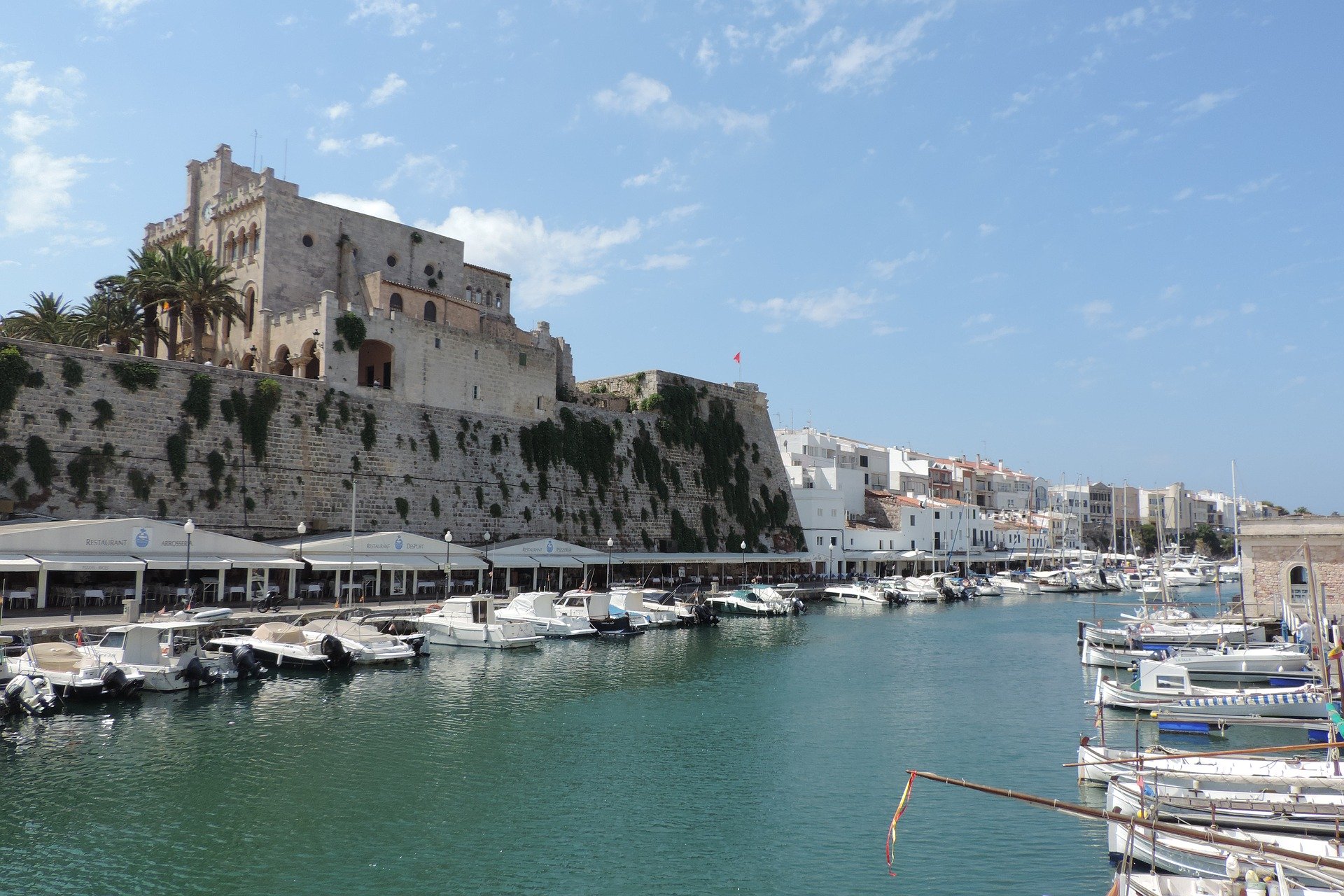
Located on the western side of the island, this former capital of Menorca and has a rich history, dating back to the Roman era. The historic centre of Ciudadela (Ciutadella de Menorca in the local Catalan language) is home to a number of important landmarks including the Cathedral of Menorca which was rebuilt from the origins of a mosque in 1287 together with the 17th century defence tower of Castell San Nicholas. Other sights worth visiting in this vibrant city are the Arab Baths and the Church of Sant Francesc.
Fornells – Dine in Its Seafood Restaurants
Located in a natural setting in Fornells Bay on the north coast of Menorca, this fishing village has a history dating back to the 16th century when a watchtower was built as a defence against Barbary pirates. Fornells is a popular tourist destination which is perhaps best known for its excellent seafood restaurants which surround its harbour. Lobster stew (caldereta de langosta) is the signature dish of the local cuisine. There are some excellent beaches nearby such as Cala Tirant which is a popular choice for water sports enthusiasts who come to enjoy activities such as sailing, windsurfing, and kiteboarding.
Binibeca – Visit This Historic Fishing Village
Binibeca is a small village which is located in the southeast of the island. It is a popular destination for tourists, known for its picturesque streets and charming atmosphere. Binibeca is a traditional Menorcan village, with narrow streets and white-washed houses. It is also known for its beautiful beaches, including Cala Torret and Punta Prima. Visitors to Binibeca can enjoy a range of activities, including swimming, sunbathing, and exploring the village’s historic centre.
Best Outdoor Activities in Menorca
Hike to the Top of Monte Toro
Standing at an altitude of just 358 metres, Monte Toro is the highest point on the island of Menorca from where there are panoramic views of the whole island on a clear day. Visitors can hike to the top where they’ll find the Sanctuary of the Virgin of Monte Toro which is a popular destination for pilgrims. The resident Franciscan nuns are happy to open their doors to the public throughout the summer months.
Take a Walk Along the Cami de Cavalls
The 185km long Camí de Cavalls is an ancient coastal path that encircles the entire island of Menorca. It is believed to have been built by the island’s original inhabitants, the Talaiotic people, who used it as a defense against invaders. Over the centuries, the path has been used by farmers, fishermen, and traders as a way to transport goods and move around the island. In more recent times, the Camí de Cavalls has become a popular countryside route for hikers, bikers, and horse riders. Visitors can select any number of coastal pathways such as along its length and do some fabulous day walks such as the popular route from Punta Prima to the watchtower at Alcaufar.
Cycle the Camí d’en Kane
Another popular route in the centre of the island is the Camí d’ en Kane which was built in the 18th century under the orders of the Irish governor Richard Kane. It was intended to link the Castillo de San Felipe, on the east coast near Mahón, with Ciudadela to improve military logistics during the British occupation. Today the paved section from Mahon to Mercadal via Alaiorit serves as a popular route for cyclists who can hire bikes at numerous places in the vicinity.
Play A Round of Golf
Located 10km to the south of Fornells on the north coast, the Golf Son Parc Menorca is the island’s only 18 hole golf course. It is set in absolutely beautiful surroundings and welcomes visitors.
Take a Sailing Trip
The Balearic Islands are a popular destinations for the worldwide yachting community. A highlight of Menorca is sailing into Mahón’s spectacular natural harbour with the town’s architecturally delightful houses standing on the cliffs above. Another popular excursion is to sail around the north coast of the island to the picturesque sheltered harbour at Fornells which has frequently attracted the Spanish Royal Family during the summer months. Private yachts can be chartered with or without a captain in Mahón
Things To Do In Menorca For All The Family
Enjoy a Day Out at the Aquarock Waterpark
Located in Cala en Bosc on the south-west tip of the island the Aquarock Kartingrock amusement park is an essential day out for families visiting the island. The AquaRock Waterpark is great fun for kids with highlights such as the kamikaze slide, go-karts and a mini golf course. Another popular waterpark for young children is Club San Jaime near Platja de Son Bou on the south coast.
Go to a Horse Trotting Race Meeting
A great evening can be had at the Hipódromo Torre Del Ram near Ciutadella and the Hipódromo Municipal de Mahón where regular trotting races take place during the summer season. This is a popular sport in the Balearics which has taken place in the island’s two main cities for more than 200 years. There are typically five races at each meeting which differ from traditional horse racing because the riders have to keep the horses at trotting speed and not allow them to break into a gallop. This is a fun activity for all the family.
Take a Boat Trip Around the Island
There are departures from the ports of all the main tourist destinations including Ciutadella, Mahón and Fornells as well as from some of the most accessible coves such as Cala Galdana and Cala’n Bosch. Typically these tours allow guests to swim and snorkel in a number of sheltered bays and and well-known beaches such as Cala Macarella, Turqueta or Pregonda. The waters around Menorca are perfect for snorkelling with many a ship wreck and coral cave to explore. There are also some excellent PADI dive schools for tourists who want to learn to scuba dive.
Attend the Menorcan Summer Festivals
Menorca is home to a variety of vibrant summer festivals, including the Fiestas de Sant Joan, which celebrates the island’s patron saint with fireworks, music, and traditional dances. The Fiestas de Sant Joan de Binissaida, held in the town of Ciutadella, features a colourful parade of floats and costumes, as well as live performances and food stalls. The Fiestas de Sant Llorenç, held in the town of Es Mercadal, offers a glimpse into Menorcan history and culture with traditional games and activities. The exact dates of these festivals vary from year to year, but they typically take place during the summer months of June, July and August.
Las Fiestas de Sant Joan de Ciutadella
The Festes de Sant Joan is celebrated annually from June 23rd to 25th in Ciutadella. Originally a religious festival honouring Saint John the Baptist, the event has roots dating back to the 14th century. Over the years it has evolved into a vibrant showcase of Menorcan culture spread over three days in June:
June 23rd: The festival begins with the “Dia des Be” (Day of the Lamb). A man, symbolizing Saint John the Baptist, parades through Ciutadella’s streets carrying a well-groomed sheep. This ritual, steeped in religious symbolism, sets the stage for the celebrations to come. As night falls, bonfires illuminate the streets, echoing ancient midsummer traditions.
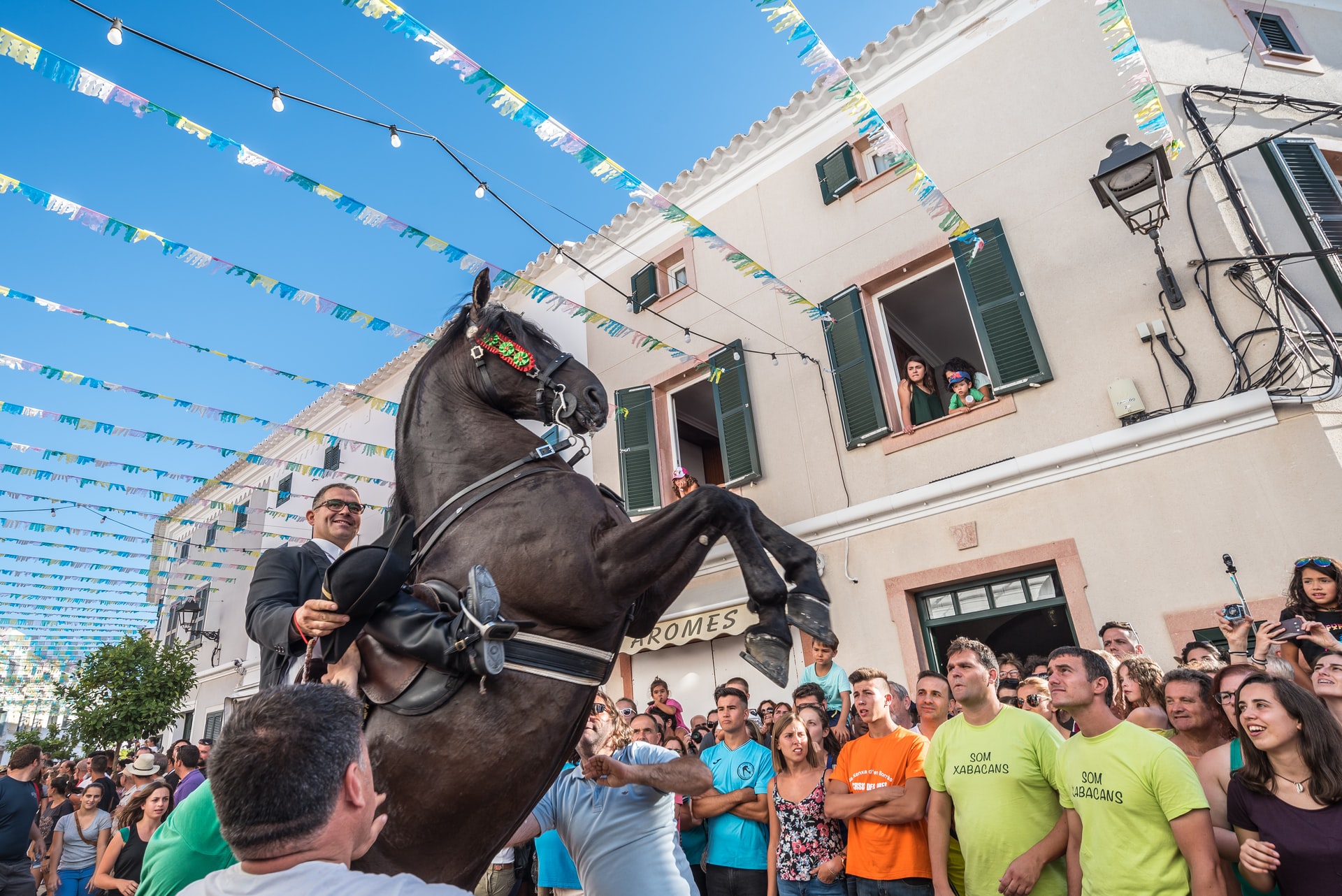
June 24th: The second day is dedicated to Menorca’s famous black horses. These majestic animals, a source of local pride, take center stage in the “jaleo” – an exhilarating display where riders, known as “caixers,” encourage their steeds to rear up on their hind legs. This spectacle represents the island’s long-standing equestrian tradition. During the “jaleo,” brave spectators attempt to run beneath the rearing horses, creating a heart-stopping display of courage (or recklessness) that epitomizes the festival’s spirit of communal revelry and daring.
June 25th: The festival culminates in a series of medieval-inspired equestrian games. The most notable is the “ensortilla” where riders attempt to spear a suspended ring with a lance while galloping at full speed. This event not only entertains but also preserves age-old chivalric traditions.
Things to Do in Menorca on a Rainy Day
Visit the Museu de Menorca in Mahón
Located in a former monastery in Mahón, the Museu de Menorca (Pla des Monestir, 9) is the largest and most visited museum on the island. It is home to an exhibition of artefacts left behind by the different civilizations which have settled here over the centuries together with an impressive collection of fine arts. Art lovers should visit the Centre d’Art i d’Història Hernández Sanz (Carrer d’Anuncivay, 2) which is located within the historic building of Ca n’Oliver. Its centrepiece is an exhibition of the famous Hernández Sanz – Hernández Mora collections.
Go Gin Tasting at a Historic Distillery
Menorca has a long history of distilling which dates back to the 18th century when the British introduced gin production to the island. Tourists can visit the Xoriguer Gin Factory in Mahón and take a guided tour of the premises which includes a tasting of the distillery’s products.
Enjoy a Cocktail Inside a Cave Bar
Menorca is known for its cave bars which are bars located inside natural caves. They offer a unique environment in which to go for drinks and to enjoy live music. One of the best known cave bars is Cova d’en Xoroi which is located near the small resort town of Cala en Porter on the island’s south-east coast. The cave is named after a Turkish pirate called Xoroi who lived there for several years. Legend has it that when Xoroi was discovered in the cave, he jumped into the sea and was never seen again.
Explore Menorca’s Great Outdoors
Naveta d’es Tudons – Menorca’s Ancient History
Whilst there are more than a thousand prehistoric sites in Menorca, this one on the the road between Mahón and Ciutadella is the most famous. Dating back to the the Bronze Age, the Naveta d’es Tudons is a burial chamber made of stone where some of the island’s earliest inhabitants were buried. It claims to be the oldest roofed building in Spain and has been recognised as a national monument.
Visit the Menorca Biosphere Reserve
The Menorca Biosphere Reserve is a protected area located on the island of Menorca. It is by UNESCO as a biosphere reserve which covers about 40% of the island’s territory. The reserve is home to a diverse range of flora and fauna, including many species that are unique to Menorca. It is also an important cultural site, with a rich history and many historic and archaeological sites. The Menorca Biosphere Reserve is a popular destination for nature lovers who come to enjoy its beautiful landscapes and learn about its unique ecology.
Frequently Asked Questions
Is Menorca Worth Visiting?
Menorca is a beautiful island with a rich history and many interesting sights and attractions. It is known for its beautiful beaches, charming villages, and historic landmarks. The island also offers a range of activities, such as hiking, swimming, and exploring the many cultural and natural attractions. Whether or not Menorca is worth visiting depends on your personal interests and travel preferences. If you enjoy beaches, nature, and history, Menorca may be a great destination for you.
Where Should I Stay in Menorca?
For such a small island the accommodation options are impressive ranging from small, self-catering apartments to luxury hotels and sumptuous villas. The most popular holiday resorts are Cala en Bosc and Cala en Blanes on the west coast. Other resorts scattered around the island tend to be very small such as Cala Galdana and Cala en Porter on the south coast which are a couple of personal favourites.
If you’d really like to get off the beaten track and experience Balearic life, Menorcan style, then you can book traditional country farmhouses (‘llocs’) for your stay rather than looking for hotel accommodation. There are also plenty private villas for rent around the island.
Another option is to stay on a campsite at Camping S’Atalaia near Cala Galdana which ideal for those who want to enjoy the outdoors. This campsite offers a range of amenities and facilities including swimming pools, playgrounds, and sports courts as well as easy access to the beach and other local attractions.
Ultimately, the best place to stay on Menorca will depend on what you want to do and see during your trip.
What’s the Weather Like in Menorca?
Menorca enjoys a typically Mediterranean climate with average annual temperatures of 15-17°C and summer highs from 23-26°C. Rainfall is mainly in the autumn months so glorious weather can be expected in the spring and summer months. Menorca enjoys a fairly mild climate throughout the year but is very quiet during the winter months.
Is Menorca a Large Island?
What will strike you very quickly on arrival in Menorca is just how small the island is. On my first visit I picked up a rental vehicle at the airport and headed west for Ciudadella. Even allowing for a brief stop at the prehistoric ruins in Alaior we covered the 50km journey across the island in around an hour. The island is even narrower from north to south.
How do I Get Around in Menorca?
There are several ways to get around the island of Menorca, including by car, bus, bike, and on foot. The most popular and convenient way to explore the island is by rental car, as it allows you to easily access all of the major attractions and destinations. Most visitors rent a car from the airport which lies just 5km south-west of Mahón. Alternatively, you can use the local bus system, which operates throughout the island and offers regular service to many popular destinations. You can also explore the island by bike or on foot, which is a great way to see the beautiful landscapes and discover hidden gems.