
Tucked away in western Spain, Extremadura is a region often overlooked by tourists, yet it holds a wealth of historical significance and unspoilt natural beauty. Bordering Portugal and comprising the provinces of Cáceres and Badajoz, it offers a rare glimpse into a Spain that has preserved its authenticity, largely untouched by the mass tourism that has transformed much of the country.
Extremadura was a critical part of the Roman Empire, as evidenced by the remarkably preserved ruins in Mérida, once one of the empire’s most important cities. Centuries later, the region became the cradle of the Spanish conquistadors, producing figures such as Hernán Cortés and Francisco Pizarro, who left an indelible mark on the Americas. Traces of this legacy remain in the grandiose architecture of towns like Trujillo which is one of the key places to visit in Extremadura for visitors who like to explore beyond the typical tourist trail.
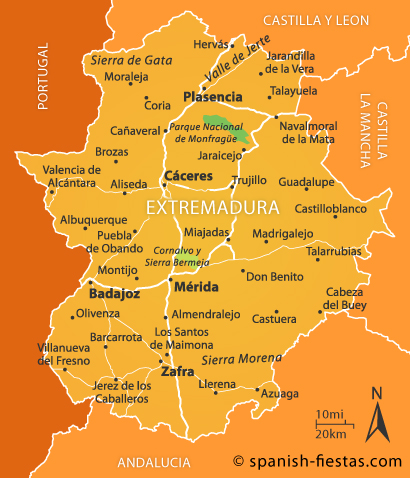
Top 5 Places to Visit in Extremadura
Cáceres
The city of Cáceres, located in the northern part of Extremadura, is a UNESCO World Heritage site and one of Spain’s best-preserved medieval cities. Its old town, known as the Ciudad Monumental, transports visitors back in time with its remarkably intact architecture spanning Roman, Islamic, Gothic and Renaissance periods.
The heart of Cáceres is the Plaza Mayor, flanked by the Torre de Bujaco, a 12th-century Almohad tower. From here, narrow cobblestone streets lead into the old town, where imposing palaces and fortified houses line the winding alleys. Notable among these is the Palacio de los Golfines de Abajo, a 15th-century palace which blends Gothic and Renaissance styles.
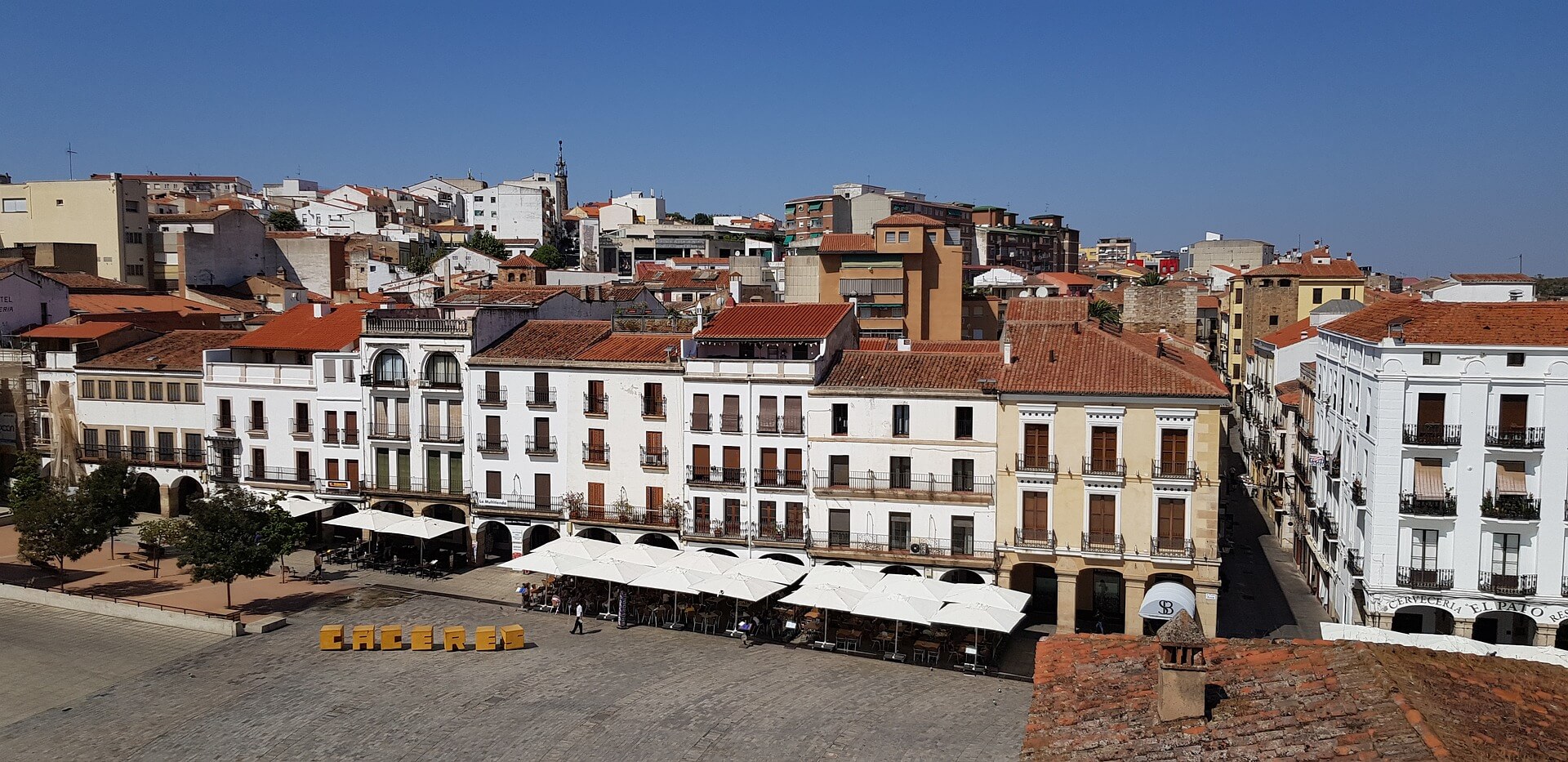
The city’s religious architecture is equally impressive. The Concatedral de Santa María, built between the 15th and 16th centuries, showcases a mix of Gothic and Renaissance elements. Its bell tower offers panoramic views of the old town’s skyline, dominated by towers and turrets.
For those interested in the city’s Islamic past, the Baluarte de los Pozos and the Arco de la Estrella provide insights into Cáceres’ Moorish fortifications. The latter serves as the main entrance to the old town.
Cáceres is not just about its historical architecture. The city has embraced contemporary art, as evidenced by the Museo de Arte Contemporáneo Helga de Alvear, housed in a striking modern building which contrasts yet complements the old town’s medieval charm.
As night falls, the illuminated walls and towers of Cáceres create a magical atmosphere, perfect for a leisurely stroll through history. The city’s gastronomic scene, featuring local delicacies like Torta del Casar cheese and Iberian ham, adds another layer to the Cáceres experience.
Mérida
Mérida, the capital of Extremadura, stands as a testament to the grandeur of the Roman Empire. Founded in 25 BC as Augusta Emerita, it served as the capital of the Roman province of Lusitania. Today, Mérida boasts one of the best-preserved Roman archaeological ensembles in Spain, earning it UNESCO World Heritage status.
The city’s crown jewel is the Roman Theatre, built in the 1st century BC and still in use for summer performances. Adjacent to it, the Amphitheatre once hosted gladiatorial contests and continues to impress visitors with its scale and preservation. The nearby National Museum of Roman Art, designed by Rafael Moneo, houses an extensive collection of Roman artifacts and provides context to the city’s ancient past.
Another remarkable Roman structure is the Puente Romano, a bridge spanning the Guadiana River. At nearly 800 metres long, it stands as one of the longest surviving bridges from ancient times. Nearby, the Alcazaba, a 9th-century Muslim fortress built on Roman foundations, offers insight into the city’s strategic importance through different historical periods.
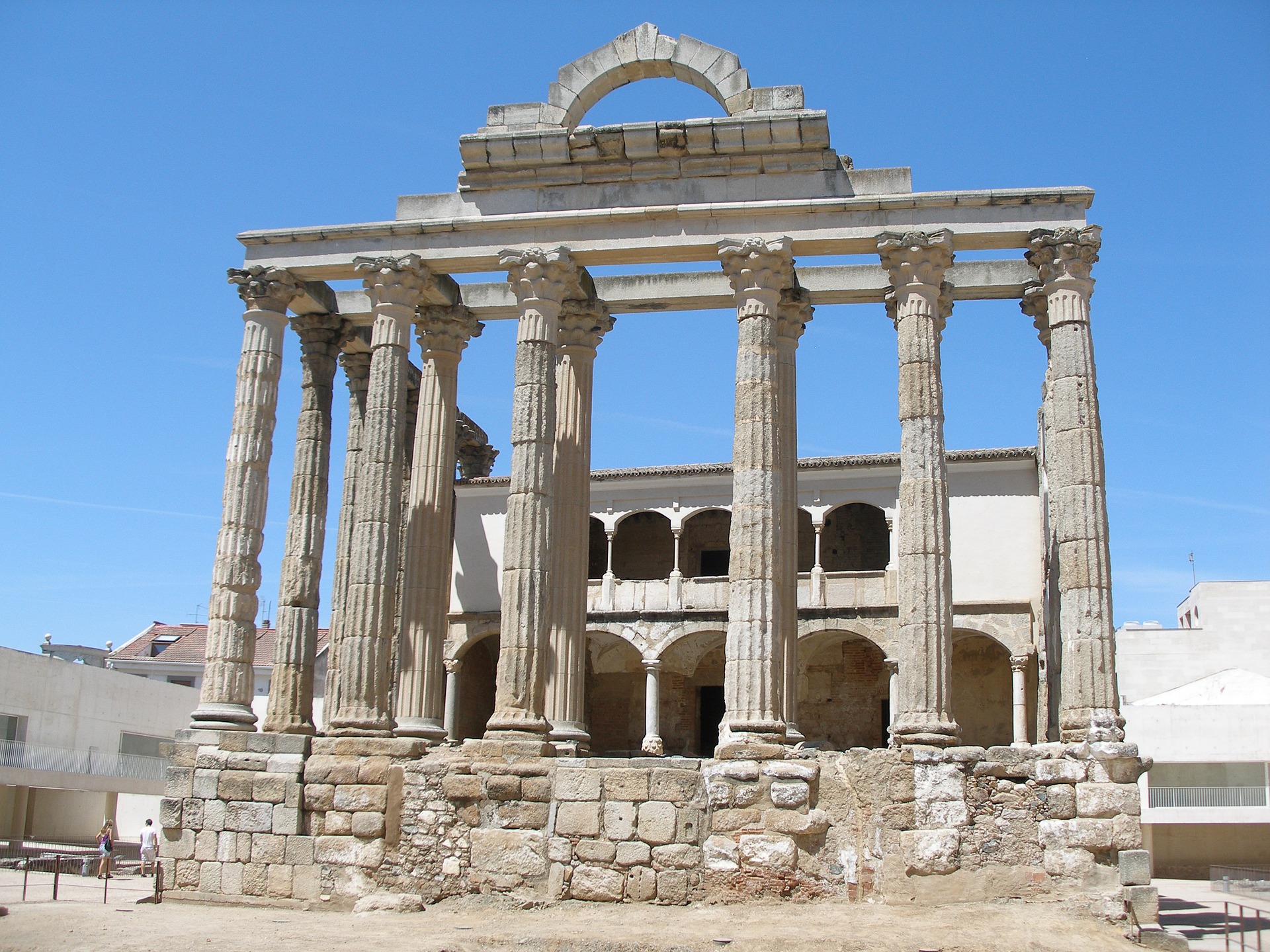
The Temple of Diana, despite its name, was likely dedicated to the imperial cult. Its well-preserved structure, integrated into a 16th-century palace, exemplifies how Mérida’s ancient and more recent history intertwine.
Beyond its Roman heritage, Mérida offers other attractions. The Moorish Alcazaba, overlooking the Guadiana River, provides panoramic views of the city. The Gothic-Renaissance Co-Cathedral of Santa María la Mayor and the Baroque Convent of San Andrés add to the city’s architectural diversity.
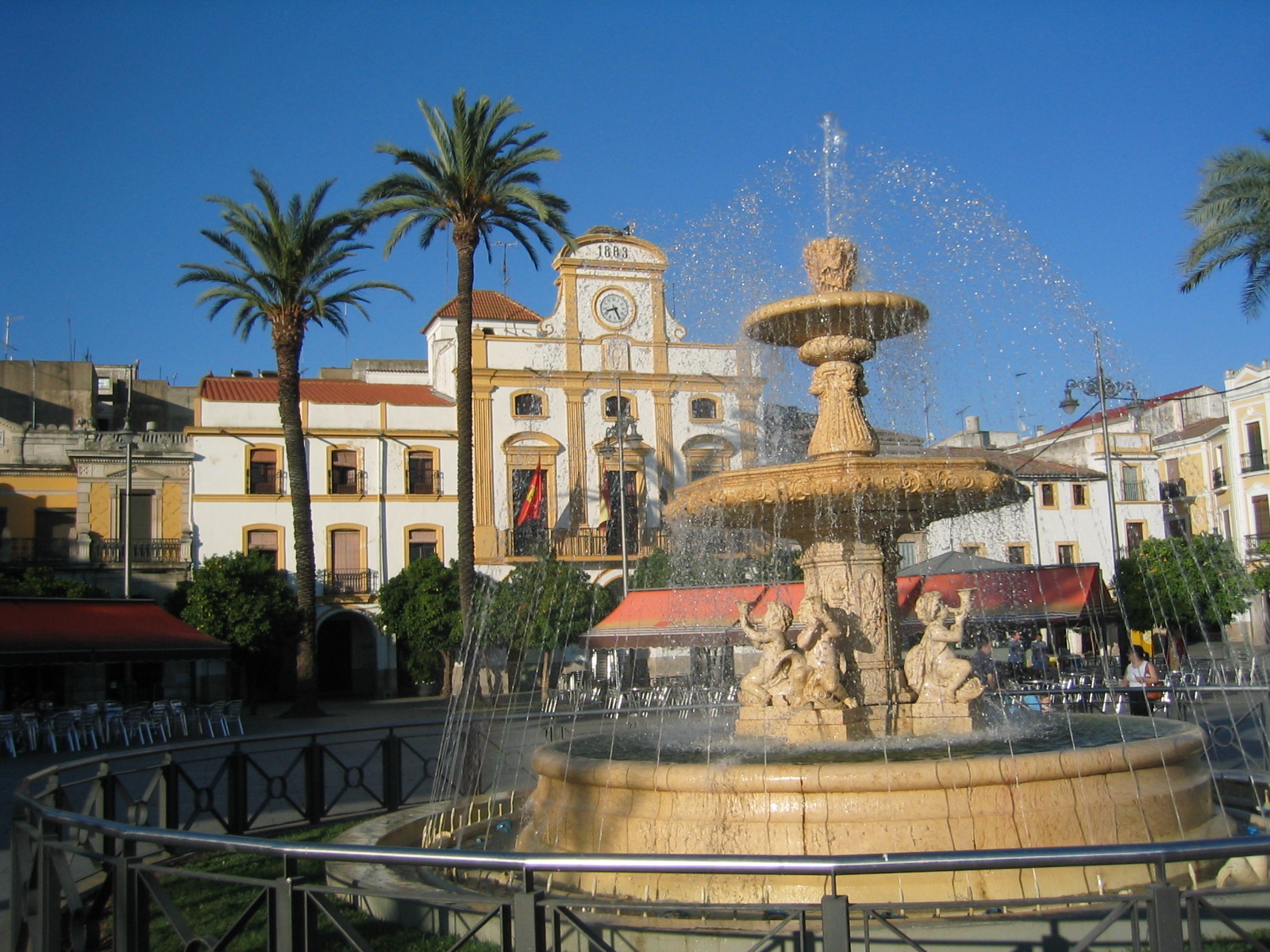
Mérida’s commitment to its historical legacy is evident in events like the annual Emerita Ludica festival, where the city recreates its Roman past with historical reenactments, markets and performances. The Festival of Mérida stages Roman, Greek and more modern plays during this annual summer event.
Trujillo
Perched on a granite hill in the province of Cáceres, Trujillo is a picturesque town which played a significant role in Spain’s colonization of the Americas. Known as the “Cradle of Conquistadors,” it was the birthplace of Francisco Pizarro, the conqueror of Peru and Francisco de Orellana, the first European to navigate the Amazon River.
The town’s skyline is dominated by the Castillo de Trujillo, an Arab fortress dating back to the 9th century. From its walls, visitors can enjoy sweeping views of the surrounding dehesa landscape and the town below.
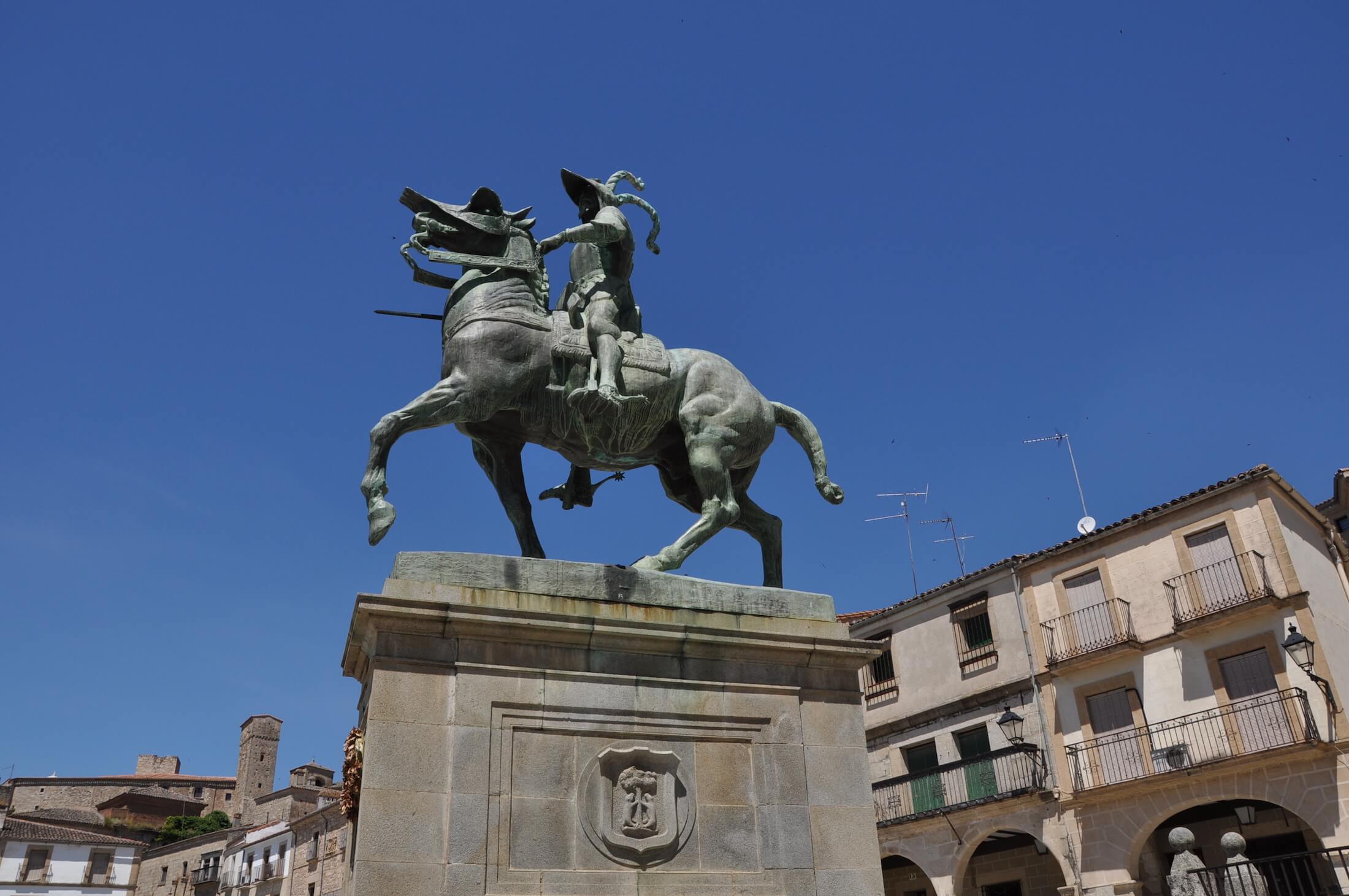
At the heart of Trujillo lies the Plaza Mayor, one of Spain’s most beautiful squares, which is dominated by the equestrian statue of Francisco Pizarro. The plaza is ringed by impressive palaces and mansions, testament to the wealth which flowed into the town during the age of exploration.
Among the notable buildings is the Palacio de la Conquista, built by Hernando Pizarro, Francisco’s brother. Its intricate plateresque façade features medallions depicting the Pizarro brothers and Incan nobles. Nearby, the Church of Santa María la Mayor showcases a blend of Romanesque and Gothic styles, with its tower offering another vantage point over the town.
Trujillo’s Jewish quarter, with its narrow streets and whitewashed houses, provides a glimpse into the town’s medieval past. The area around the Chiviri Gate is particularly evocative of this era.
Every year, Trujillo hosts the National Cheese Fair, celebrating Spain’s rich cheese-making traditions. This event, along with local specialties like migas (a dish made from breadcrumbs) and torta del casar (a creamy sheep’s milk cheese), makes Trujillo a destination for food enthusiasts as well as history buffs.
Guadalupe
Nestled in the eastern part of Extremadura, the small town of Guadalupe is home to the Royal Monastery of Santa María de Guadalupe, a UNESCO World Heritage site. This impressive complex, blending Gothic, Mudéjar, Renaissance, Baroque and Neoclassical styles, has been a major pilgrimage site since the 14th century.
The monastery houses the revered statue of the Virgin of Guadalupe, patroness of Extremadura and Queen of Hispanidad. Beyond its religious significance, the monastery is renowned for its artistic treasures. The sacristy features an exceptional collection of paintings by Francisco de Zurbarán, while the museum houses works by artists such as El Greco and Goya.
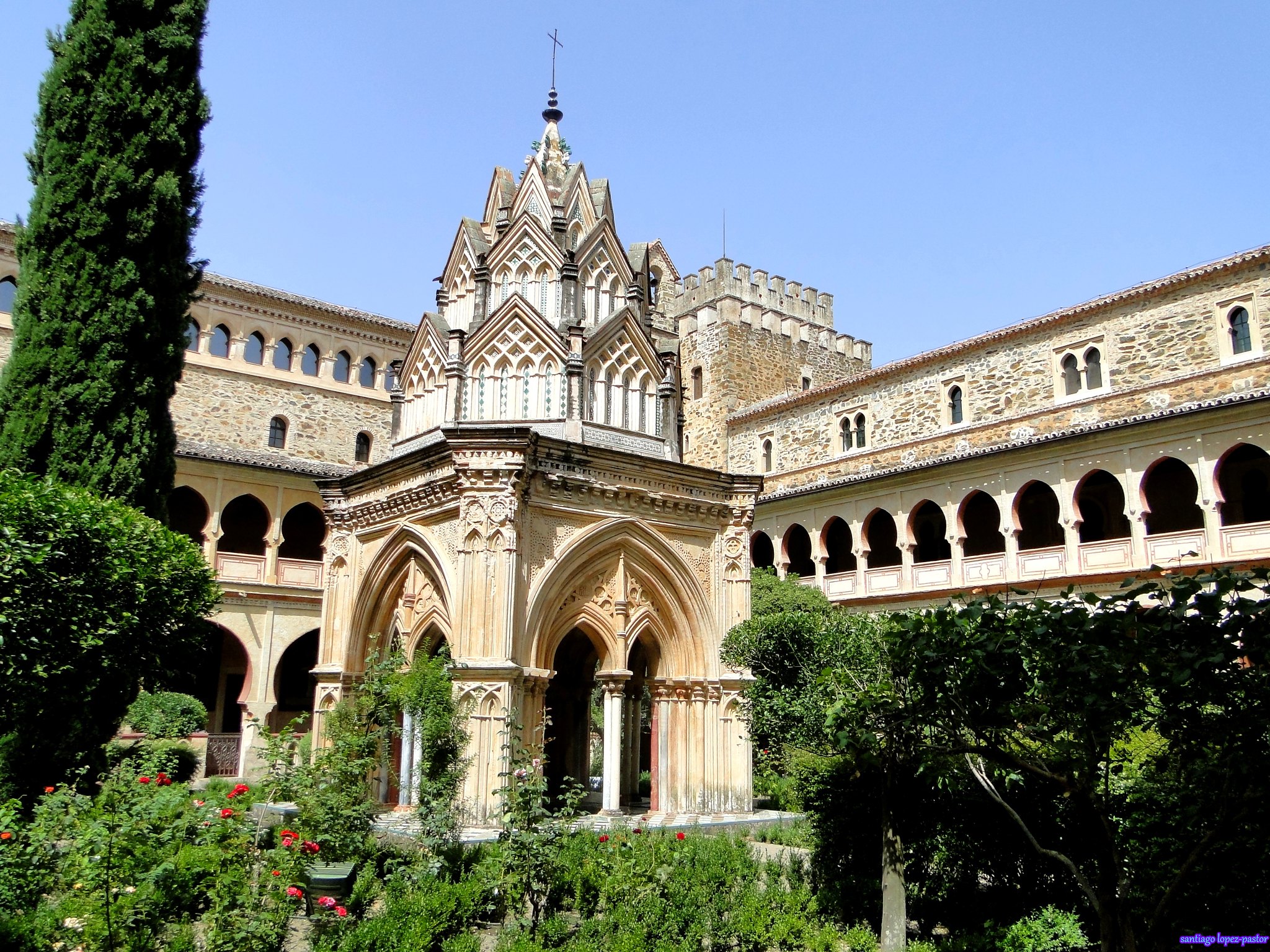
The monastery’s architecture is equally impressive. The main church, with its ornate Baroque altarpiece and the Mudéjar cloister, with its tranquil fountain and orange trees, showcase the complex’s diverse architectural influences. The Gothic cloister, adorned with frescoes depicting the miracles of the Virgin, is another highlight.
Guadalupe’s charm extends beyond the monastery walls. The town itself, with its traditional houses featuring wooden balconies and whitewashed walls, invites leisurely exploration. The Plaza Mayor, overlooked by the monastery, comes alive during the Feast of the Virgin of Guadalupe in September, when pilgrims from across the Hispanic world gather to celebrate.
The surrounding area, part of the Villuercas-Ibores-Jara Geopark, offers opportunities for nature lovers. The nearby Villuercas Mountains provide excellent hiking trails and panoramic views of the Extremaduran landscape.
Monfragüe Natural Park
Monfragüe National Park, located in the northern part of the province of Cáceres, is a haven for nature lovers and one of Europe’s best bird-watching destinations. Designated as a UNESCO Biosphere Reserve, the park encompasses a diverse landscape of Mediterranean forest, river valleys and dramatic rock formations.
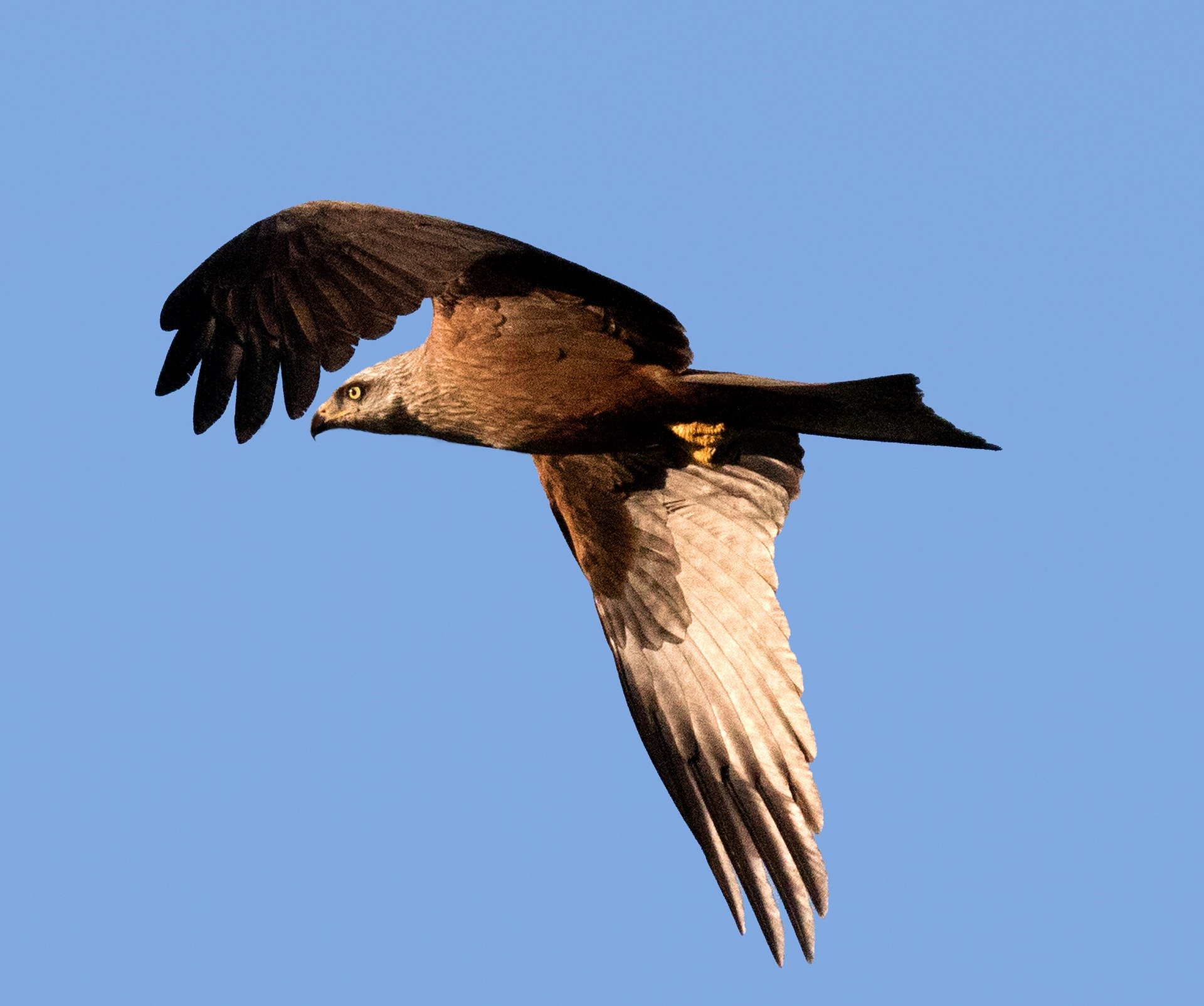
The park is centred around the confluence of the Tagus and Tiétar rivers, creating a unique ecosystem which supports a rich variety of flora and fauna. It is particularly renowned for its large breeding colonies of birds of prey. The park is home to the world’s largest colony of Black Vultures and significant populations of Spanish Imperial Eagles, Golden Eagles and Eagle Owls. As well as the birds there are over 200 species of animal in the Park including the extremely rare Spanish lynx.
One of the park’s most iconic spots is the Salto del Gitano (Gypsy’s Leap), a dramatic cliff face rising above the Tagus River. This site offers excellent opportunities to observe Griffon Vultures and other raptors soaring on thermals. The nearby Mirador de la Tajadilla provides another fantastic viewpoint for bird watching and appreciating the park’s rugged beauty.
The Castillo de Monfragüe, a 9th-century castle atop a hill, offers panoramic views of the surrounding landscape. The climb to the castle is rewarded with breathtaking vistas and potential sightings of soaring raptors at eye level.
Monfragüe National Park is also home to one of the highest concentrations of rock art on the Iberian Peninsula with 114 documented rock shelters. Notable sites include Barbaón Stream, Friar’s Gorge and Sierra de Santa Catalina. These hidden cave paintings, which date back between 8,500 and 2,800 years are part of the European Prehistoric Rock Art Trails (PRAT).
For local activities, Monfragüe offers numerous hiking trails which allow visitors to explore its diverse habitats, from riverside paths to mountain tracks. The park’s visitor centre in Villarreal de San Carlos provides valuable information about the park’s ecology and offers guided tours.
More Places to Visit in Extremadura
Plasencia
Situated in northern Extremadura, Plasencia serves as the gateway to the lush Jerte Valley, famous for its cherry blossoms in spring. Founded in 1186 by Alfonso VIII of Castile, this walled city boasts a rich architectural heritage which reflects its historical importance.
Plasencia’s old town is a maze of medieval streets and grand palaces. The city walls, with sections dating back to the 12th century, are punctuated by impressive gates like the Puerta del Sol and the Puerta de Trujillo. These fortifications offer a glimpse into Plasencia’s strategic role in medieval times.

The city’s most striking feature is its unique cathedral complex. The Catedral Nueva (New Cathedral), begun in the 16th century in the Gothic style and later incorporating Renaissance and Baroque elements, stands alongside the Romanesque Catedral Vieja (Old Cathedral). This juxtaposition of styles creates a fascinating architectural ensemble.
Plasencia’s main square, the Plaza Mayor, is lined with arcaded buildings and serves as the city’s social hub. Nearby, the Palacio de los Marqueses de Mirabel, a 15th-century palace, now houses the Museo de Caza, dedicated to the region’s hunting traditions.
The city’s Jewish heritage is evident in the well-preserved Jewish quarter, where narrow streets lead to the site of the former synagogue, now the Iglesia de San Vicente Ferrer. The nearby Parque de los Pinos offers a green respite and panoramic views of the surrounding mountains.
Plasencia is also known for its vibrant market tradition. The Martes Mayor, held on the first Tuesday of August, transforms the city into a bustling medieval market, showcasing local crafts and produce.
The city serves as an excellent base for exploring the natural beauty of the Jerte Valley and the nearby Monfragüe National Park, a paradise for birdwatchers and nature enthusiasts.
Zafra
Zafra is a charming town which is strategically located on the Vía de la Plata. The heart of Zafra is the Plaza Grande and the adjacent Plaza Chica which form the social and commercial centre of the town. The arcades lining these squares house numerous bars and restaurants which create a lively atmosphere, especially during the evening paseo.
Dominating the town’s skyline is the Alcázar de los Duques de Feria, a 15th-century fortress-palace which now functions as a Parador hotel. This imposing structure, with its blend of Gothic and Renaissance elements, offers a glimpse into Zafra’s noble past. The palace’s tower provides panoramic views of the town and the surrounding plains.

Zafra’s religious architecture is equally noteworthy. The Iglesia de la Candelaria, with its striking Plateresque façade and the Convent of Santa Clara, known for its Mudéjar elements, showcase the town’s diverse architectural heritage.
The town’s Jewish quarter, centred around the Calle Boticas, preserves the memory of Zafra’s once-thriving Jewish community. The narrow streets and traditional houses in this area offer a journey back in time.
Zafra is famous for its fairs, particularly the San Miguel Fair held in late September. This centuries-old livestock fair transforms the town into a bustling marketplace and cultural festival, attracting visitors from across the region.
El Valle de Jerte
No guide to the best places to visit in Extremadura would be complete without reference to El Valle de Jerte which lies in the north-east of the region. Over half of Spanish cherries are cultivated here and during April the blossom appears to fill the entire valley.

Sierra de Los Gredos
The Sierra de Gredos mountains form part of Spain’s Sistema Central which span the provinces Ávila, Salamanca, Cáceres, Madrid and Toledo. Designated a natural park by the region of Castilla y León, it is home to some rugged peaks with the highest being Pico Almanzor at 2,592m. It also has five river valleys and some stunning alpine lakes such as Laguna Grande de Gredos. The mountains are home to diverse fauna including the Iberian ibex, golden eagle and griffon vulture. Such a diverse landscape within proximity of Madrid makes it a popular destinations for many outdoor activities.

Jarandilla de la Vera
Just south of the Sierra de los Gredos mountains is an area known as La Vera which is home to a number of charming villages. Jarandilla de la Vera and Cuacos de Yuste are two of the best known of these villages. Whilst the old town of Jarandilla de la Vera is steeped in history, its main attraction is the 15th century Parador de Jarandilla. This historic palace was where Carlos V stayed for 3 months in 1556-57 whilst his residence in the nearby Monasterio de San Jerónimo de Yuste was being completed.

Yuste Monastery
Just 10km south-west of Jarandilla de la Vera is the Monastery of Yuste which was founded by the Hieronymite Order of monks in 1402. The Monastery is famous as the final residence of Holy Roman Emperor Charles V. After abdicating his throne, Charles retired to this secluded monastery, where he lived for just a year before his death in 1558.
Historical Note: Carlos I was the King of Spain (1516-1556) whilst Carlos V was the Holy Roman Emperor (1519-1556). They are the same person with two different titles.
The monastery complex consists of two main parts: the monastic quarters and the emperor’s palace. The Gothic church, with its austere façade, houses Charles V’s burial place, marked by a simple bronze slab. The emperor’s private quarters, adjoining the church, offer insight into the lifestyle of one of Europe’s most powerful rulers in his retirement.

The monks’ living quarters showcase classic monastic architecture, with two cloisters – the Gothic “Claustro Viejo” (Old Cloister) and the Renaissance “Claustro Nuevo” (New Cloister). These peaceful spaces, adorned with fountains and gardens, reflect the contemplative life of the Hieronymite monks who once inhabited the monastery.
The emperor’s palace, while modest compared to grand royal residences, is noteworthy for its architectural innovations. It features a covered passageway allowing Charles, who suffered from gout, to move easily between his chambers and the church. The palace’s terrace offers beautiful views of the surrounding gardens and the distant mountains.
The monastery’s gardens, with their carefully manicured hedges and vibrant flowers, provide a serene backdrop to the historic buildings. The Pond of the Emperor, where Charles V reportedly fished, adds to the tranquil atmosphere.
Yuste Monastery is not just a historical site but also a cultural centre. It hosts concerts, exhibitions and academic conferences, particularly focusing on the era of Charles V and European history.
The surrounding La Vera region, known for its microclimate and lush vegetation, offers additional attractions. The nearby town of Cuacos de Yuste is worth exploring for its well-preserved medieval architecture.
Badajoz
Badajoz, the largest city in Extremadura, sits on the banks of the Guadiana River, just a stone’s throw from the Portuguese border. This strategic location has shaped the city’s history and character, making it a fascinating blend of cultural influences and architectural styles.
The city’s most prominent landmark is the Alcazaba, an impressive Moorish fortification which dominates the old town. Built in the 12th century by the Almohad dynasty, it’s one of the largest and best-preserved Islamic fortifications in Spain. Visitors can walk along its walls, enjoying panoramic views of the city and the Guadiana River. Within the Alcazaba, the Palace of the Dukes of Feria now houses the Provincial Archaeological Museum, showcasing artifacts from the region’s rich history.
At the heart of Badajoz lies the Plaza Alta, a picturesque square which once served as the city’s main marketplace. Surrounded by colourful buildings with distinctive sgrafitto decorations, this square offers a glimpse into the city’s vibrant past. Nearby, the Cathedral of San Juan Bautista, with its mix of Gothic, Renaissance and Baroque elements, stands as a testament to the city’s evolving architectural styles over the centuries.
Badajoz’s border location is evident in its unique cuisine, which blends Spanish and Portuguese influences. Local specialties include caldillo extremeño (a fish soup) and técula mécula (a rich almond cake). The city’s tapas scene is particularly lively, especially around the bustling Calle San Juan area.
For art enthusiasts, the Museo de Bellas Artes (Fine Arts Museum) is home to an impressive collection of Spanish and Flemish paintings which are housed in a beautifully restored 19th-century palace.
Badajoz also serves as a gateway to the nearby Alqueva Dark Sky Reserve, the first Starlight Tourism Destination in the world. Located across the border in Portugal, this observatory recognizes the exceptional quality of the night skies in this area, making it an ideal spot for stargazing and astronomical observation.
The city comes alive during its annual Carnival, considered one of the best in Spain. Known for its flamboyant costumes and lively parades, the Badajoz Carnival attracts visitors from all over the country and neighbouring Portugal.
Extremadura Travel Guide
When to Visit Extremadura
Extremadura tends to have very hot and dry summers – the average temperature in July is above 26° and it can be as high as 40°. Drought is quite common during the summers. I recall only too well 7th July 2005 as I sat in my car in Trujillo listening to events unfold in London after the terrorist attack on the city. The air conditioning was working overtime as the car’s thermostat registered 44ºC. Winters are generally mild though significantly colder in mountain areas. Rainfall is also more pronounced here with occasional snow at high altitudes. In the remainder of the region rainfall is quite low with most falling in the autumn or spring.
How to Get There
There is only one airport of a significant size in Extremadura, at Badajoz, although this presently has only internal flights. Although Seville, Valladolid and Madrid are only between three and four hours’ drive away, by far the nearest international airport is that at Lisbon, which can be reached in just over two hours. However, with the major road route from Madrid to Lisbon crossing the region and the N630 going from north to south, the whole area is far more accessible than it used to be. With a rail and bus network now extending to all the towns in the region, it is possible to make connections to here from all major Spanish cities.
Where to Stay in Extremadura
If you truly wish to experience all that this region has to offer then you need to stay in the region’s paradors. These are hotels that have been built in conjunction with the ancient buildings themselves, such as castles and monasteries and offer the ultimate in luxury and a feeling of being part of the heritage of this region.
An ideal way of discovering this fascinating land is to take a self-drive tour of the region whilst staying in some of Extremadura’s historic paradors. The 4-star Parador de Cáceres is one of the best around whilst there are other beautiful options in Zafra, Trujillo, Merida, Guadalupe and Jarandilla de la Vera. Below is a list of the building type in each destination.
| Parador de Cáceres | 14th Century Palace |
| Parador de Guadalupe | 15th Century Hospital Of St. John The Baptist |
| Parador de Jarandilla De La Vera | 15th Century Castle-Palace |
| Parador de Mérida | 18th Century Convent |
| Parador de Plasencia | 15th Century Convent |
| Parador de Trujillo | 18th Century Convent |
| Parador de Zafra | 15th Century Castle |